

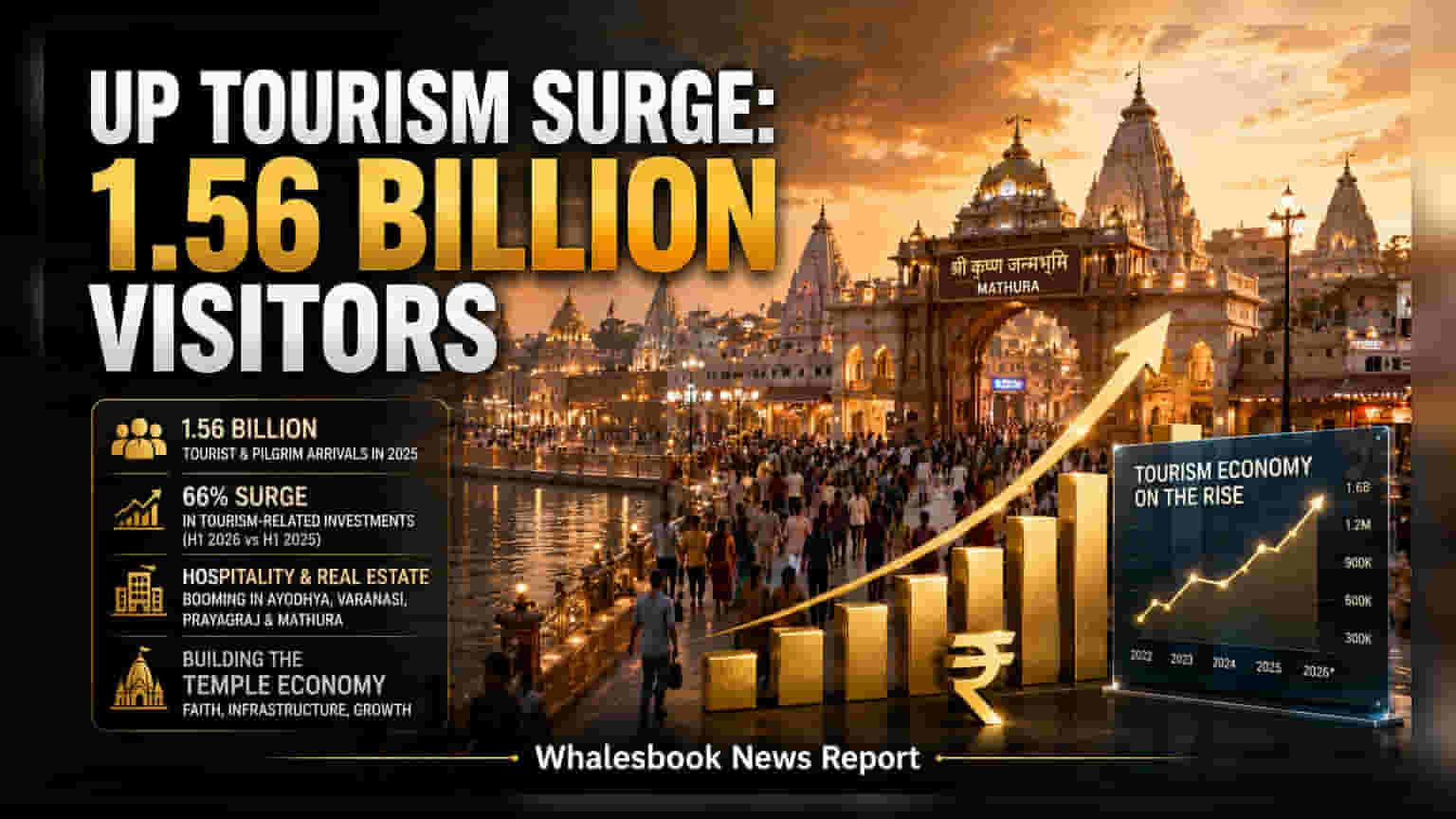
Uttar Pradesh recorded 1.56 billion tourist arrivals in 2025, fueling a 66% surge in tourism-related real estate investment. The state's shift toward a professionalized 'Temple Economy' is attracting significant capital into hospitality and infrastructure. Investors are now monitoring whether local public services can sustain this massive visitor volume over the long term.
Uttar Pradesh reported a record 1.56 billion tourist and pilgrim arrivals during 2025, a figure that is now acting as a cornerstone for the state's economic strategy. The administration is actively using this surge in footfall to transition the region toward a formalized 'Temple Economy.' This model focuses on integrating religious tourism with infrastructure development to generate consistent revenue, moving away from unorganized pilgrimage patterns of the past.
Surge In Hospitality And Real Estate Investment
The impact of this massive visitor influx is clearly visible in the real estate and hospitality sectors. Data for the first half of 2026 indicates a 66% increase in tourism-related property investments compared to the same period in 2025. Hubs such as Ayodhya, Varanasi, and Prayagraj have become the primary focus for developers and hotel chains. These areas are seeing a rapid expansion in branded accommodation and retail spaces designed to cater to the growing number of visitors seeking reliable amenities and professional services.
Sustainability And Infrastructure Risks
While the economic growth is significant, the scale of this visitor influx brings operational challenges. The primary concern for long-term stability is the capacity of local infrastructure to manage billions of arrivals without compromising public safety or basic service quality. Heavy reliance on seasonal religious tourism also poses a risk, as the economy remains sensitive to large-event management and seasonal fluctuations. If utility infrastructure, such as water supply, waste management, and transport, does not scale effectively with the increasing crowd numbers, it could create bottlenecks that might dampen the long-term appeal for both private investors and tourists.
What Investors Are Monitoring Next
The success of this economic model will depend heavily on the execution of upcoming infrastructure projects. Investors and market watchers are closely observing the timeline for state-led development initiatives to see if they can keep pace with the rapidly increasing visitor numbers. The key monitorable for the coming quarters will be whether the state can maintain this high level of tourism traffic while ensuring that the necessary public services are upgraded to support the long-term growth of these religious commercial hubs.