 Whalesbook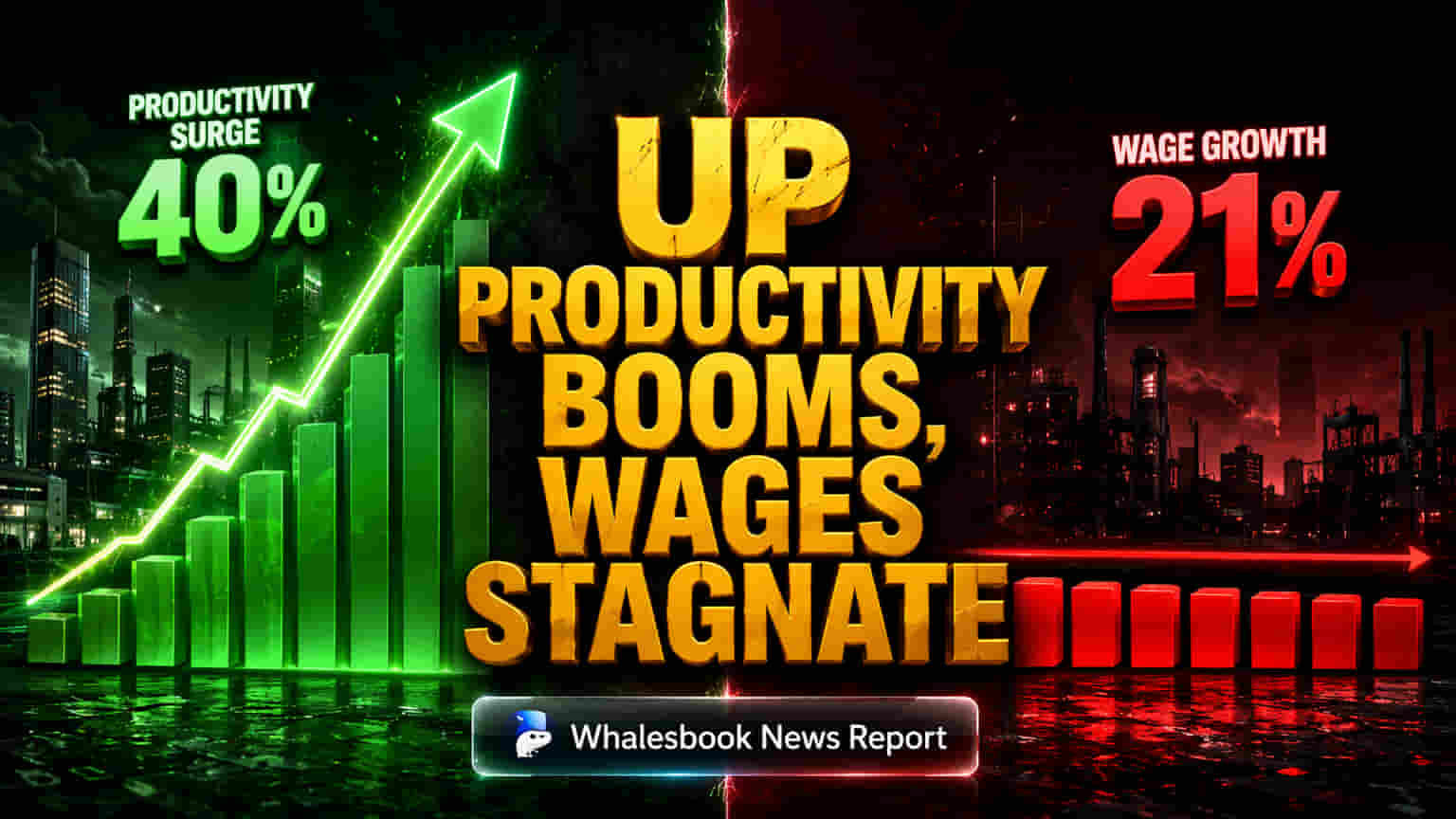


Productivity Surges, Wages Trail Behind
Uttar Pradesh is experiencing a significant economic imbalance in its manufacturing sector. While worker productivity has surged, wages have not kept pace. This widening gap is leading to labor protests and questions about whether the state's industrial growth model truly benefits its large workforce.
UP's Manufacturing Output Outpaces Pay
The state's manufacturing sector has reported a substantial 40% increase in worker productivity over the past five fiscal years. However, this impressive output growth has been overshadowed by a far more modest 21% rise in wages during the same period. This disconnect is fueling discontent and protests within the National Capital Region's manufacturing hubs, as rising living costs and an expanding labor force reduce the economic benefits for individual workers. This contrasts with national trends, where productivity rose 43.6% and wages 23.5% between 2019-20 and 2023-24. The situation in UP is particularly acute, with average industrial worker wages standing at Rs 14,700 per month, making it one of the lowest-paid states nationally and significantly below the all-India average of Rs 18,000 for 2023-24.
UP's Wage Growth Trails Neighbors
The economic narrative in Uttar Pradesh stands in stark contrast to its immediate neighbors. Haryana, for instance, has managed to far outpace UP in productivity growth, allowing for stronger wage increases and a widening income gap. Haryana's industrial base, strong in sectors like automotive and export-oriented manufacturing, enables higher output per worker and better compensation. Similarly, Delhi, despite slower productivity growth, maintains a higher wage base, with average annual earnings for its industrial workers reaching Rs 3.85 lakh compared to UP's Rs 3.36 lakh. Maharashtra continues to lead as the highest-paying industrial state, with reported annual worker earnings of Rs 4.94 lakh.
Deeper Trends: Capital vs. Labor
There's a long-standing gap between wages and productivity in India's organized manufacturing sector since economic reforms. Real wage growth has often lagged behind how much workers produce. This trend suggests a shift where profits have grown faster than worker pay. Uttar Pradesh's workforce is expanding faster than investment in new equipment, meaning a greater reliance on industries that use a lot of labor and add less value compared to states like Haryana. While UP's economy has grown, its share in the national economy has seen a marginal increase from 8.6% to 9.1% between 2016-17 and 2024-25, indicating that despite overall growth, gains for each worker may be limited.
Risks in UP's Growth Model
Weaknesses in Uttar Pradesh's current growth model pose significant risks. The persistent gap between productivity and wages, coupled with a large and rapidly expanding labor force, could lead to sustained social unrest and discourage investment in higher-value manufacturing. Unlike states such as Haryana, which benefits from established automotive and export hubs, UP's industrial composition may be less able to withstand economic shocks and competition. The state's average industrial worker wage remains significantly below the national average and its more developed neighbors, potentially creating a 'brain drain' effect where skilled labor seeks better opportunities elsewhere. Furthermore, studies show capital intensity has increased in some Indian states but declined in UP. This suggests UP's industrial structure relies less on capital, potentially limiting future wage growth driven by productivity. The recent protests and interim wage hikes highlight the fragile state of industrial peace and the challenge of balancing worker demands with industry competitiveness, especially with rising global costs.
UP's Path Forward: Bridging the Gap
Uttar Pradesh's manufacturing sector's economic future depends on addressing the gap between productivity and wages and shifting towards higher value-added industries. While interim wage hikes have been implemented following recent protests, a permanent structural solution is crucial. Neighboring states and leading industrial powerhouses like Maharashtra continue to benefit from strong industrial networks and higher average incomes, setting a benchmark for growth. The success of initiatives like UP's 'One District One Product' program in creating local value and diversifying industry will be critical. However, without significant investment in technology and higher-value sectors, the risk remains that UP's large workforce will continue to dilute productivity gains, continuing an economic model that struggles to turn output into fair prosperity for workers.