

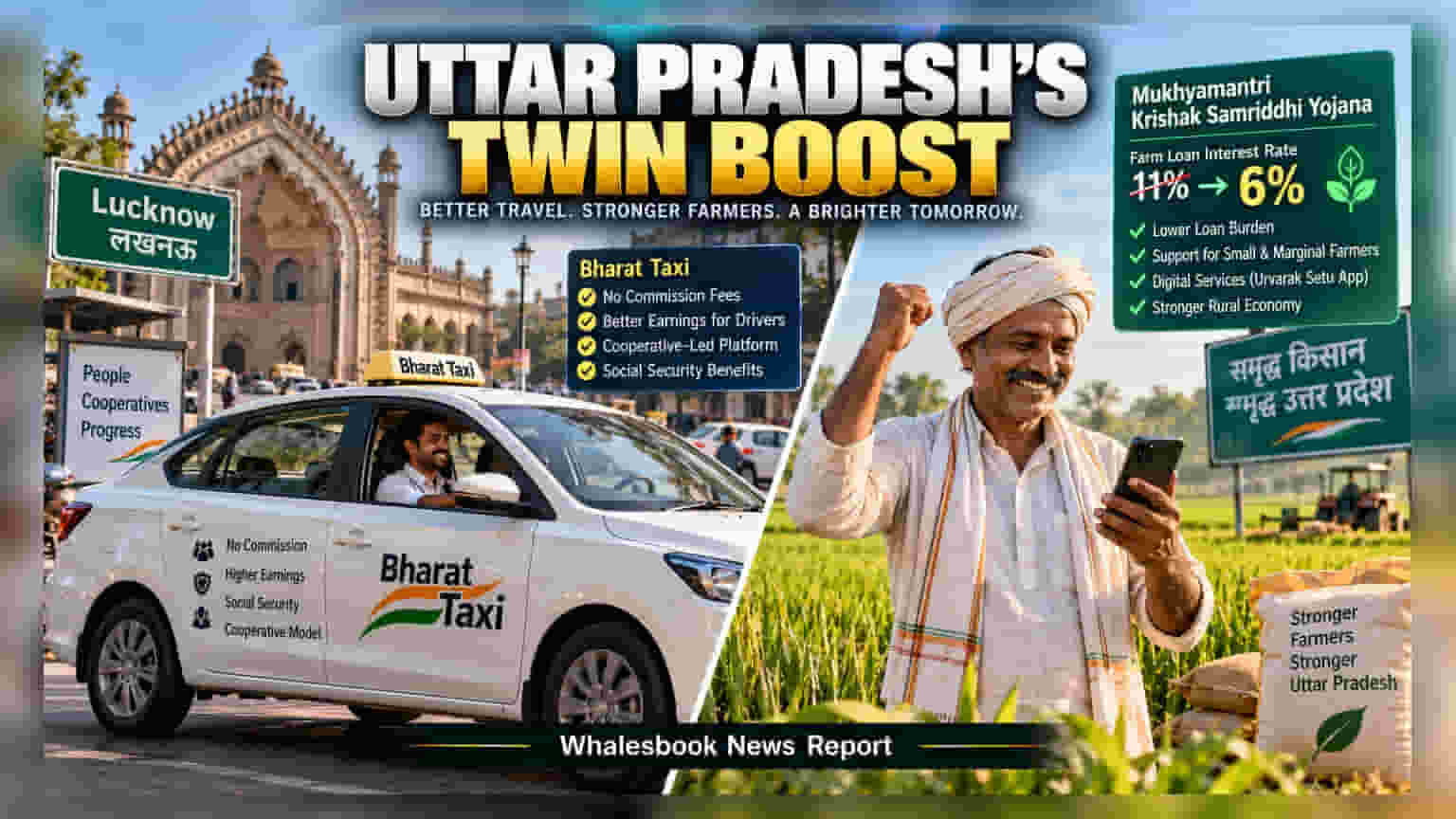
Uttar Pradesh has introduced the Bharat Taxi cooperative service to eliminate driver commissions and the Mukhyamantri Krishak Samriddhi Yojana to cut long-term farm loan interest rates from 11% to 6%. These initiatives aim to formalize rural transport and ease agrarian financial stress, creating a new competitive dynamic for private gig-economy platforms and rural credit providers.
The Uttar Pradesh government has unveiled two major initiatives designed to reshape the state's transport and agricultural sectors. Under the new Bharat Taxi platform, the government aims to challenge existing private ride-hailing models by leveraging a cooperative-led structure. Managed by the Sahakar Taxi Cooperative Limited, the service promises to remove the commission fees traditionally charged by private aggregators, which could impact the operational models of existing gig-economy participants in the region. The state has also introduced the Mukhyamantri Krishak Samriddhi Yojana, which provides significant relief to farmers by slashing long-term loan interest rates from 11% to 6% through the Uttar Pradesh Cooperative Rural Development Bank. This interest subvention—where the government covers the difference in interest costs—is aimed at reducing the debt burden for small and marginal farmers across the state.
The launch of Bharat Taxi reflects a growing trend in India where state-backed cooperatives are entering the gig economy, similar to models seen in other regions like Kerala. By providing social security benefits and removing commission structures, the government intends to offer better take-home pay for drivers, which may attract more participants to the platform. However, the success of this model will depend on the government’s ability to compete with the technology, scale, and user experience provided by established private players. Investors tracking the gig economy space should monitor whether such state-led interventions gain significant market share or remain niche service providers.
The agricultural credit scheme is a strategic move to manage rural economic stability. By lowering the cost of capital, the administration is effectively injecting liquidity into the rural economy, which can stimulate demand for agricultural equipment and inputs. The introduction of the Urvarak Setu mobile application and a centralized database centre suggests that the government is focusing on digital infrastructure to streamline these services. The fiscal impact of these subsidies on the state's budget will be an important metric to watch, as sustained support requires significant allocation of funds.
For investors and market participants, the key monitorable is the execution scale of these projects. While the intent to lower costs for drivers and farmers is clear, the real-world challenge lies in operational efficiency and the ability to maintain these services without relying solely on recurring state subsidies. Furthermore, any expansion into rural bus transport, as indicated by officials, could potentially impact state-run road transport corporations or private bus operators in the long term.