

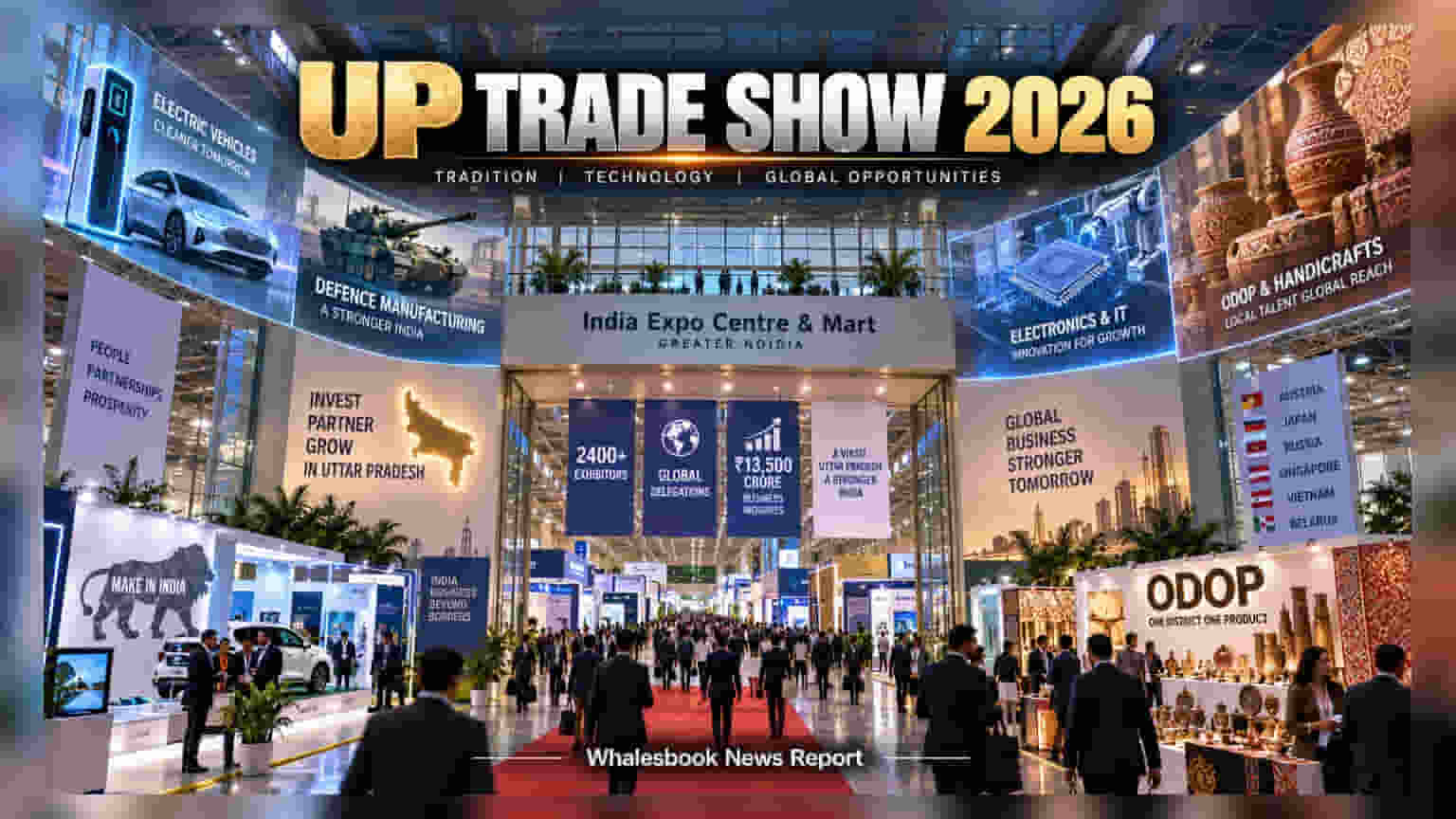
The fourth Uttar Pradesh International Trade Show has opened in Greater Noida, aiming to connect 2,400+ exhibitors with global buyers. While the state is targeting Rs 13,500 crore in business inquiries, the key for observers is how many of these non-binding agreements actually convert into operational industrial projects.
The fourth edition of the Uttar Pradesh International Trade Show has commenced at the India Expo Centre and Mart in Greater Noida. This five-day event is acting as a showcase for over 2,400 exhibitors. While the state is known for its traditional One District One Product (ODOP) handicrafts, the 2026 event highlights a strategic pivot toward higher-value manufacturing. The government is actively promoting sectors like electric vehicles, electronics, IT, and defense equipment to attract global original equipment manufacturers. International participation is a key theme, with delegations from countries including Austria, Japan, Russia, Singapore, Vietnam, and Belarus. The state administration has set an ambitious target, anticipating total business inquiries to cross the Rs 13,500 crore mark. The goal is to institutionalize these trade relationships, moving away from informal inquiries toward binding memorandums of understanding. From an investor perspective, these large summits serve as an important barometer for industrial sentiment in India’s most populous state. However, the sheer size of the event and the volume of planned memorandums should be viewed with a balanced outlook. Historically, state-level investment summits often report high target figures, but the conversion rate—the percentage of these agreements that turn into actual construction and job-creating projects—remains the most critical factor. The success of this strategy will depend on several on-the-ground factors. Investors may track whether the state can overcome common challenges such as land availability, infrastructure bottlenecks in logistics, and the need for a ready supply of skilled labor for high-tech manufacturing. As the state tries to integrate its local MSME clusters into global supply chains, the ability to provide reliable power, streamlined regulatory approvals, and connectivity to industrial corridors will be just as important as the trade show itself. The next important step for observers will be the post-event reports detailing the actual number of agreements that progress into firm investments, site acquisitions, and groundbreaking ceremonies. This will clarify whether the state’s industrial transition is gaining genuine momentum or if it remains in the early conceptual phase.