

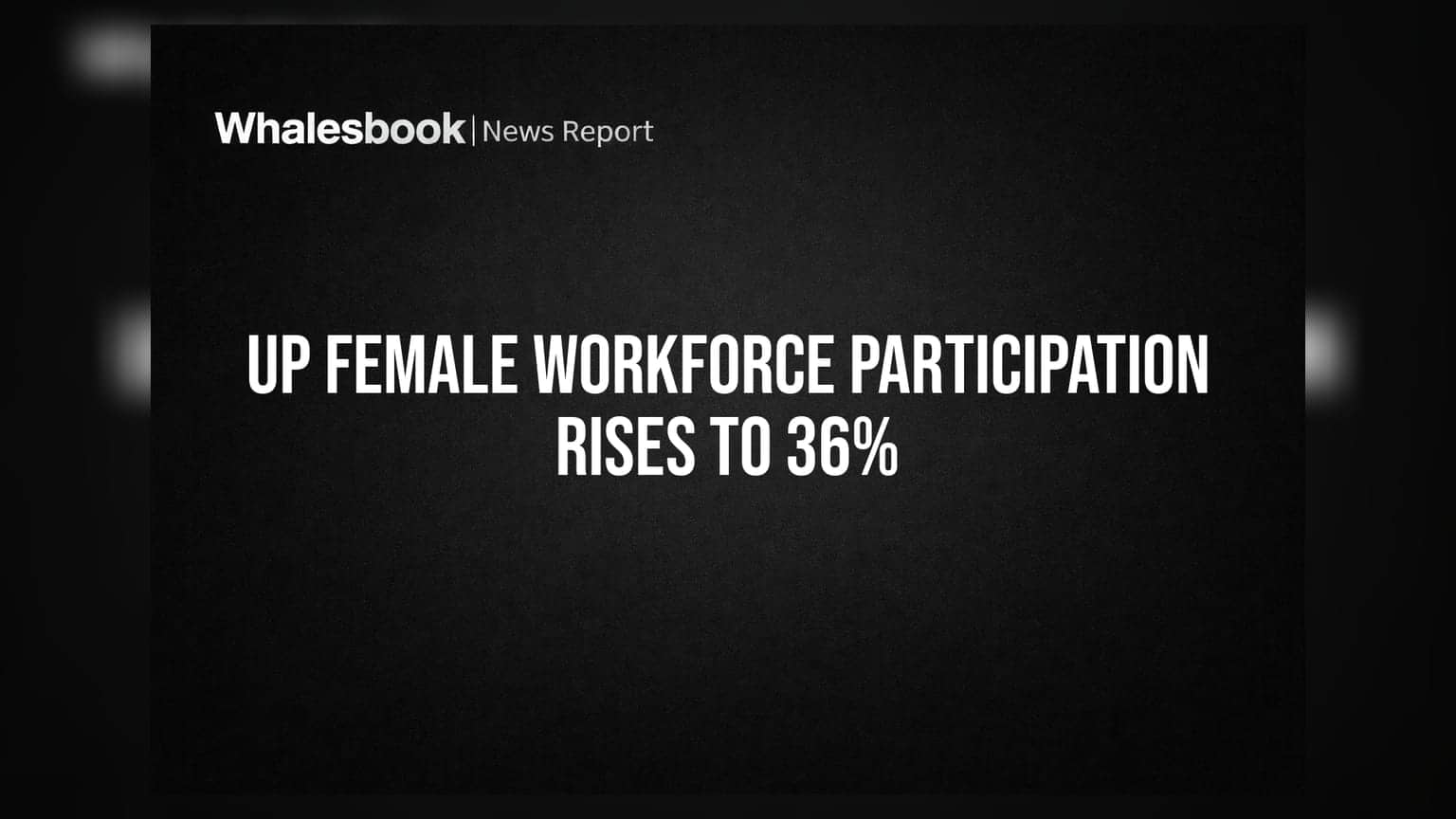
Uttar Pradesh reported that female workforce participation reached 36% in 2026, rising from 13% in 2017. The state government attributed this growth to improvements in the security environment, which it stated has facilitated extended commercial operating hours and expanded employment opportunities.
The Uttar Pradesh government has reported a significant shift in the state's labor metrics, noting that female workforce participation has climbed to 36 percent as of 2026, compared to 13 percent in 2017. This data reflects a substantial change in the state's economic landscape, as workforce participation is a fundamental indicator of regional economic health and productivity.
The administration stated that this growth is closely linked to a revamped security framework and a zero-tolerance policy toward criminal activities. For investors and businesses operating within the state, the availability of a larger and more diverse labor pool is a key metric. A higher participation rate can indicate a broader base for consumer demand and a larger talent supply for industries ranging from manufacturing to services.
Beyond labor participation statistics, the state government highlighted an expansion in night-time commercial activity. The administration noted that improved public safety has allowed businesses to operate during extended hours, which was previously limited in many areas. For commercial establishments, the ability to operate across different shifts without security constraints can improve operational efficiency and potentially contribute to higher capacity utilization.
For the state's economic outlook, this shift is part of a broader push to attract investment. When a region can demonstrate improved labor mobility and longer operational windows, it often becomes more attractive to both local entrepreneurs and companies looking to set up manufacturing or service units. A stable and accessible workforce environment is a core factor that companies evaluate when considering long-term expansion plans.
While the government focuses on the security-led narrative for these changes, analysts and market participants will monitor whether this trend continues to correlate with sustained industrial growth and increased per-capita income in the state. The next steps for investors will be to track updated state-level industrial output data, ongoing infrastructure developments, and whether these labor participation trends reflect a long-term improvement in the state's overall business environment.