

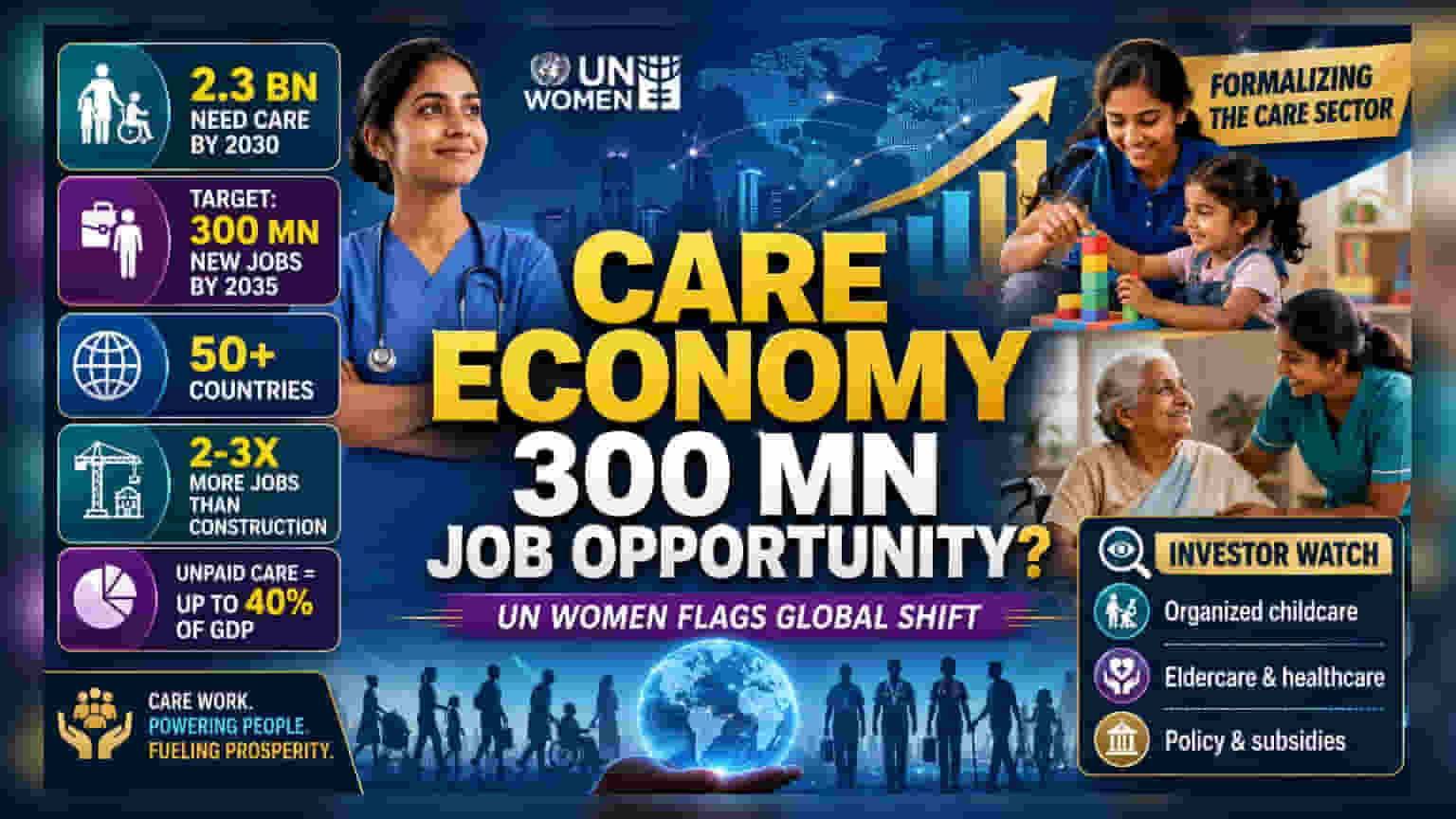
A new report from UN Women suggests that formalizing care systems could generate 300 million jobs by 2035 and significantly boost global GDP. As 2.3 billion people are expected to require care by 2030, this creates a structural opportunity for organized service providers in healthcare, eldercare, and childcare to expand their footprint.
What Happened
UN Women has released a major report calling for a global shift in how societies view and invest in the "care economy." The agency highlights that care work—which includes healthcare, childcare, eldercare, and domestic support—is an essential but often undervalued pillar of the global economy. The report projects that by 2030, nearly 2.3 billion people will require care services, a significant increase from 2.1 billion in 2015. To meet this demand, the agency’s 'Transform Care Initiative' aims to support over 50 countries, with a target to create nearly 300 million new decent jobs by 2035.
The Economic Logic of Care
The report argues that the care sector is not just a social support system but a powerful engine for economic growth. Currently, much of this work is unpaid and performed at home, primarily by women. The UN estimates that if this unpaid work were assigned a monetary value, it could represent up to 40% of a country's Gross Domestic Product (GDP). By transitioning these services from an unpaid, informal model to a formal, paid sector, governments and private entities can unlock significant economic value that is currently 'invisible' in national accounts.
Employment Efficiency
For policymakers and economic analysts, one of the most compelling data points is the employment multiplier of the care sector. The report states that investing in care systems generates two to three times more jobs than an equivalent investment in the construction sector. Furthermore, the care sector is identified as being significantly less polluting, aligning with modern goals for sustainable economic development. This suggests that as nations look for ways to boost employment without increasing their carbon footprint, the care economy offers a highly efficient alternative.
The Shift to Organized Care
The investor angle here lies in the ongoing shift from unorganized, domestic care to organized, institutional services. In many emerging markets, care services are highly fragmented, often relying on informal domestic workers who frequently lack social security or standardized training. As global demand rises, there is a clear trend toward the 'formalization' of these services. This includes the rise of private healthcare networks, professional eldercare facilities, corporate-sponsored childcare, and organized staffing agencies. For investors, this shift implies a growing market for companies that can provide scalable, high-quality, and regulated care services.
Risks and Realities
While the growth potential is high, there are distinct risks to consider. The report highlights that women currently absorb the vast majority of unpaid care work, keeping nearly 45% of working-age women out of the formal labor market. If the care sector remains under-funded or fails to provide decent wages, it could perpetuate low-productivity and insecure employment rather than creating high-quality, sustainable jobs. Additionally, the success of this sector depends heavily on government policy, as infrastructure like affordable childcare is often reliant on public funding or public-private partnerships.
What Investors May Track
Investors may keep a close watch on several factors to gauge the development of the care economy. Key monitorables include government policy changes related to childcare and eldercare subsidies, the growth of organized staffing and healthcare services, and the ability of companies in this sector to maintain margins while providing competitive wages. The ultimate test will be whether the sector can attract the capital and regulatory support needed to move from a fragmented, informal model to a formal, high-growth industry.