 Whalesbook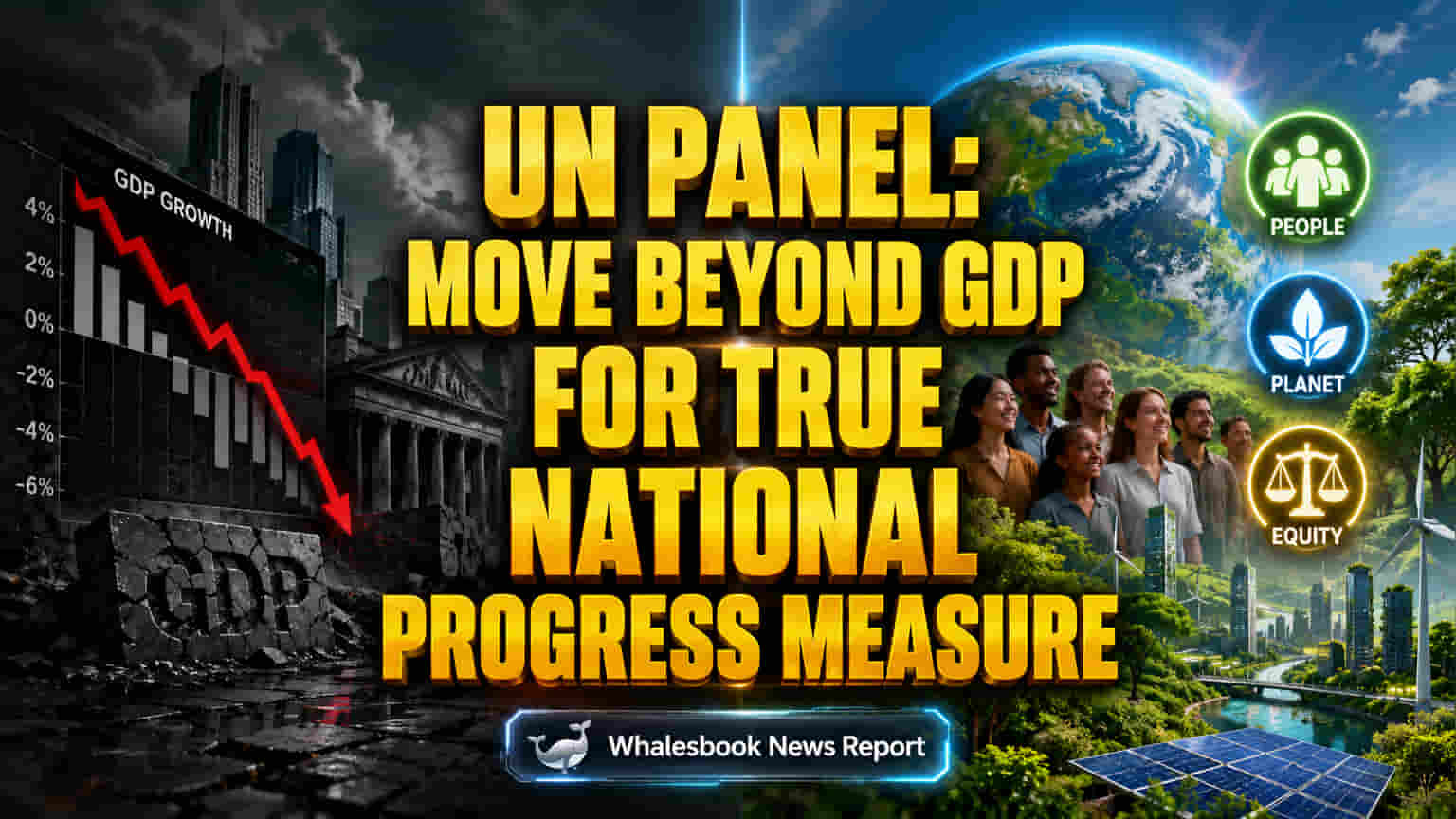


UN Experts Call for New Progress Measures, Beyond GDP
A United Nations expert group has released a report, "Counting What Counts: A Compass of Progress for People and Planet," challenging Gross Domestic Product (GDP) as the main way to measure national progress. The group states that GDP is just an economic activity indicator and doesn't fully show human well-being, societal strength, or environmental sustainability. This comes as people are more aware of ongoing inequality, environmental harm, and falling trust in institutions. The report, requested by UN member states, aims to redefine progress. Its core idea is a new framework for "equitable, inclusive, and sustainable well-being," using 31 indicators across social, economic, institutional, and environmental areas. This broad approach offers a fuller picture of a nation's health, moving past just economic output. The report highlights that GDP growth has often led to wider gaps and environmental damage, issues standard economic reports overlook. While economists like Simon Kuznets warned about GDP's limits years ago, this UN report and UN Secretary-General António Guterres's framing signal new urgency, especially with growing climate crises, fast-changing technology like AI, and deep inequalities. This shift in defining progress is set to change how investors view and measure corporate value.
ESG Investing Grows as Investors Seek Sustainable Performance
The market is showing a clear shift in investor focus towards Environmental, Social, and Governance (ESG) factors, aligning with the "Beyond GDP" ideas. Sustainable investment strategies are growing strongly, driven by performance. In early 2025, sustainable funds beat traditional funds, returning 12.5% on average compared to 9.2% for conventional funds. Since 2018, a $100 investment in a sustainable fund would have grown to $154 by mid-2025, versus $145 in a traditional fund. This performance is boosting demand, with most investors interested in sustainable investing. Surveys from late 2025 showed ESG data is key for assessing risks and allocating capital, whether legally required or not. Companies with strong ESG practices are better at managing risks, building customer loyalty, improving operations, and innovating, leading to higher valuations. The global ESG investing market, valued at $39.08 trillion in 2025, is expected to grow significantly. Companies are now comparing themselves by looking at their environmental impact, how they treat workers, and their governance. These factors are crucial for accessing capital and attracting staff. Despite some recent drops in explicit "sustainability" keyword use in corporate reports (possibly due to "greenhushing" or political pressure), investors still demand key ESG information and risk assessments. The focus is shifting to embedding ESG data into core business strategy, not just reporting it.
Challenges and Risks as the World Moves Beyond GDP
However, moving beyond GDP-focused metrics brings significant risks and challenges. Companies that have prioritized traditional economic growth might struggle to adapt their reporting and strategy. Those that don't could face more scrutiny and lower valuations. Artificial Intelligence (AI) offers productivity gains but also risks like job losses and power concentration, issues GDP doesn't measure well. Relying heavily on AI itself creates operational risks, such as dependence on vendors and potential for biased results if not managed carefully. ESG reporting also faces hurdles. While investors want reliable disclosures, agreeing on common standards is difficult, and some regions are reducing explicit ESG language. This gap between promises and reality can lead to "greenwashing" claims and lost trust. Combining different ESG data into comparable metrics is hard, as different rating methods often show little relation between scores and financial results, further reducing confidence. Setting up new measurement systems costs money and requires strong data infrastructure, which can be tough for smaller companies. Firms may also wrongly focus on easy-to-measure aspects of new metrics instead of what's truly important. Implementing new data collection for non-financial factors can bring risks related to models, vendors, and regulatory changes as rules for this data evolve.
Future Outlook: New Metrics Will Guide Investment and Corporate Value
Corporate valuation and investment strategies are becoming deeply tied to measures that go beyond GDP. Analysts and investors are increasingly including ESG data in their risk assessments and capital decisions, seeing it as vital for long-term value and stability. The UN's "Beyond GDP" report, with its 31 indicators, is expected to drive more use of these broader measures in policy and corporate reporting. Governments are encouraged to create national "progress dashboards" that influence policy and budgets. This trend means companies showing a strong commitment to sustainability, fairness, and environmental care will likely see higher valuations and attract more investment. Companies that fall behind in adopting and reporting on these new progress areas may struggle to raise capital and lose market appeal. Mandatory climate and sustainability disclosures are becoming more common in key regions, requiring greater transparency and detailed records. As markets redefine "progress," adaptability, reliable data, and integrating non-financial factors into strategy will be key to lasting success.