

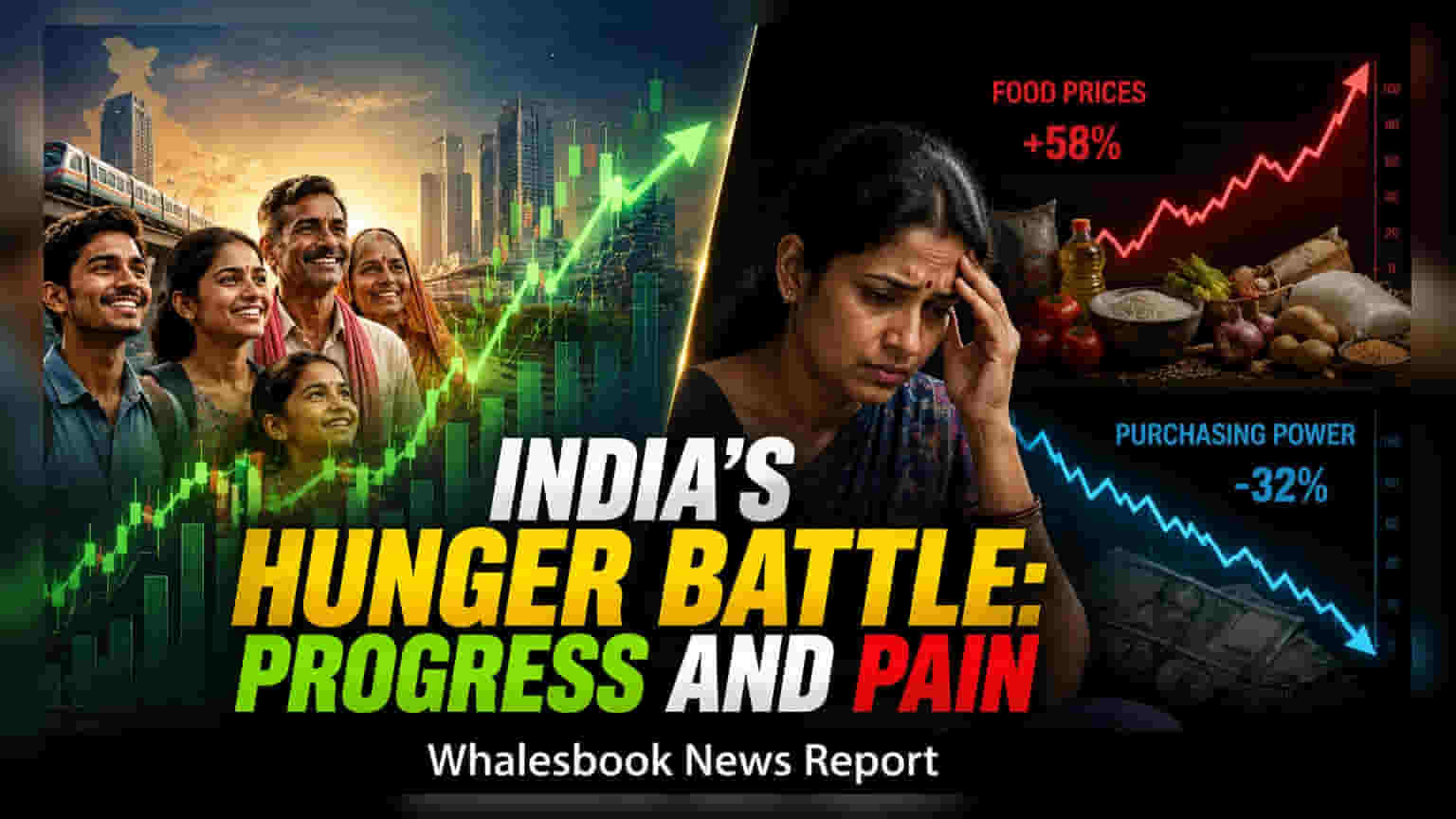
A new UN report shows India cut its undernourished population by over 100 million in two decades. Despite this progress, rising healthy food costs mean 520 million Indians still struggle to afford a nutritious diet.
Detailed Coverage
A landmark report from the United Nations, released on July 21, 2026, highlights a significant shift in India’s food security landscape. According to the Food and Agriculture Organization (FAO) data, the share of undernourished people in India dropped from 21.1% in the 2004-2006 period to 9.8% by 2023-2025. This improvement represents a reduction of approximately 101 million people facing chronic hunger.
Challenges in Healthy Diet Affordability
While calorie intake has improved, the ability to afford a nutritionally adequate diet remains a major economic hurdle. The report, titled 'State of Food Security and Nutrition in the World 2026,' estimates that 520.1 million Indians, or roughly 35.5% of the population, could not afford a healthy diet in 2025. This indicates that while many citizens can access basic calories, a significant portion of the country still faces difficulty in obtaining diverse and healthy food sources.
Rising Food Costs Outpace Income Growth
The report identifies a growing gap between food prices and household income. Since 2017, the cost of a healthy diet in India has increased by nearly 48%. This rate of inflation in food prices significantly outpaces income growth for many lower-income households. By 2025, the daily cost for a healthy, nutritionally balanced diet in India reached $4.11 in purchasing power parity (PPP) terms. When compared to other major economies, this cost structure reflects unique challenges, as the price of healthy food in India is higher than in the United States ($2.86) or the United Kingdom ($2.75) when adjusted for local purchasing power.
Mixed Trends in Health Indicators
The broader health picture shows a complex set of contradictions. Stunting among children under five years old fell to 32.9% in 2024, down from 41.7% in 2012, marking steady improvement in long-term nutrition. However, other metrics show cause for concern. Acute malnutrition, known as wasting, remains high at 18.7%. Simultaneously, the country is facing a double burden of malnutrition, with childhood obesity rising to 3.7% and adult obesity doubling over recent years. Furthermore, anaemia rates among women aged 15-49 have climbed to 53.7%.
Economic Impact and Market Implications
India’s progress is noted as a primary driver behind the global decline in hunger for lower-middle-income countries. However, the inability of over one-third of the population to afford a healthy diet suggests that food inflation will remain a critical monitorable for the economy. As food costs continue to rise relative to real incomes, households may have less disposable income for other goods, impacting broader consumer demand. The government's policy response to food inflation and supply chain management will likely remain a key focus for analysts assessing long-term consumption trends.