 Whalesbook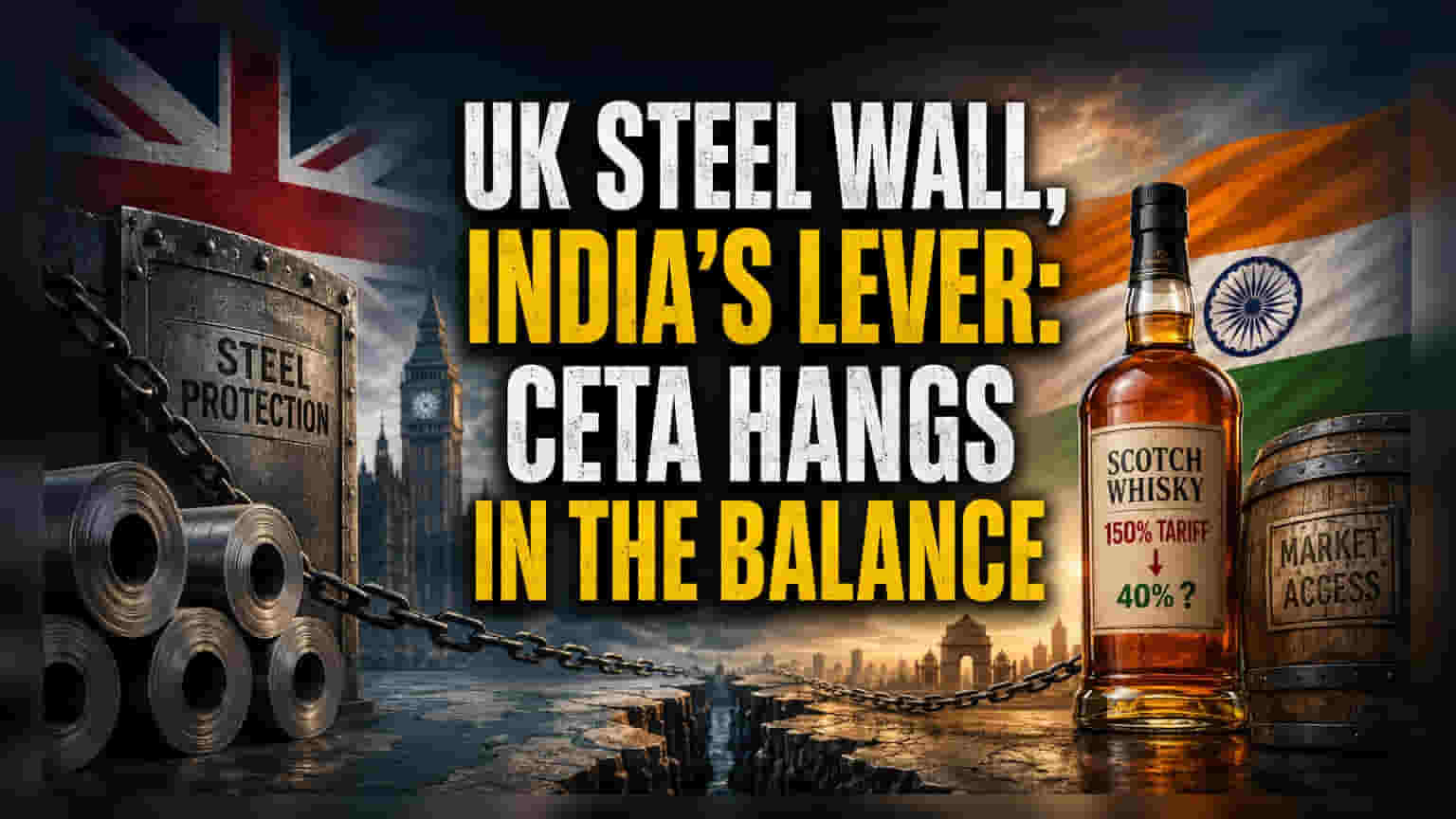


The Strategic Mismatch
The impasse regarding the UK-India Comprehensive Economic and Trade Agreement (CETA) highlights a fundamental misalignment between the United Kingdom's industrial protectionism and its broader geopolitical trade ambitions. While the British government defends the upcoming July implementation of steel import barriers as a necessity to counter global overcapacity, the move serves as a primary point of friction with New Delhi. By erecting these defenses, the UK has inadvertently provided India with leverage to stall or renegotiate access for key British exports, most notably in the high-value spirits sector.
The Whisky Concession Paradox
Central to the economic promise of the CETA is the potential reduction of India’s prohibitive 150% tariff on Scotch whisky to a tiered 40%. This concession is viewed by the Scottish Whisky Association as the most significant growth catalyst for the industry in decades. However, the current diplomatic strain suggests that this reduction is no longer a certainty. Indian negotiators have signaled that the liberalization of their market for foreign spirits is intrinsically linked to reciprocal openness—a condition now compromised by the UK's steel-focused regulatory stance. The economic arithmetic is stark: sacrificing the potential for significant market share growth in the world’s largest whisky market for the sake of localized steel protection could prove to be a long-term strategic miscalculation.
The Institutional Drag
While officials such as Business and Trade Secretary Peter Kyle maintain a narrative of near-term optimism, the internal reality within the House of Lords suggests deeper skepticism. The debate over whether to prioritize the sovereignty of domestic manufacturing over the expansion of export-led services reflects a divided administration. Furthermore, the delay in the trade timeline—shifting from an expected late-spring resolution to an autumn target—demonstrates the difficulty of insulating trade negotiations from the volatility of domestic industrial policy. Investors should note that until the steel dispute is resolved, the £48 billion in projected annual two-way trade remains effectively frozen in bureaucratic limbo.
The Structural Weakness
From a risk perspective, the UK government is navigating a narrow corridor where the loss of a flagship trade agreement could undermine market confidence in post-adjustment economic growth. The primary concern remains the lack of clear contingency planning; should India choose to walk away or indefinitely delay the whisky tariff phase-outs, the UK lacks an immediate alternative to compensate for the lost market access. For companies heavily exposed to the export of high-end consumer goods, this trade uncertainty introduces a measurable risk premium that is currently being underestimated by the markets. The failure to secure the CETA on the originally proposed timeline confirms that trade policy remains subservient to domestic political pressures, creating a persistent drag on the sector’s valuation potential.