

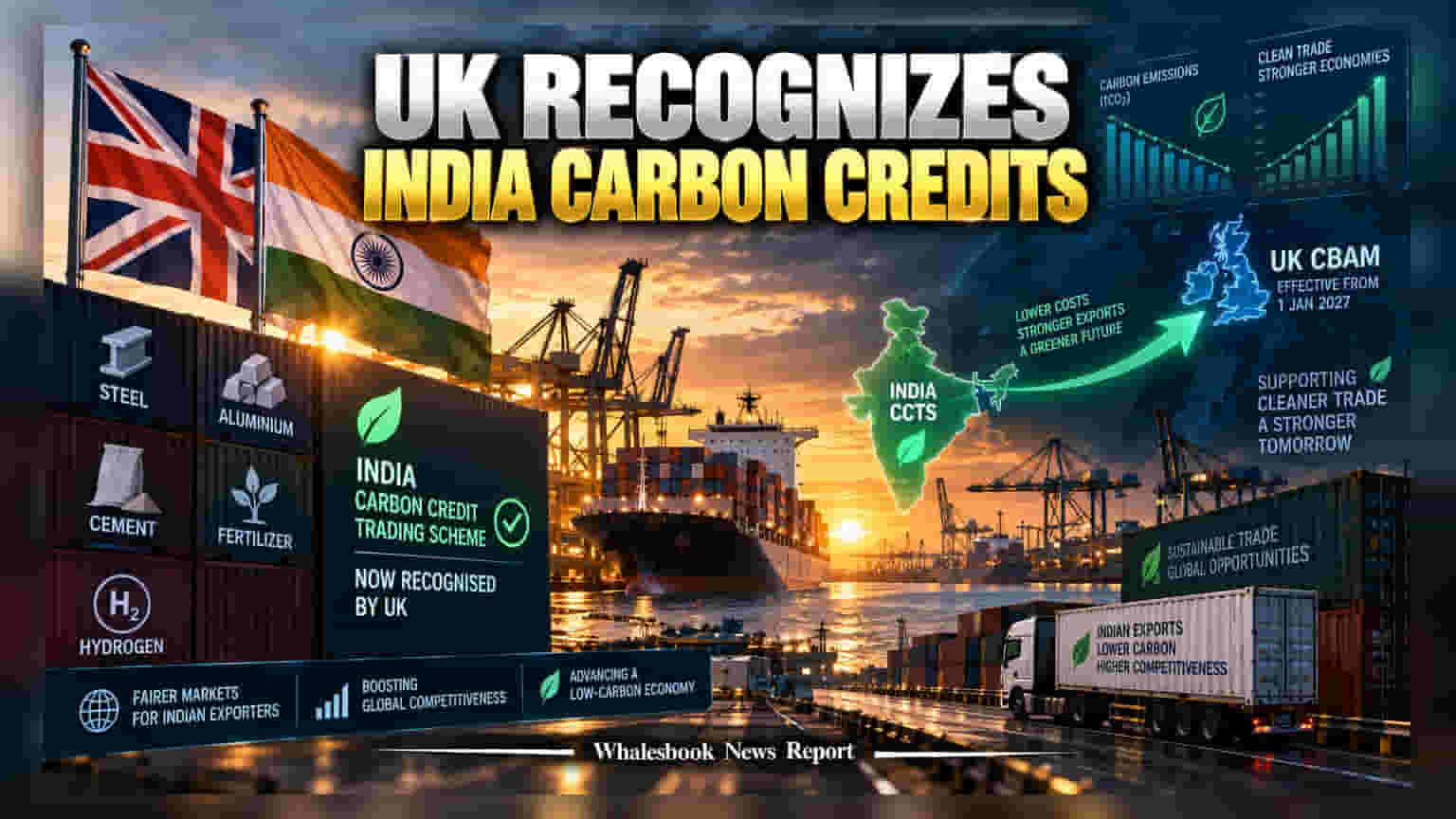
The UK will recognize India's Carbon Credit Trading Scheme starting January 2027, protecting Indian exporters of steel, cement, and other goods from double taxation under its carbon border tax. This decision helps maintain export competitiveness by allowing firms to claim relief for carbon costs paid within India. Additionally, trade negotiations with the US, Chile, and New Zealand are advancing.
The United Kingdom has officially decided to recognize India’s Carbon Credit Trading Scheme (CCTS) as a valid carbon-pricing mechanism. This move is significant for Indian exporters in high-emission sectors, as it allows them to claim relief against the UK’s upcoming Carbon Border Adjustment Mechanism (CBAM), which takes effect on January 1, 2027.
For many years, Indian companies operating in carbon-intensive industries—such as steel, aluminium, cement, fertilizer, and hydrogen production—have faced uncertainty regarding how global trade partners would view their domestic environmental compliance. Without this recognition, Indian exporters faced the risk of double taxation: paying for emissions via the Indian scheme at home and then paying a carbon border tax upon entry into the UK market. By aligning the two systems, the UK is effectively helping Indian manufacturers remain price-competitive in the European market.
Commerce Secretary Rajesh Agrawal confirmed this development on September 9, 2026, during the Global Fintech Fest in Mumbai. He noted that the decision reflects the government's push to protect Indian industry from sudden regulatory shocks as global trade pivots toward stricter sustainability requirements. This recognition does not mean companies get a free pass; rather, it ensures that businesses fully compliant with India’s domestic carbon rules are not unfairly penalized by foreign import levies.
Beyond this specific carbon policy, the Secretary provided updates on broader international trade negotiations. The long-anticipated trade agreement between India and the US is reported to be in the final stages of development, with both nations currently refining the framework for preferential market access. Navigating the differences between India’s tariff structure and the US approach remains a core focus of these discussions.
Trade ties with other nations are also tightening. Negotiations with Chile are reaching their conclusion, expanding India’s potential for trade in South America. Furthermore, the Free Trade Agreement with New Zealand is on track for implementation in October 2026. These developments suggest a concerted effort by Indian policymakers to diversify export destinations and secure regulatory recognition for Indian standards in major global markets.
For investors in capital-intensive sectors like steel and cement, the key monitorable remains how these companies manage their transition to green energy and compliance with the CCTS. While the UK’s decision removes a major cost headwind, the requirement to maintain strict, verifiable emissions reporting remains. Companies that successfully integrate these systems early may be better positioned to maintain their profit margins as global carbon border taxes become standard across other developed economies.