

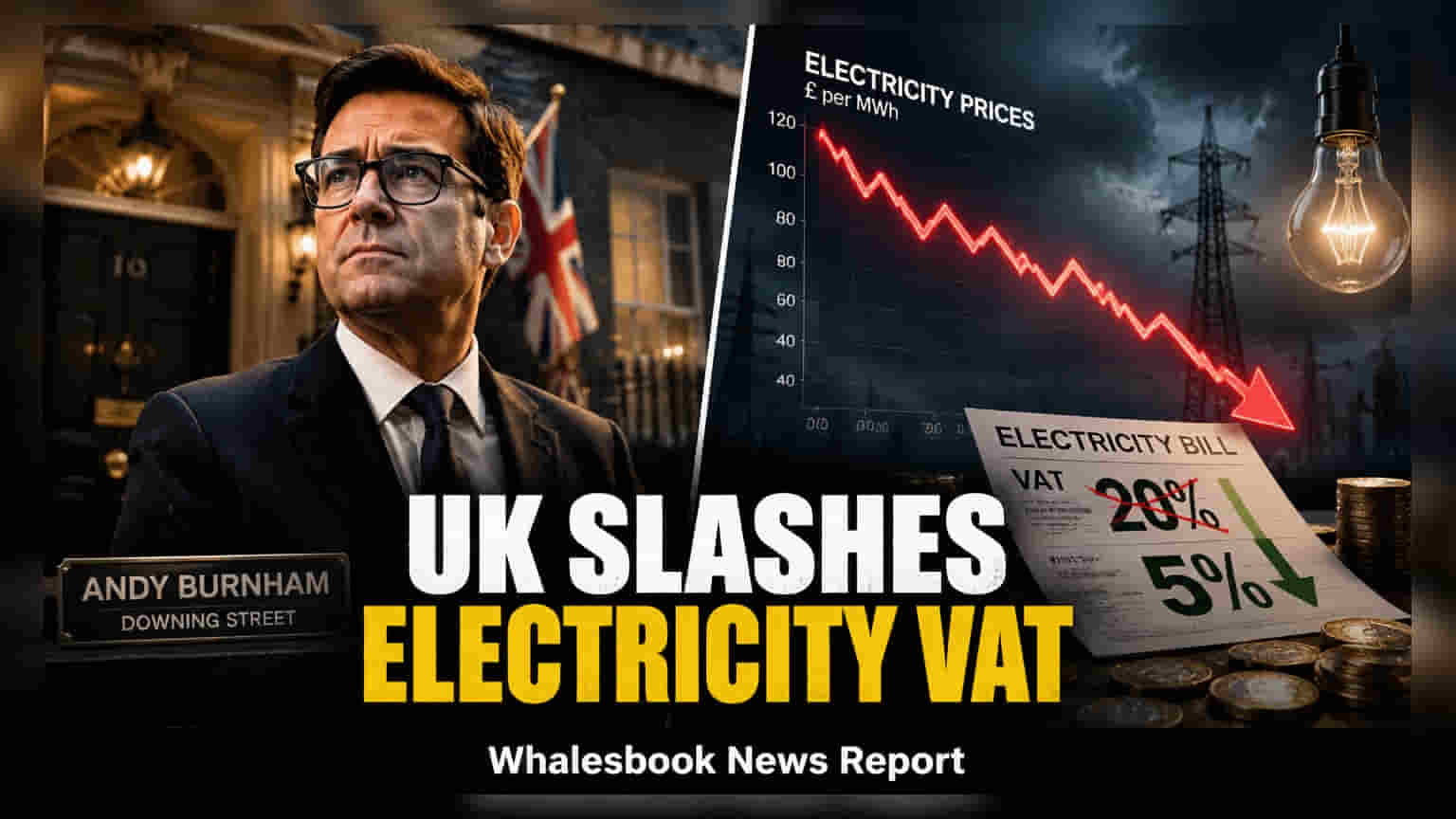
Prime Minister Andy Burnham has announced a reduction in VAT on domestic electricity bills effective October 1 to lower living costs. The government plans to fund this tax cut by cancelling the proposed Digital ID program. Analysts are questioning the long-term financial viability of this funding method as the administration prepares its next fiscal statement.
Detailed Coverage
In his first major economic policy move, UK Prime Minister Andy Burnham has announced the removal of Value Added Tax (VAT) from domestic electricity bills. Scheduled to begin on October 1, the policy is designed to provide direct financial relief to households currently struggling with high energy costs. The administration aims to increase the amount of money consumers have available to spend by lowering their monthly utility expenses.
The government intends to pass these savings to the public by requiring all energy suppliers to adjust their billing systems to reflect the removal of the tax. The policy is a central part of Burnham’s pledge to prioritize cost-of-living relief, signaling a shift in fiscal focus as the new government attempts to stabilize household budgets against the backdrop of recent energy market volatility.
Financial experts and former officials have raised questions regarding how the government plans to pay for this relief. Chancellor John Healey stated that the tax cut would be fully funded by cancelling the government's previous plan to implement a Digital ID program. However, this approach has faced immediate pushback. Darren Jones, a former Treasury official, publicly disputed the claim that the Digital ID project would generate sufficient funds, suggesting that the initiative was never fully financed. This discrepancy has led to concerns that the government may need to identify alternative funding sources or adjust other budget plans to balance its finances.
The debate over the funding mechanism highlights the difficult economic choices facing the new administration. With the government expected to present a formal fiscal statement in the coming months, investors and policy watchers are monitoring whether this tax cut will lead to further adjustments in government spending or changes in national debt projections. The effectiveness of the policy will depend on whether energy suppliers fully implement the price reductions and whether the government can clarify its broader strategy for managing public finances without relying on funds from scrapped projects. The next key update will be the upcoming fiscal statement, which is expected to provide more transparency on how these tax changes fit into the country's long-term budget.