

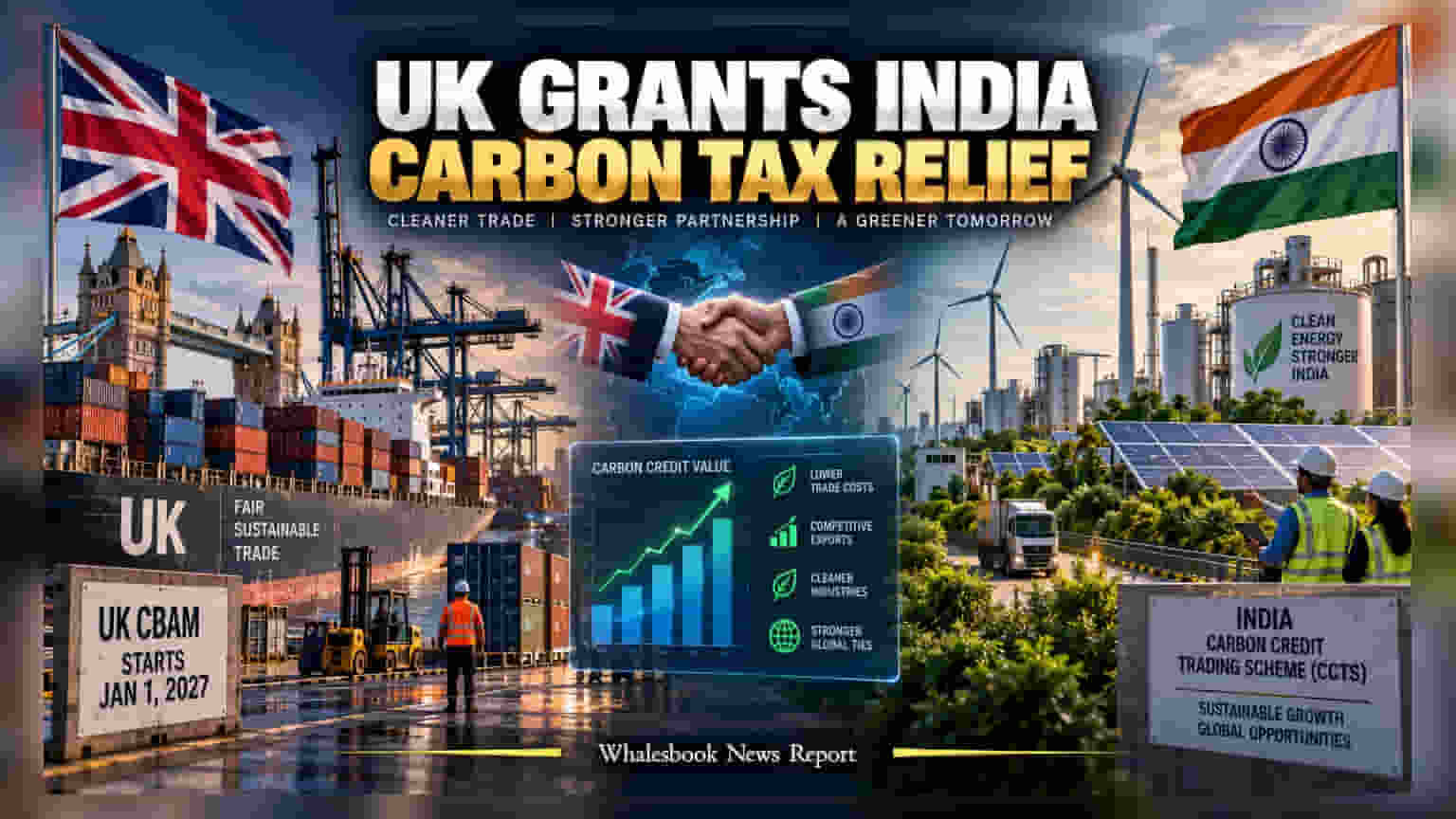
The UK Treasury has recognized India’s carbon credit trading scheme, allowing Indian exporters to avoid double taxation under the upcoming Carbon Border Adjustment Mechanism (CBAM). This policy helps companies in carbon-intensive sectors like steel and aluminum maintain price competitiveness in the UK market before regulations begin in January 2027.
The United Kingdom has officially recognized India’s domestic Carbon Credit Trading Scheme (CCTS), providing a strategic relief to Indian exporters. By acknowledging that Indian manufacturers already operate under a carbon pricing framework, the UK will allow businesses to claim relief on carbon levies under its upcoming Carbon Border Adjustment Mechanism (CBAM), which is scheduled to commence on January 1, 2027.
Impact on Carbon-Intensive Industries
This development is particularly relevant for Indian companies in energy-intensive sectors, including steel, aluminum, cement, fertilizer, and hydrogen. Previously, these exporters faced the risk of 'double taxation'—paying for carbon emission compliance within India and then facing an additional levy upon entry into the UK. By avoiding these redundant costs, Indian manufacturers can maintain more competitive pricing, which is crucial for preserving profit margins and market share in the British market.
The Need for Careful Compliance
While the relief is a positive step, it is not automatic. The UK Treasury requires exporters to prove the effective carbon price already paid under India’s domestic regulations on a case-by-case basis. This places an administrative burden on companies, which must maintain rigorous documentation to verify their domestic carbon costs. Because relief is granted only after verification, there is a risk of potential delays or administrative friction for exporters who do not have clear records of their carbon pricing compliance.
Leverage for EU Trade Negotiations
Beyond the immediate impact on UK trade, this agreement serves as a vital template for India’s ongoing negotiations with the European Union. With an EU trade deal expected to move toward finalization next year, the Indian government is using this recognition by London to argue that Indian climate policies are transparent and equivalent to global standards. If the EU adopts a similar recognition framework, it would provide significant relief for Indian exporters across a much larger trading bloc.
Monitoring Future Developments
Investors and business observers should monitor how companies in the steel and aluminum sectors adapt their compliance departments to handle these verification requirements. The next important step will be the formalization of the indicative list of qualifying goods by the UK Treasury. While the UK decision is a diplomatic win, there remains no guarantee that the European Union will immediately mirror the UK’s approach, making the outcome of upcoming EU trade talks a key monitorable for the long-term outlook of India's export-oriented manufacturing sector.