

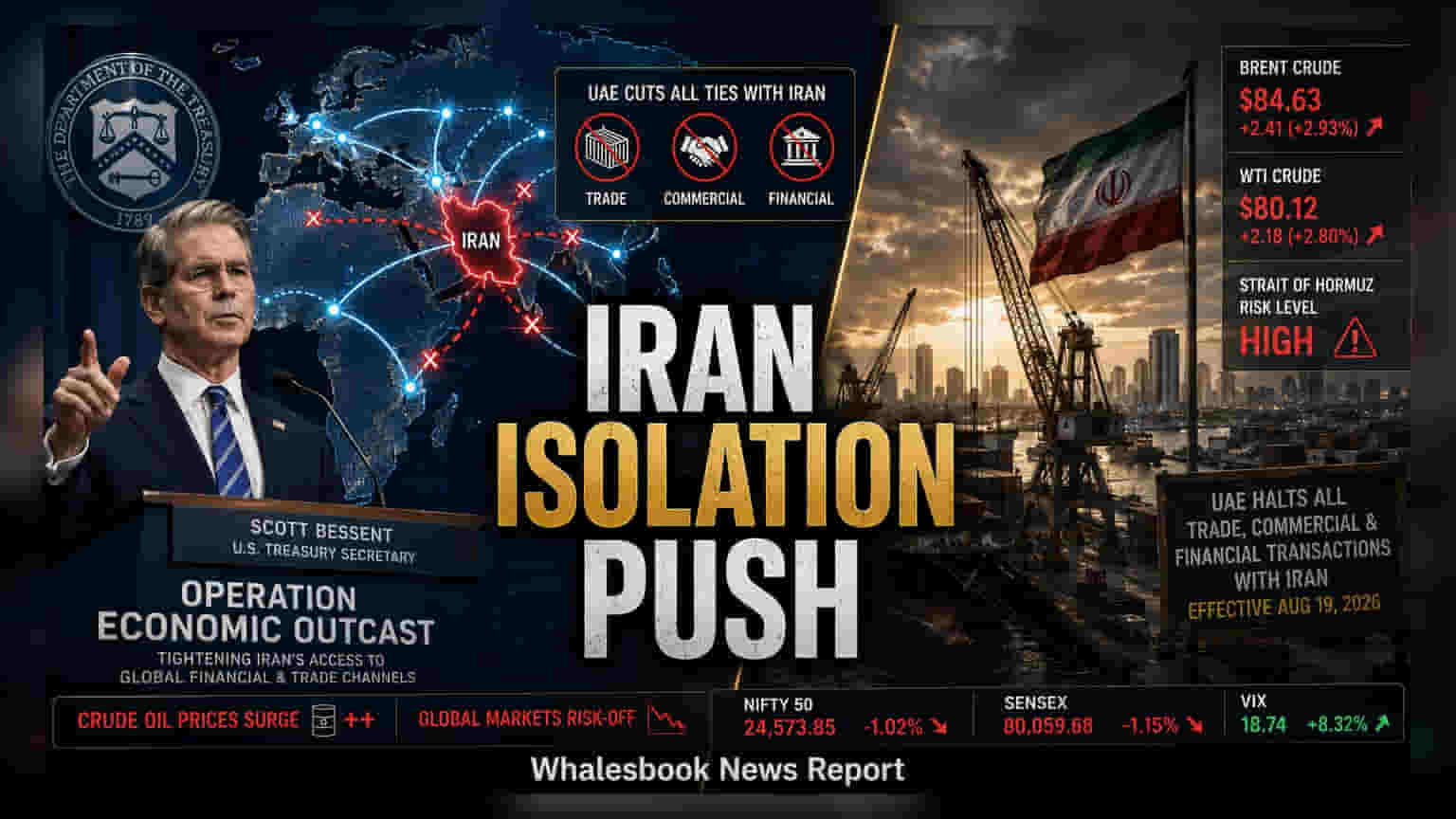
The United Arab Emirates has officially suspended all trade and financial ties with Iran following regional security tensions. This move coincides with the US-led ‘Operation Economic Outcast,’ a new campaign to tighten global economic sanctions on Tehran. For investors, the situation increases the risk of supply chain disruptions and volatility in global oil markets, which remain sensitive to developments near the Strait of Hormuz.
The geopolitical situation in the Middle East has entered a more volatile phase following the United Arab Emirates’ decision to sever economic ties with Iran. On August 19, 2026, the UAE officially suspended all trade, commercial, and financial transactions with Tehran, citing regional security concerns and allegations of ballistic missile attacks near Emirati waters. This development is running parallel to a broader US-led initiative, 'Operation Economic Outcast,' announced by Treasury Secretary Scott Bessent on August 24, 2026. The US campaign is designed to tighten the economic isolation of Iran by more aggressively curbing its access to global financial and trade channels.
The Impact of the UAE Trade Halt
For years, the UAE functioned as a vital logistical hub and a primary re-export center for Iranian goods, allowing them to reach global markets while often bypassing direct scrutiny. The sudden closure of this gateway forces Iranian firms to find alternative, likely less efficient, routes for imports and exports. Economists anticipate this will heighten inflationary pressures within Iran and further destabilize its local currency. For global companies that utilized UAE-based logistics and re-export networks for regional operations, this disruption complicates supply chains and effectively increases the cost of doing business in the region.
Energy and Market Risks
The most significant concern for global markets, including India, is the security of the Strait of Hormuz. A vast portion of the world's daily oil supply transits through this narrow chokepoint. With the US intensifying its pressure campaign and regional tensions escalating, the risk of maritime disruption has risen. Energy markets are highly sensitive to these developments; any sign of blocked tanker traffic or conflict would likely cause a spike in crude oil prices. As India is a major importer of crude oil, sustained volatility in energy prices could weigh on the rupee and impact the import bill, potentially affecting margins across sectors ranging from aviation to manufacturing.
Global Sanctions and Investor Sentiment
The US Treasury’s 'Operation Economic Outcast' is increasingly targeting third-country entities that facilitate trade with Tehran. This places pressure on major economies, particularly China, which remains the primary buyer of Iranian oil. Washington has signaled that nations acting as economic lifelines for Iran may face the risk of secondary sanctions. This adds a layer of uncertainty for global investors, who are already reacting to the current 'risk-off' sentiment. As companies navigate these shifting geopolitical alliances, investors may see continued volatility, particularly in sectors that are sensitive to global shipping and energy costs.
Investors should monitor the stability of the Strait of Hormuz, as any tangible disruption to tanker traffic will likely impact oil futures immediately. Furthermore, market participants will watch for any shifts in regional trade policies among neighboring countries that may feel the pressure to choose between US-led economic systems and traditional ties to Tehran. The broader effect on technology and semiconductor stocks, which have shown increased sensitivity to global risk, also remains a key area to track.