 Whalesbook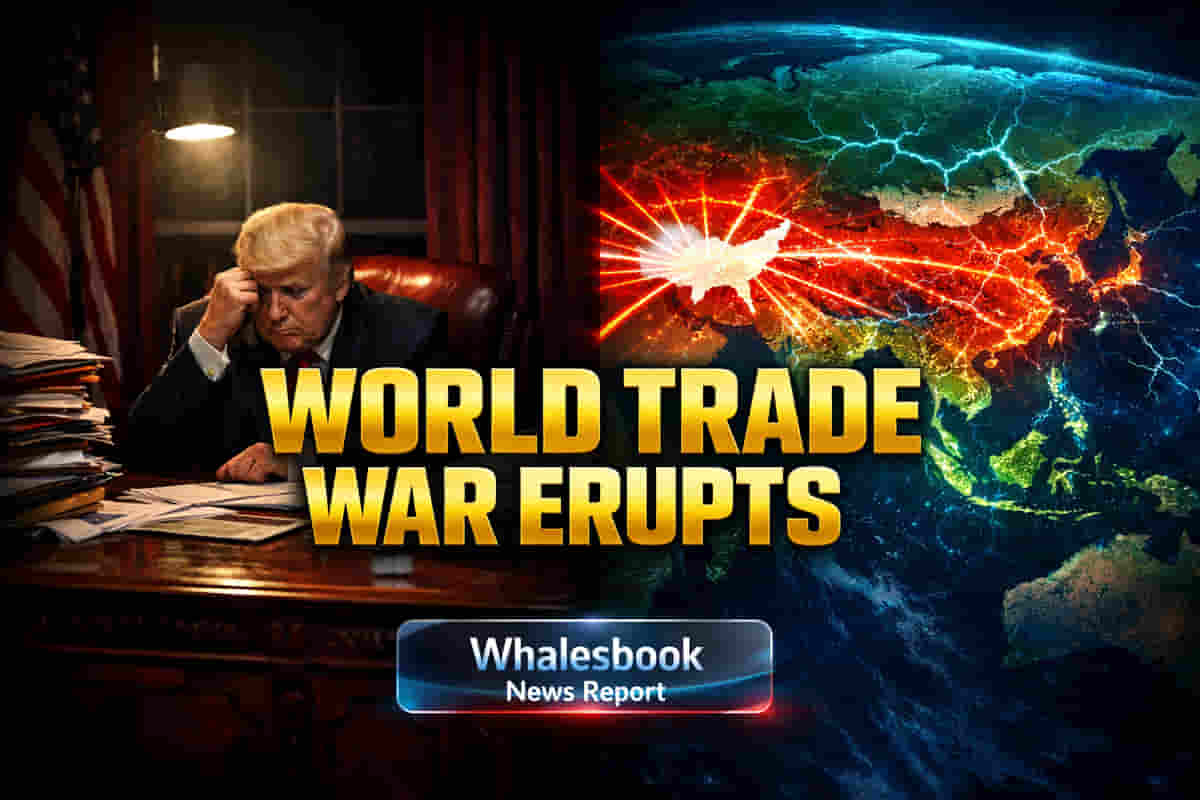
Trump's 'America First' Trade Policy Triggers Global Economic Upheaval
The year 2025 is being marked as a period of profound change in global trade, largely driven by the assertive 'America First' trade policy adopted by United States President Donald Trump upon commencing his second term. This policy, aimed at prioritizing American economic interests above all else, has reshaped geopolitical alliances and fundamentally altered the landscape of international commerce.
The Core Issue: Protectionism and Tariffs
The cornerstone of Trump's 'America First' strategy was the aggressive use of tariffs. Described by Trump as "the most beautiful word in the dictionary," reciprocal tariffs were announced in April on 57 countries. While their immediate imposition was deferred, the underlying threat and subsequent application significantly increased the cost of doing business globally. This policy was explicitly designed to "Make America Great Again by putting America First," leveraging federal government authority to ensure enduring economic, technological, and military dominance for the United States.
Financial Implications and Global Value Chains
The escalating costs and persistent policy uncertainties stemming from 'Trump tariffs' had an immediate adverse effect on major economies. More profoundly, this policy challenged the very structure of global value chains (GVCs), the intricate networks that have underpinned global production and trade for the past three decades. While previous administrations had experimented with 'friendshoring' to create America-centric GVCs, Trump's protectionist wall aimed to facilitate a direct reshoring of manufacturing back to the US, signaling a distinctly inward-looking approach.
Market Reaction and WTO Crisis
Trump's unilateral approach dealt a severe blow to the multilateral trading system. For eight decades, global trade rules were collaboratively established through the General Agreement on Tariffs and Trade (GATT) and later the World Trade Organization (WTO). Trump's policies, which began dismantling the WTO during his first term, accelerated its existential crisis. Despite announcing tariffs on 57 nations, deals were only successfully closed with 17 countries. Notably, attempts to extract concessions from China and India proved unsuccessful, with China threatening retaliatory tariffs and India resisting levies on its exports.
Unexpected Geopolitical Shifts
Perhaps the most unforeseen consequence of Trump's disruptive trade policy was the rapprochement between India and China. The inability to secure concessions from these major Asian economies spurred a symbolic meeting between the Indian Prime Minister and the Chinese President in Tianjin at the end of August. This signaled a willingness to improve bilateral relations after years of strained ties. By the close of 2025, the resumption of direct flights and improved visa facilities between the two neighbors indicated a normalization of relations.
India-China Trade Dynamics
The normalization significantly impacted trade relations, particularly addressing India's declining exports to China, which had fallen to just over $14 billion in 2024-25. Following the diplomatic thaw, China committed to increasing imports from India. Data showed India's exports to China surging by over 90% in November and over 33% in the first eight months of the fiscal year, reversing a steep decline.
Reduced Dependence on the US Market
Both China and India began reducing their exposure to the US market due to Trump's policies. China's export share to the US dropped from nearly 22% in 2017 to 10% by November 2025. India similarly decreased its dependence from a high of nearly 23% in June to 20% in November. India also actively sought to expand its export destinations, concluding numerous Free Trade Agreements (FTAs) in 2025 and engaging with the Eurasian Economic Union, suggesting a move towards "strategic autonomy."
Impact
This news has significant implications for the global economy, particularly for countries heavily reliant on international trade. For India, it highlights a shift towards diversified trade partnerships and potentially reduced dependence on Western markets. The geopolitical realignment, with India and China finding common ground amidst US protectionism, could reshape regional dynamics. The weakening of the WTO also poses long-term challenges to global trade governance. Impact rating: 8/10.
Difficult Terms Explained
- Tariff: A tax imposed on imported or exported goods, often used as a tool to protect domestic industries or generate revenue.
- Global Value Chains (GVCs): The entire span of activities (design, production, marketing, distribution, etc.) required to bring a product or service from conception to consumption, often involving multiple countries.
- World Trade Organization (WTO): An international organization that regulates and facilitates international trade between nations.
- Reshore Manufacturing: The practice of bringing manufacturing operations back to a company's home country after they had been moved overseas.
- Friendshoring: Shifting supply chains to friendly or allied countries to reduce reliance on geopolitical rivals.
- Strategic Autonomy: A nation's ability to pursue its own foreign policy and security interests independently, without undue influence from other major powers.