

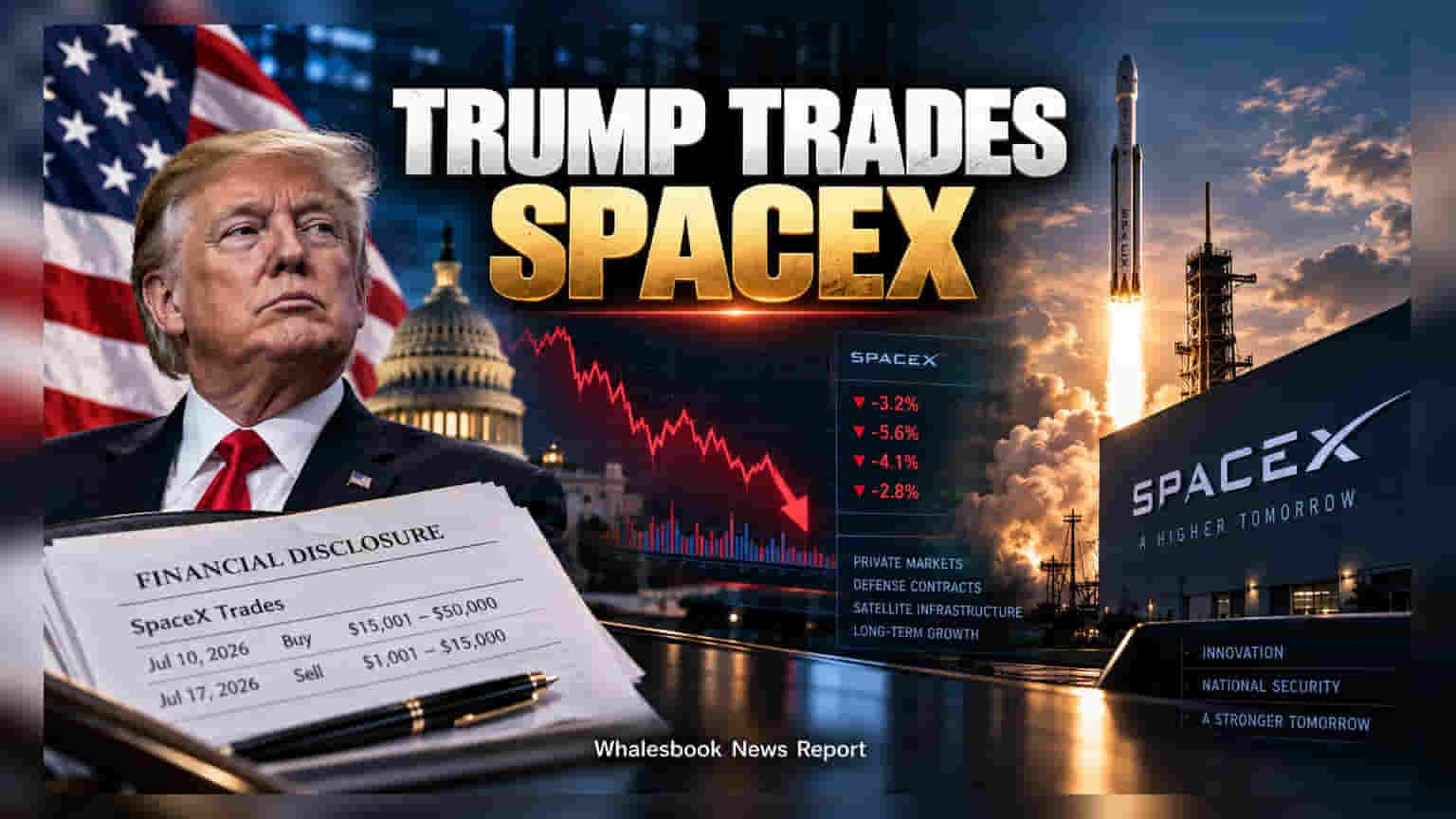
US President Donald Trump recorded small-scale purchases and sales of SpaceX shares in July through a third-party managed investment account. These trades occurred while the firm continued its major work as a US defense contractor. Because SpaceX is a private company, retail investors cannot trade these shares on public exchanges.
Recent financial disclosures have revealed that US President Donald Trump executed a series of trades involving SpaceX shares throughout July. Public records indicate that the president acquired SpaceX shares valued between $15,001 and $50,000 on July 10, and subsequently sold a portion of that holding, valued between $1,001 and $15,000, on July 17. These transactions were part of a high volume of portfolio activity recorded during the month.
The Role of Managed Portfolios
For investors, it is important to understand how public officials often manage their wealth to avoid direct conflicts of interest. The president’s financial assets are managed by third-party institutions. These managers typically operate using automated strategies that aim to mirror broad market indices rather than picking individual stocks based on specific policy or business knowledge. This structure is intended to distance the officeholder from daily trading decisions and mitigate concerns regarding insider information or conflicts of interest that could arise from federal policy decisions impacting major contractors.
SpaceX as a Private Company
SpaceX remains one of the largest aerospace and satellite companies in the world, serving as a critical contractor for US defense and federal agencies. However, the company is not listed on public stock exchanges. This means that unlike companies such as Boeing or Lockheed Martin, individual retail investors cannot purchase or sell shares of SpaceX on the open market. The president's exposure to the company is held through private placement or specialized investment vehicles managed by these third-party firms.
Why the Market Tracks These Disclosures
While these specific trades represent a small fraction of the total portfolio, they draw attention because SpaceX works closely with the US government on strategic partnerships and operational approvals. Any intersection between the executive branch and a major government contractor is scrutinized by regulators and the public to ensure transparency. Financial disclosure laws require officials to report assets in broad ranges, which provides a level of oversight but does not always show the exact profit or loss on specific trades.
Moving forward, the primary monitorable for investors will be how the administration continues to manage potential conflicts of interest regarding federal procurement and policy decisions. As SpaceX continues its role in defense operations, the focus remains on the independence of the third-party managers handling these portfolios to ensure that asset allocation remains purely administrative rather than influenced by political or strategic policy shifts.