

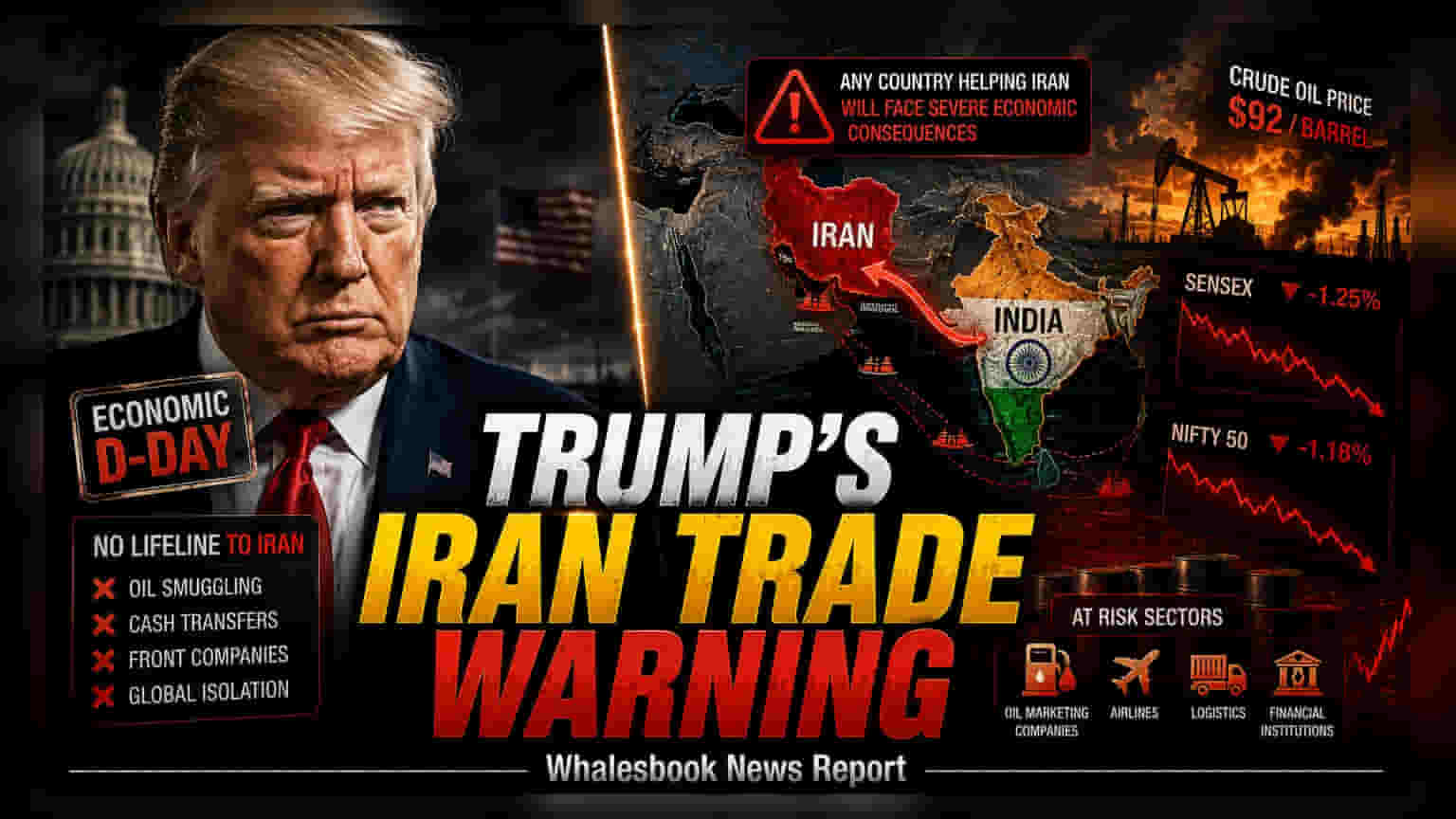
U.S. President Donald Trump has announced severe new economic measures against Iran, warning countries of 'tremendous consequences' for facilitating trade. While India's direct trade with Iran is limited, the geopolitical tension threatens to inflate crude oil prices and disrupt global shipping. Investors may monitor energy and logistics sectors amid rising market volatility.
U.S. President Donald Trump has escalated economic pressure on Iran, declaring a new phase of economic warfare that he described as an "Economic D-Day." The announcement includes a stern warning that any nation, including its financial institutions and government entities, that provides any form of "lifeline" to Iran will face severe economic consequences. The targeted activities include oil smuggling, cash transfers, and the use of front companies, which the U.S. aims to isolate completely from the global financial system.
For Indian markets, the primary investor concern is not necessarily the direct bilateral trade, but the broader geopolitical impact on the global energy market. While India’s direct trade with Iran has declined—falling to approximately $1.68 billion in 2024-25—the conflict adds pressure to global crude oil prices, which have recently climbed toward $92 per barrel. Indian stock indices, including the Sensex and Nifty, have already shown a cautious bias and increased volatility in response to this geopolitical uncertainty.
Indian businesses involved in trade with Iran, particularly in sectors like agriculture (tea, sugar, basmati rice) and pharmaceuticals, may face heightened operational challenges. The risk extends beyond trade volumes to the mechanics of business. Enhanced U.S. sanctions could complicate payment processing, insurance coverage, and shipping logistics, especially if tensions escalate in or near the Strait of Hormuz. For companies in these sectors, the ability to secure alternative markets or navigate complex compliance requirements will be a key factor in protecting profit margins.
Beyond direct trade, energy-intensive sectors face the most significant indirect risk. Rising crude oil prices often increase costs for oil marketing companies (OMCs), airlines, and logistics firms, which can place pressure on operating margins. If crude prices remain elevated due to the threat of a wider conflict, the impact could filter through to broader inflation and the country's current account deficit. Financial institutions may also need to increase monitoring of their exposure to entities that could be caught in the expanded scope of U.S. sanctions.
While India's recent merchandise export performance has been strong, with records in sectors like manufacturing, the uncertainty surrounding Iran remains a variable that the market is currently pricing in. Investors will likely track the trajectory of crude oil prices, any specific regulatory guidance from the Indian government regarding trade compliance, and management commentary from companies with high exposure to the Middle East for further clarity on potential disruptions.