

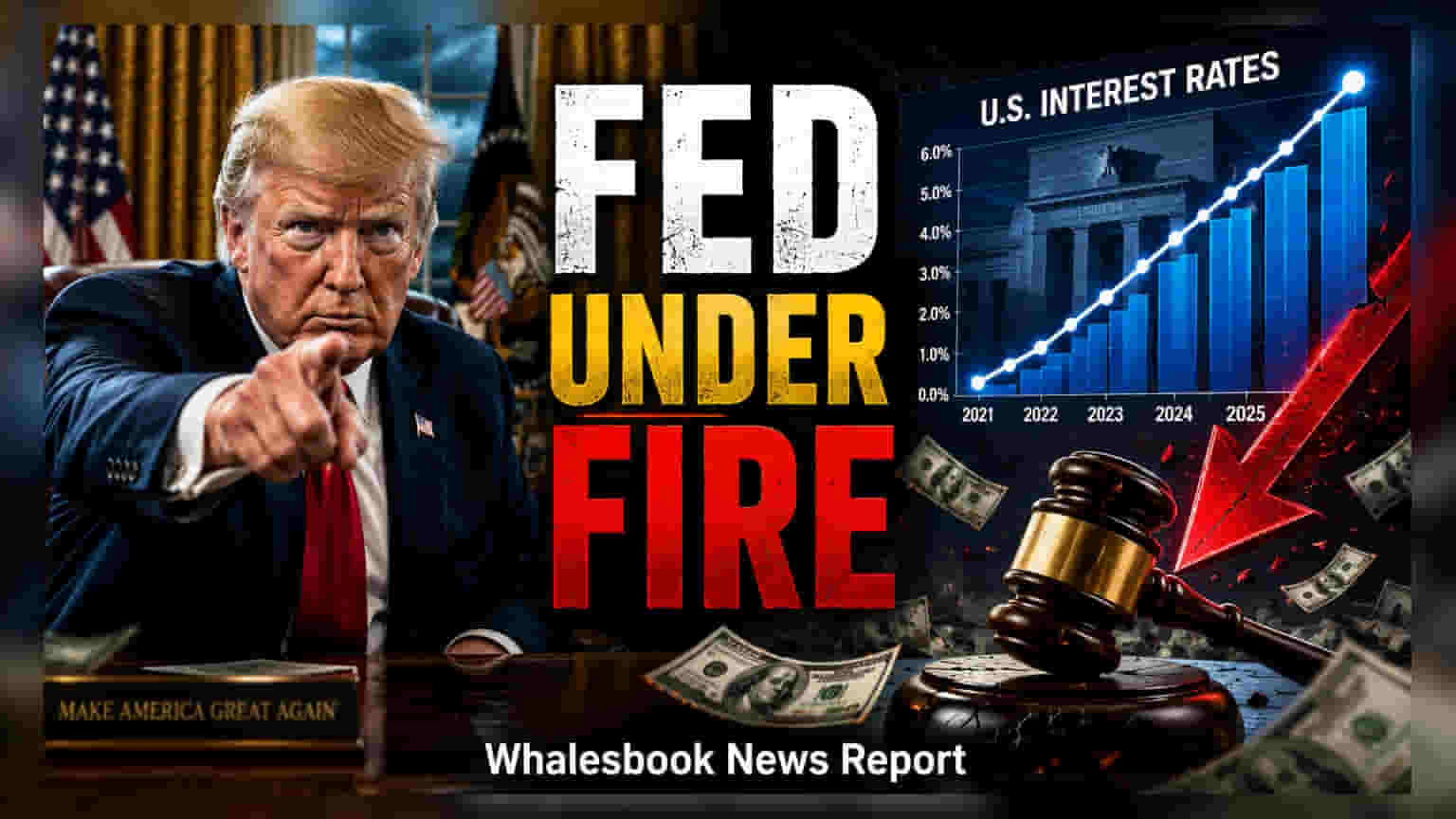
President Donald Trump has revived efforts to remove Federal Reserve Governor Lisa Cook, citing unproven mortgage fraud allegations. This political move comes as the Federal Open Market Committee (FOMC) approaches its September 15-16 meeting, with markets currently pricing in a 75% probability of an interest rate hike to combat persistent inflation.
President Donald Trump has intensified political pressure on the United States Federal Reserve, specifically targeting Governor Lisa Cook with allegations of mortgage fraud. This move reflects growing anxiety within the administration regarding the potential for an interest rate hike at the upcoming Federal Open Market Committee (FOMC) meeting scheduled for September 15-16, 2026.
At the July 2026 meeting, the central bank held interest rates steady at the 3.5%–3.75% range. However, persistent inflation and elevated core price increases remain a primary concern for policymakers. Current market data indicates a 75% probability of a quarter-point rate increase before the upcoming November midterms. Analysts suggest the political targeting of Governor Cook is an attempt to influence the committee's voting bloc, as the White House fears that Fed Chair Kevin Warsh, who assumed office in May 2026, may not be able to prevent a majority of governors from voting in favor of a hike.
The timing of these allegations is significant. In June 2026, the Supreme Court ruled that Federal Reserve governors could only be removed 'for cause,' a decision that limits the President's ability to dismiss officials. While the allegations against Governor Cook are being contested, the ongoing political friction introduces uncertainty regarding the independence of the central bank. Investors and economists are closely watching these developments because any interference with Fed personnel could disrupt the committee's consensus on monetary policy.
For investors, the primary concern lies in how this political maneuvering affects the credibility of the Federal Reserve’s inflation-fighting strategy. If the market perceives that the Fed is susceptible to political pressure to keep rates lower than necessary, it could lead to higher long-term inflation risk premiums in the bond markets. This could cause bond yields to rise, affecting borrowing costs globally.
Chair Kevin Warsh is currently navigating a committee where the stance on interest rates is becoming increasingly split. The potential for a shift in voting—where previously neutral governors might lean toward hiking rates—could fundamentally change the economic path for the second half of the year. Investors will continue to monitor the upcoming FOMC meeting, specifically the Summary of Economic Projections, to gauge whether the central bank remains committed to its inflation targets despite the surrounding political noise.