

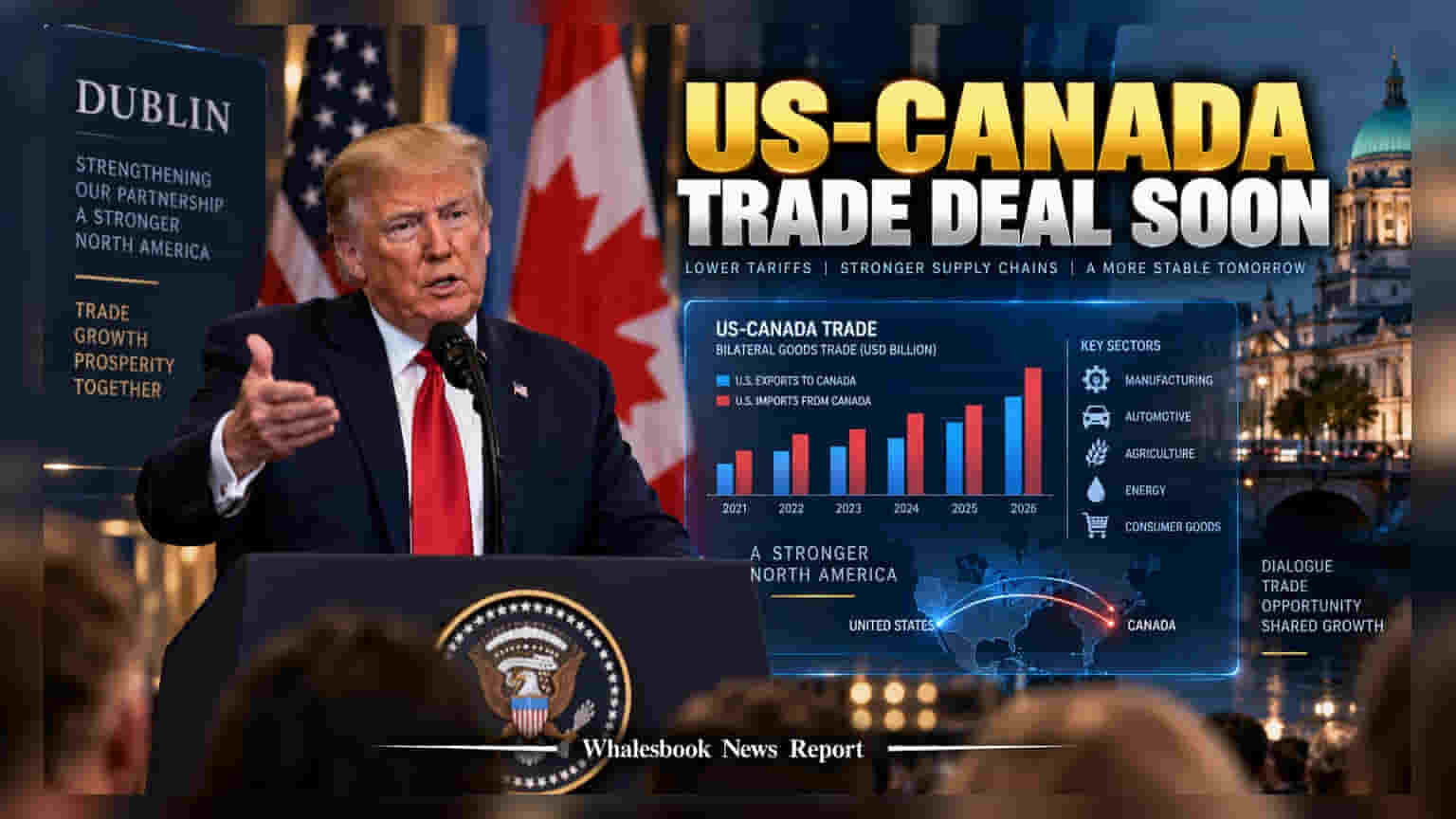
President Donald Trump has indicated that a trade agreement with Canada could be finalized soon, following recent tariff escalations. While this signals a potential thaw in tensions, investors remain cautious as a U.S. import ban on certain Canadian goods is still scheduled for late September. The situation creates ongoing uncertainty for industries relying on cross-border trade.
President Donald Trump announced on September 12, 2026, that a trade agreement between the United States and Canada could be reached in the near future. The statement followed diplomatic discussions where the president noted that Canadian leadership is interested in securing favorable terms. This update comes during a period of significant volatility in North American trade, characterized by a rapid escalation of tariffs between the two nations.
The current atmosphere of trade friction intensified throughout August 2026, when the United States implemented 50% tariffs on a range of Canadian imports. Canada responded to these measures on September 8, 2026, by imposing retaliatory tariffs on approximately C$27.6 billion worth of U.S. goods. These reciprocal actions have strained trade relations and created concern regarding the stability of supply chains for cross-border industries, including manufacturing and agriculture.
While the prospect of a new deal offers a potential path to de-escalation, the immediate regulatory environment remains challenging. A critical point for market participants is the scheduled U.S. import ban on specific Canadian commodities, such as dairy products, alcohol, and motorcycles, which is set to take effect on September 29, 2026. The uncertainty surrounding whether this ban will proceed or be cancelled as part of a new agreement remains a significant factor for businesses and exporters.
Economic analysts point out that while the macroeconomic impact of these tariffs on the broader Canadian economy may be contained, specific export-oriented sectors are facing direct pressure. There is also the risk of inflationary consequences resulting from the retaliatory tariffs, which could affect prices for consumers in both nations. Additionally, the broader geopolitical tension has led to localized boycotts of U.S. products within Canada, further complicating the commercial environment.
For investors, the primary monitorable in the coming weeks will be the progress of high-level negotiations and any official confirmation of a deal before the September 29 deadline. The market will also be looking for signals regarding whether current tariffs will be rolled back, which would likely provide relief to industries heavily exposed to cross-border logistics. Until a formal agreement is signed and the timeline for import bans is clarified, trade volatility is expected to persist.