

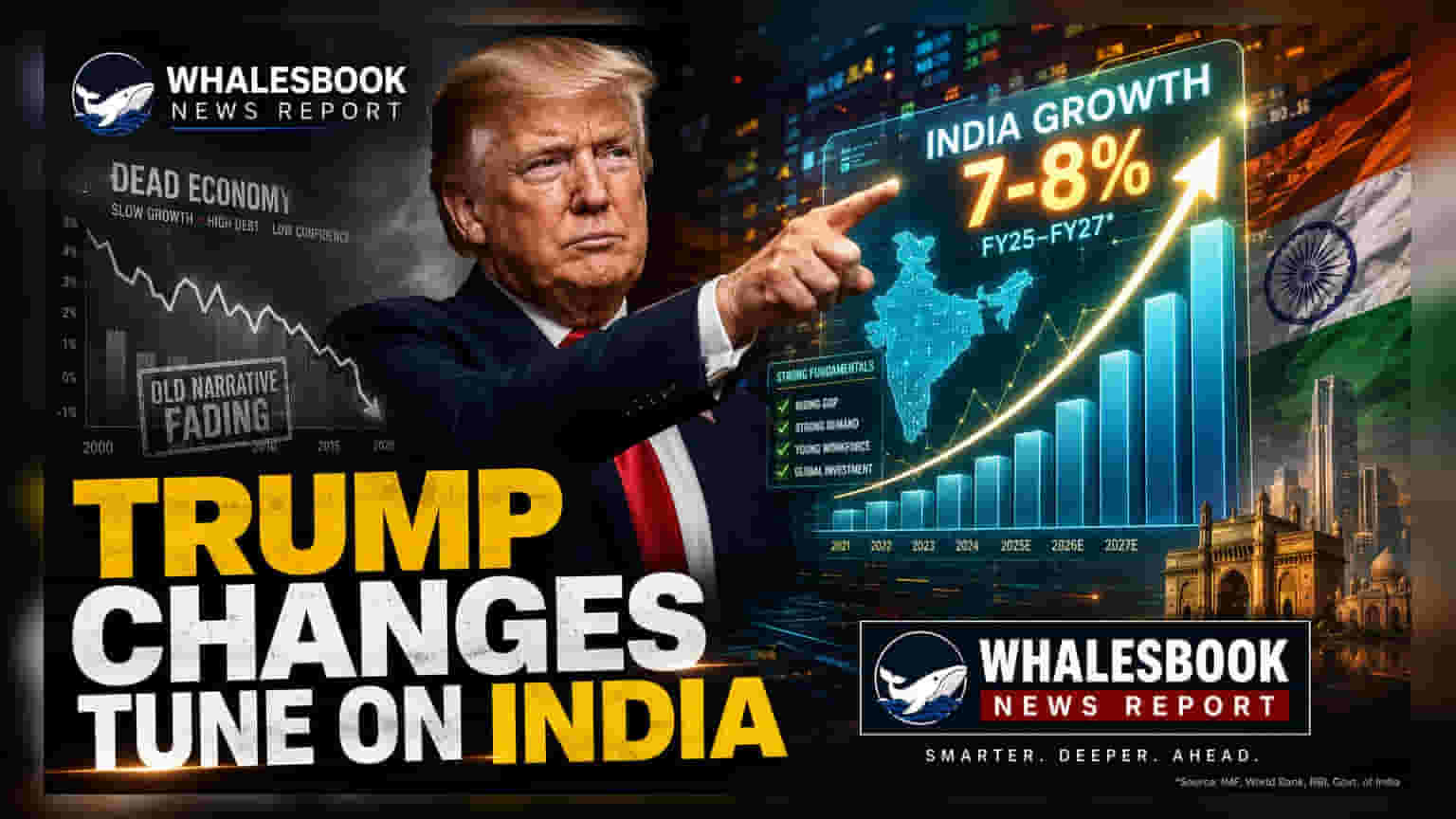
US President Donald Trump has praised India’s 7-8% economic growth, marking a shift from previous criticism. This change in tone follows progress in bilateral trade negotiations, as both nations aim to finalize an interim agreement before existing US tariff deadlines in late July.
What Happened
US President Donald Trump has publicly commended India’s economic trajectory, noting its strong 7-8% growth rate. This positive shift in stance arrives after a period of intense trade friction between the two nations throughout 2025. Last year, the bilateral relationship faced challenges, including the imposition of significant tariffs on Indian imports by the US, which were linked to trade barriers and India’s energy and defense procurement policies. The current reversal in tone is noteworthy as it aligns with ongoing efforts by both Washington and New Delhi to resolve outstanding trade issues.
Progress on Trade Negotiations
The improved rhetoric follows renewed momentum in trade talks between the two countries. Reports indicate that the framework for an interim trade agreement has been largely settled. Union Commerce Minister Piyush Goyal has stated that the implementation of this pact depends on India securing specific preferential tariff conditions. This progress gained significant traction following discussions between Prime Minister Narendra Modi and President Trump at the G7 Summit held in France this past June.
The Deadline and Investor Impact
For investors, the timeline for these negotiations is a critical factor. The current US tariff regime impacting various goods is set to expire on July 24, 2026. Negotiators are working to conclude an interim pact before this date, which could directly influence trade costs, investment flows, and technology cooperation. A successful agreement would likely reduce trade uncertainty, whereas a failure to reach terms could lead to a continuation or adjustment of the existing tariff structure.
Economic Context and Monetary Policy
During his recent comments, President Trump used India’s growth figures to frame broader arguments regarding global economic performance. He also leveraged these comparisons to challenge Federal Reserve policies in the United States, advocating for monetary conditions that support higher GDP growth rather than restrictive measures. By describing the current US environment as a period of significant expansion, the administration is signaling a focus on industrial and market performance, which has historical implications for how international trade partners are engaged.
What Investors Should Track
Market participants will be closely watching the final details of the interim trade agreement as the July 24 expiration date for current US tariffs approaches. Key monitorables include whether India secures the sought-after preferential tariff status and how any resulting trade pact affects specific sectors like manufacturing, energy, and defense. Investors should track official updates from the Ministry of Commerce and Industry regarding the final terms of the agreement, as these will determine the potential for smoother export-import operations between the two economies.