

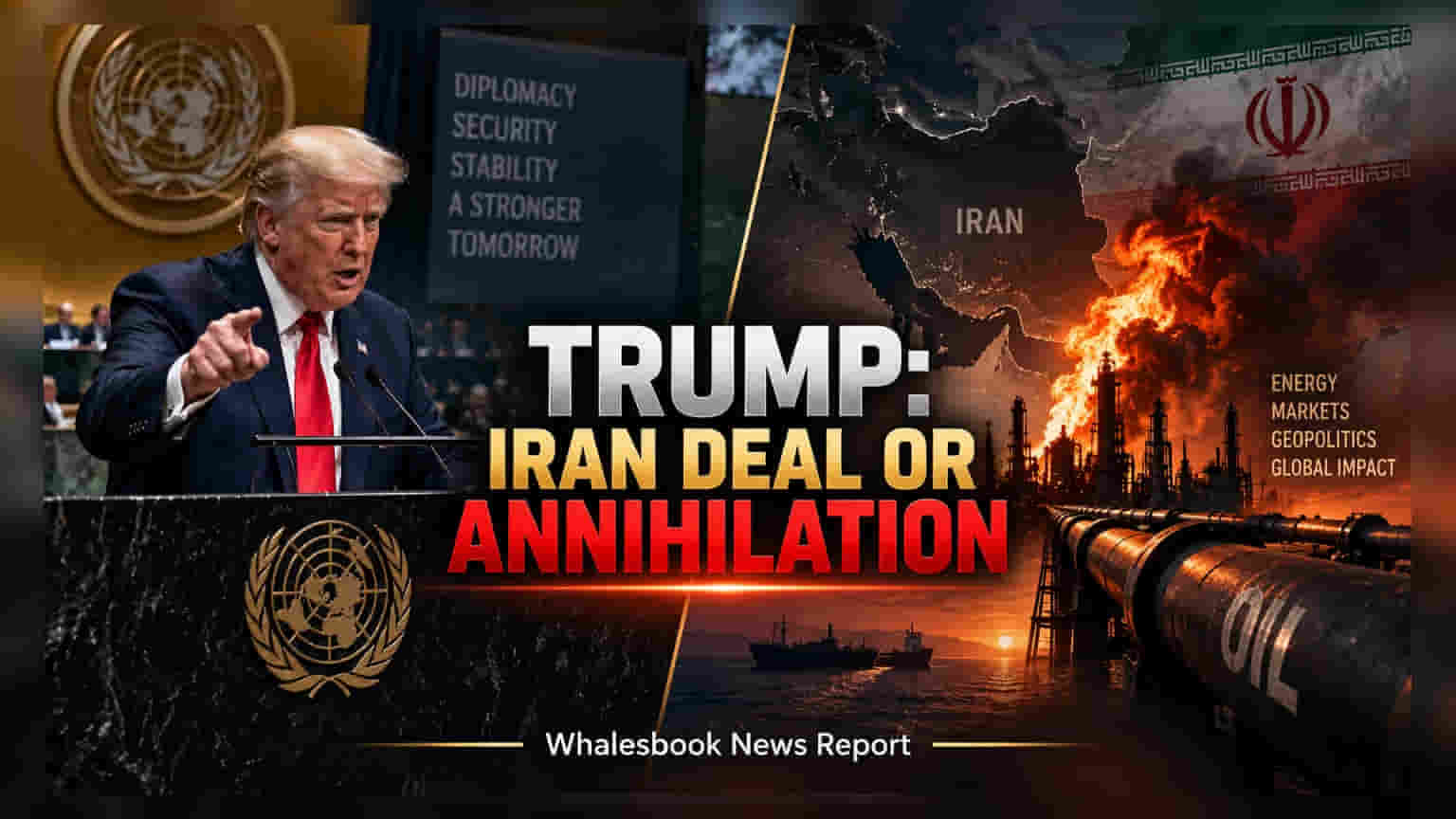
US President Donald Trump confirmed direct contact with Iranian officials at the UN, signaling a diplomatic shift despite his firm warnings. For Indian investors, this geopolitical uncertainty adds to the ongoing global energy market volatility. With disruptions in key shipping routes and conflict in Europe, the focus remains on crude oil price stability and its impact on domestic inflation and trade balances.
US President Donald Trump reported that American envoys, specifically Steve Witkoff and Jared Kushner, held a meeting with Iranian officials on the sidelines of the UN General Assembly in New York. While the President described the engagement as constructive, the administration also issued a stern ultimatum, highlighting the complex and high-stakes nature of current Middle East diplomacy. This engagement marks a shift from months of stalled communications, though the path to a full resolution remains unclear.
For global and Indian markets, the primary concern lies in the stability of energy supply chains. Ongoing geopolitical tension has fueled volatility in crude oil prices, which directly affects India due to its high reliance on imported energy. Disruptions near key transit points such as the Bab al-Mandab Strait, combined with the lingering effects of the Russia-Ukraine conflict, keep pressure on global energy costs. Any sustained increase in oil prices often complicates the economic outlook for net-importing countries like India.
Domestic investors typically monitor these developments because sustained high crude oil prices can influence India’s current account deficit and the value of the Rupee against the US Dollar. Furthermore, energy price volatility impacts the profitability and operational costs of sectors ranging from oil marketing companies to logistics and aviation, which rely on stable fuel inputs. The administration's plan to potentially impose tariffs on major importers of Russian oil and gas adds another layer of complexity to global energy flows.
Beyond the Middle East, the US announced plans to construct military bases in Greenland. While this represents a significant shift in Arctic security, it also highlights a broader strategy of consolidating regional influence amid a complex global environment. For investors, the immediate monitorables include the progression of diplomatic channels, the stability of key maritime trade routes, and any further updates on global energy policies that may affect pricing and supply stability.