

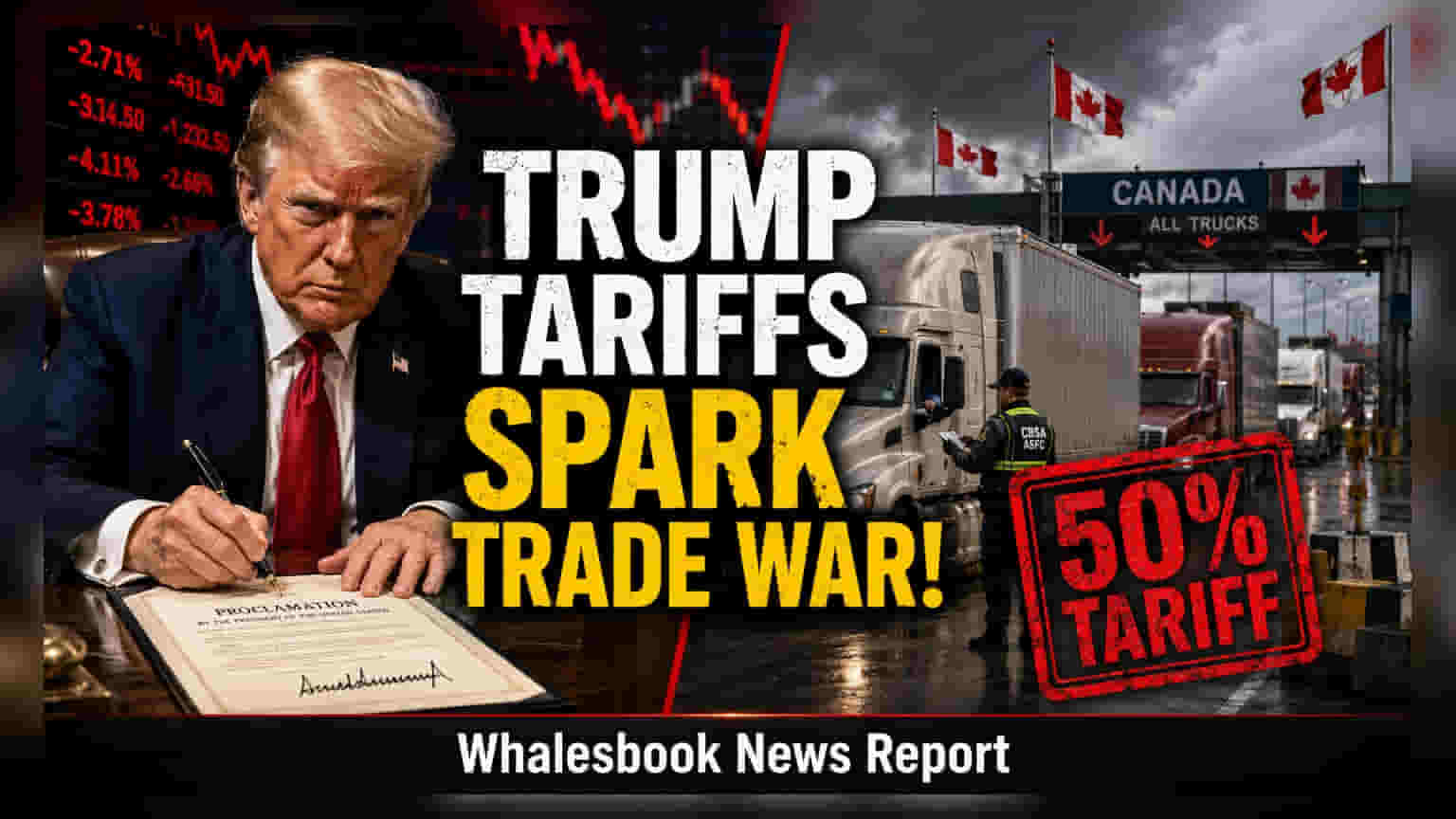
President Donald Trump has announced 50% tariffs on a wide range of Canadian imports, citing trade disputes over automobiles, alcohol, and dairy. This move threatens to raise inflation and disrupt North American supply chains. Investors should watch for potential reciprocal actions from Canada and the impact on companies with heavy cross-border exposure.
Detailed Coverage
President Donald Trump has signed three proclamations imposing a 50% tariff on a broad range of goods imported from Canada. The administration stated that these measures are a response to what it describes as unfair trade practices regarding American-made automobiles, alcoholic beverages, and dairy products. These tariffs, which are scheduled to take effect in 30 days, were enacted under Section 338 of the 1930 Trade Act, a legal provision that grants the executive branch broad authority to address trade disputes.
Impact on North American Trade
While energy products, potash, fish, and certain critical minerals remain exempt from these new duties, the action directly affects many other products previously covered under the United States-Mexico-Canada Agreement (USMCA). By targeting goods that have historically enjoyed duty-free status under the trade pact, this move introduces significant uncertainty into the North American supply chain. Businesses that rely on the free flow of goods across the border may face immediate cost increases or the need to quickly identify alternative supply sources to avoid the tariff burden.
Potential for Reciprocal Escalation
Canadian officials and business leaders are now assessing their response to these measures. Ontario Premier Doug Ford has suggested that Canada should consider retaliatory tariffs on a dollar-for-dollar basis. The Canadian Chamber of Commerce has also requested that both governments utilize the 30-day window before the tariffs take effect to engage in high-level negotiations to resolve the disputes. Historically, trade tensions between the two nations have included Canadian retaliatory measures on U.S. goods, such as motor vehicles and alcoholic beverages, in response to previous U.S. tariff actions.
Risks to Inflation and Markets
For investors, the primary concern is the potential for these tariffs to act as an inflationary pressure. Increased costs for imported goods are often passed on to consumers, which can dampen demand and complicate the economic outlook. Furthermore, trade disputes of this magnitude often trigger market volatility, particularly for sectors with high exposure to cross-border manufacturing, such as the automotive industry and consumer goods. While the 30-day period provides a buffer for negotiations, the risk of a broader trade war remains a significant concern for global economic stability. Investors should monitor whether these talks yield a diplomatic resolution or if the escalation continues, as further retaliatory measures could lead to increased operational costs and margin pressure for companies heavily dependent on trade with Canada.