

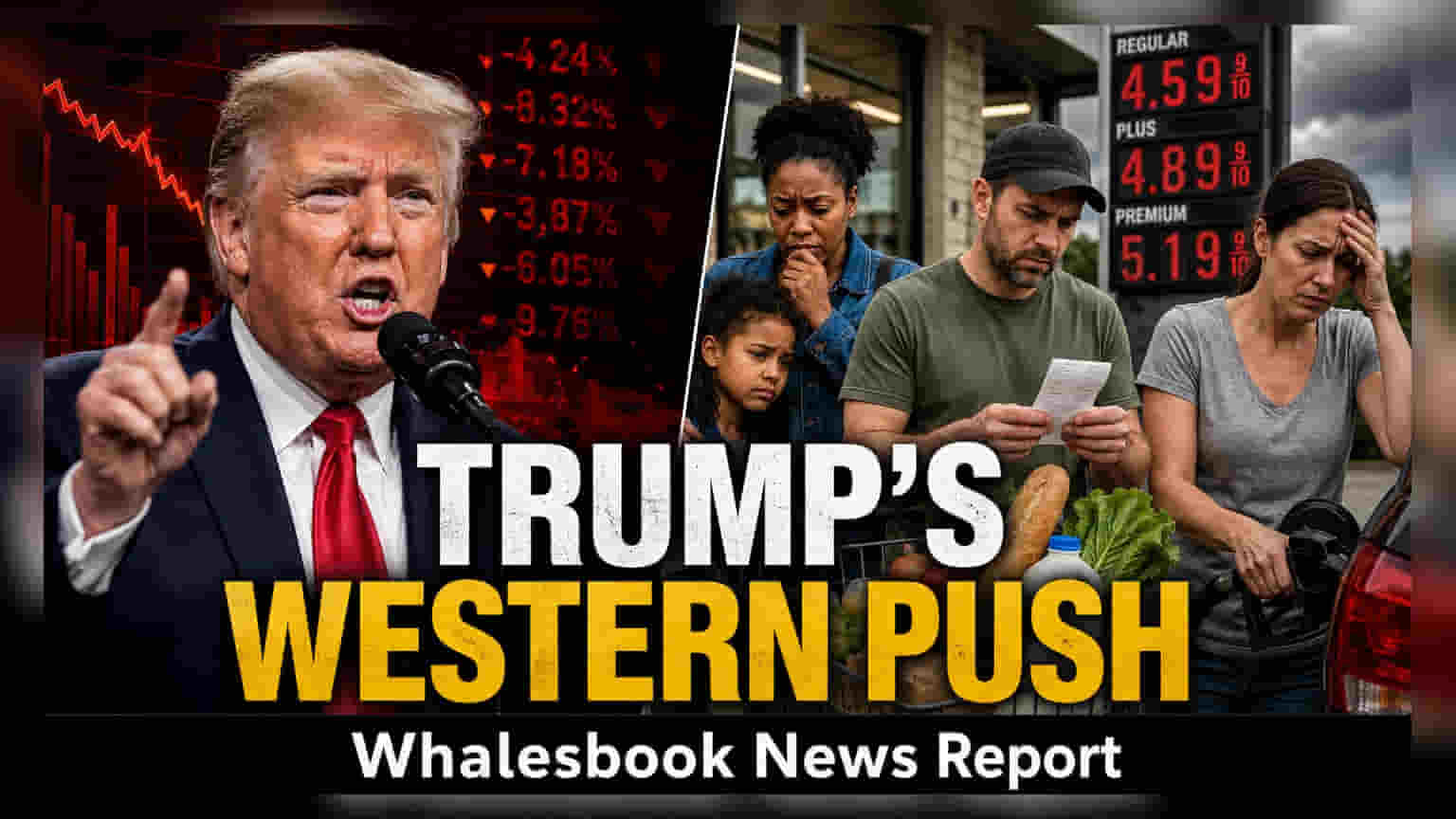
President Donald Trump is visiting California and Nevada to campaign on economic policy and border security ahead of midterm elections. For global investors, the focus remains on the administration's management of inflation and consumer sentiment, as these factors significantly influence U.S. monetary policy and broader market stability.
President Donald Trump is on a two-day trip to California and Nevada, conducting campaign events centered on the economy, border security, and crime. While these visits are part of standard political messaging ahead of the upcoming midterm elections, they highlight the ongoing challenges the U.S. administration faces in managing public perception regarding the economy.
The economic messaging during this trip comes against a backdrop of mixed data and public dissatisfaction. Recent data, including an AP-NORC poll, indicates that a majority of U.S. adults view the current economic situation as poor, with concerns primarily focused on the cost of essential goods like groceries and fuel. For global investors, including those in India, this persistent consumer concern is important because it pressures the administration to respond with fiscal or trade policy shifts that can impact global markets.
While political speeches are distinct from official policy, the rhetoric used in these battleground states often signals the administration’s future priorities. Campaigns frequently address specific themes like tax structures, manufacturing incentives, and trade policies. Any shift in these areas, particularly regarding international trade or domestic spending, can ripple through global financial markets, affecting currency valuations and investment flows into emerging markets.
From a risk perspective, political travel and campaign events can sometimes lead to unexpected policy commentary regarding international relations or trade agreements. Investors typically keep a close watch on such events, not for the campaign rhetoric itself, but for any deviations from established economic policy that might hint at future changes in interest rates or trade regulations. The administration is currently balancing the need to spur domestic economic growth with the realities of high interest rates and geopolitical tensions.
The most important factor for investors remains the underlying economic indicators, such as inflation data and employment figures, rather than individual campaign stops. Markets are sensitive to how these data points influence the central bank's decisions on interest rates. Consequently, while the political drama in California and Nevada provides context on voter sentiment, the focus for the financial community remains on the official economic reports that will dictate U.S. fiscal and monetary direction in the coming months.