

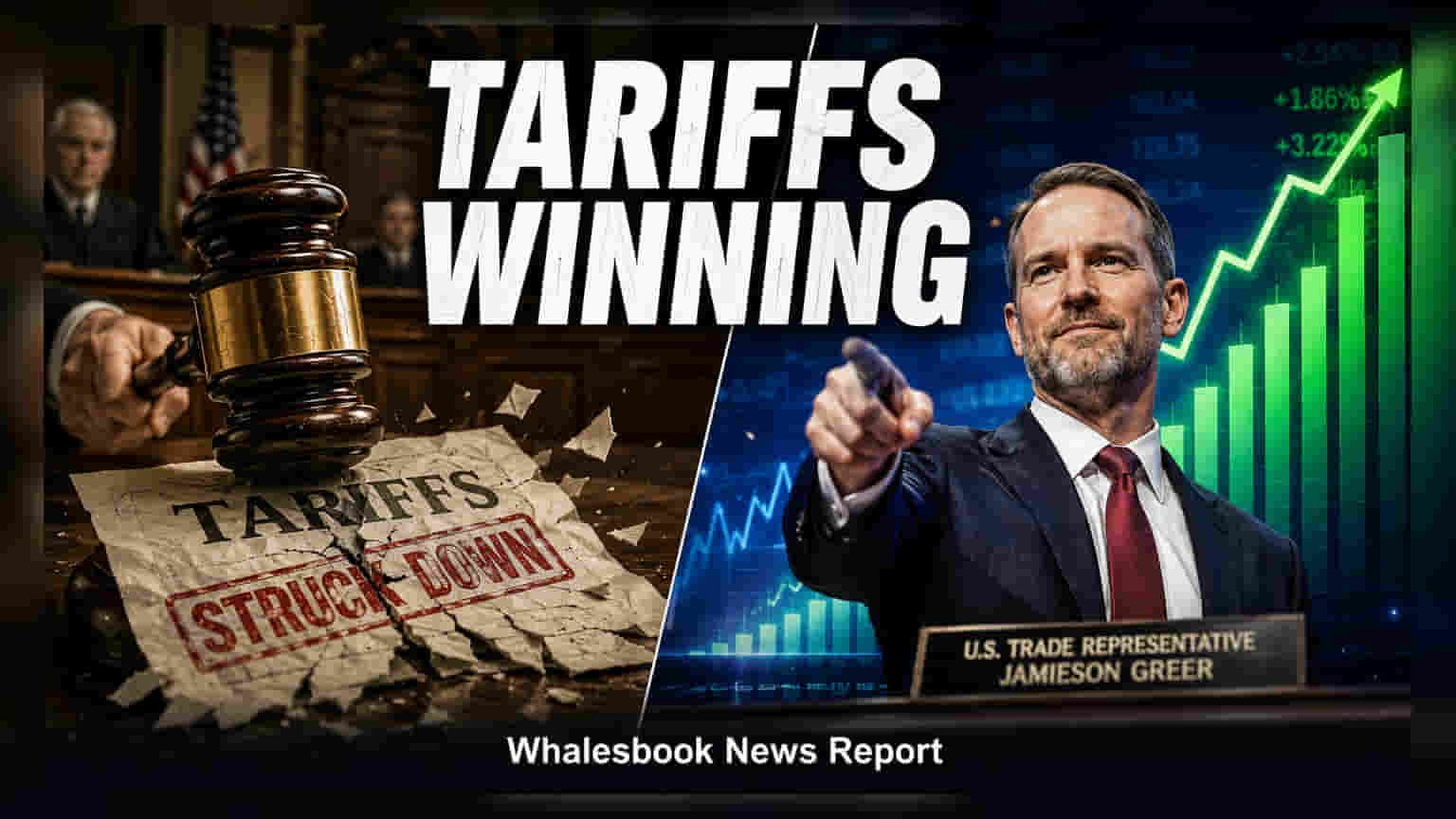
The U.S. government is seeking new legal strategies to maintain its tariff policy after a recent Supreme Court setback. U.S. Trade Representative Jamieson Greer defended the policy as a tool for reducing the trade deficit and encouraging domestic manufacturing. Investors should monitor how these potential new trade measures may impact global supply chains and export-oriented sectors in India.
Detailed Coverage
The U.S. administration is pushing ahead with its trade policy agenda despite facing a recent challenge from the Supreme Court. U.S. Trade Representative Jamieson Greer confirmed that the government is exploring new legal avenues to keep its current tariff framework intact. The administration maintains that its trade initiatives have been successful in narrowing the U.S. trade deficit while encouraging companies to bring manufacturing operations back to American soil.
Legal Challenges and Future Trade Measures
Following a Supreme Court ruling that impacted a segment of the existing tariff program, officials are looking at alternative methods to continue their trade strategy. These measures may include targeted levies on goods produced using surplus capacity or those involving forced labor. The administration has signaled that it does not intend to back down, framing the judicial setback as a hurdle to be navigated rather than a reason to change its fundamental economic goals.
Economic Focus Over Geopolitical Ties
The policy remains rooted in a protectionist economic philosophy. According to Greer, the administration prioritizes economic objectives over traditional geopolitical alliances. This stance has previously led to friction even with close partners like the European Union over issues such as agricultural trade barriers. The official position is that these actions are aimed at securing favorable trade terms for the U.S. rather than targeting any specific nation's foreign policy.
While the administration claims broad success in its negotiations with countries including India, Japan, the United Kingdom, and the EU, the continued use of tariffs creates a complex environment for global trade. For businesses and investors, the uncertainty surrounding these legal maneuvers is significant. Any shift in how these trade barriers are applied could alter cost structures for exporters and change demand patterns for goods entering the U.S. market. The next steps will likely involve administrative or legislative efforts to bypass the recent court limitations, making the timing and scope of these new measures key factors to watch in the coming months.