 Whalesbook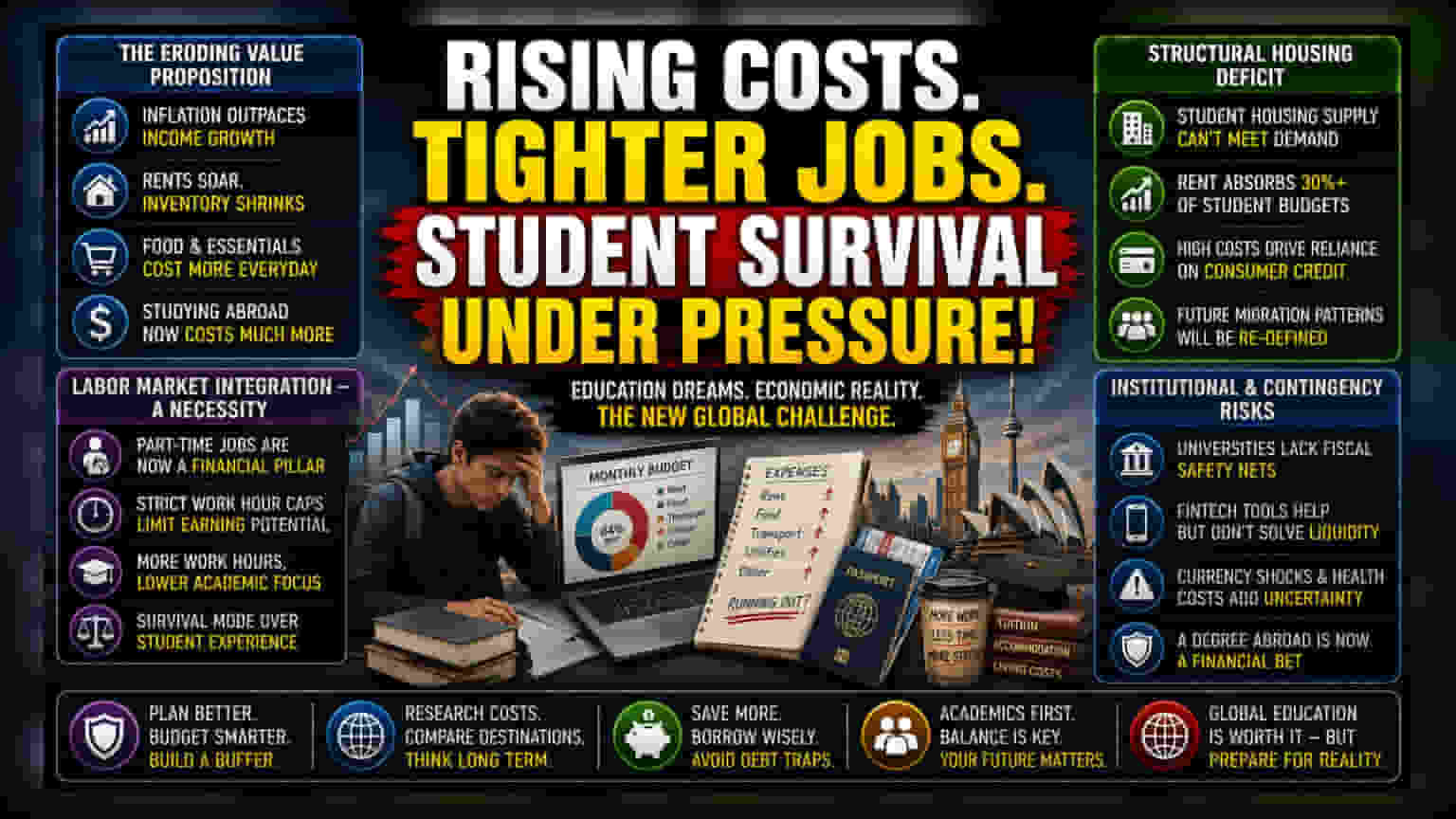


The Eroding Value Proposition
The traditional economic model of international education is undergoing a structural reset as inflationary pressures in key study destinations outpace income growth for both domestic and migrant households. While tuition inflation remains a recognized challenge, the silent crisis involves the compounding costs of essential living requirements. The convergence of restricted rental inventory and rising food index prices has transformed the student experience from one of academic exploration into a complex exercise in cash flow management.
Labor Market Integration as a Necessity
Students are increasingly forced to view their host country’s labor market not as a supplementary source of income, but as a critical pillar for survival. This shift has normalized reliance on part-time employment, shifting the student demographic toward high-frequency, low-margin job markets. However, this dependence creates a paradox. The regulatory environment in major education hubs, such as the United Kingdom, Canada, and Australia, enforces strict caps on work hours, creating a ceiling on how much financial strain a student can mitigate through labor. As students push these limits to cover rising cost-of-living adjustments, academic performance often becomes a secondary casualty of economic necessity.
The Structural Housing Deficit
Unlike traditional residential markets, the student housing sector lacks the elasticity to adjust to sudden influxes of population, leading to a permanent squeeze on affordability. Investors in purpose-built student accommodation have historically enjoyed high yields, but the current environment is testing the limits of this segment. When rent absorption exceeds thirty percent of a student’s total budget, the elasticity of demand for other necessities collapses, leading to an increased reliance on high-interest consumer credit. Financial analysts observe that this trend is likely to influence future student migration patterns, as families weigh the risk of a high-cost environment against the long-term career benefits of a foreign degree.
Institutional and Contingency Risks
Academic institutions, while beneficiaries of international student tuition, rarely provide the comprehensive fiscal infrastructure required to support students through localized economic volatility. This gap is increasingly being filled by digital financial platforms, which offer cross-border payment solutions and budgeting tools to mitigate currency conversion friction. Yet, these tools do not address the fundamental issue of liquidity. In the absence of institutional emergency funds or robust financial planning requirements, international students remain uniquely vulnerable to macroeconomic shocks, such as sudden currency devaluations in their home nations or unexpected healthcare expenditures abroad. Prospective students and their families must now account for a volatility premium, treating a degree abroad not just as an education expense, but as a speculative financial undertaking that requires a significant contingency buffer.