

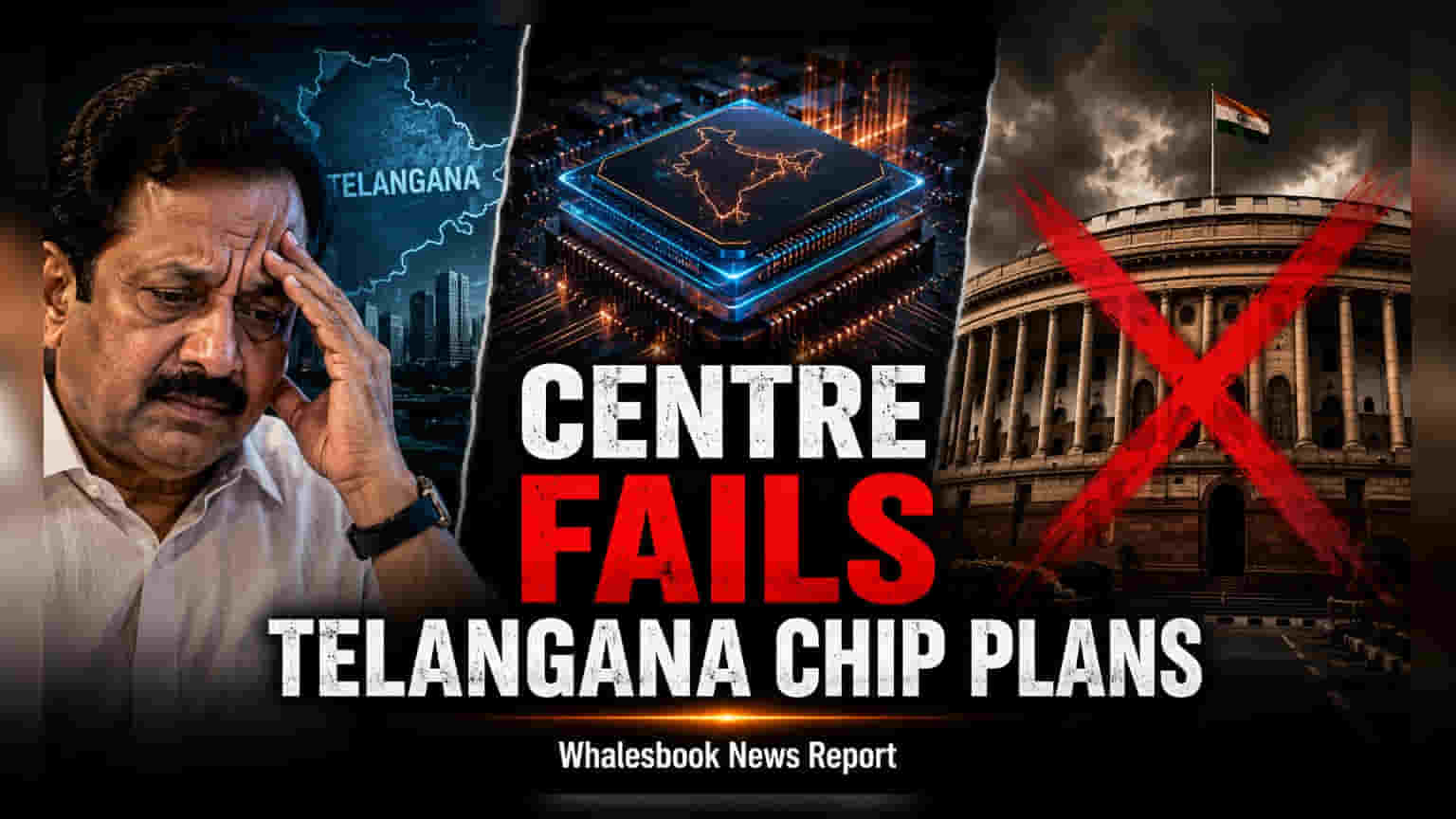
Telangana IT Minister D Sridhar Babu has alleged that the central government is ignoring the state's semiconductor project proposals. He argues that equitable distribution of support under the India Semiconductor Mission is necessary to encourage national manufacturing growth and healthy inter-state competition.
Detailed Coverage
Telangana’s Minister for IT and Industries, D Sridhar Babu, has voiced concerns over the central government’s approach to semiconductor project approvals. Speaking at the Rising Bharat Summit 2026, the Minister stated that Telangana has faced what he described as unfair treatment regarding its proposals under the India Semiconductor Mission. The mission is a government program designed to provide financial incentives to companies building semiconductor manufacturing facilities in India.
Challenges in Semiconductor Investment
Semiconductor manufacturing requires massive capital spending and long-term planning. The Minister noted that because these projects are so expensive, state governments often rely on central government support and incentives to attract global manufacturers. According to the state’s position, Hyderabad already hosts a strong ecosystem for chip design and research. The Minister argued that proposals coming from the state should be evaluated fairly alongside those from other regions to ensure that the country maximizes its manufacturing potential.
Focus on Regional Growth and Talent
Beyond the debate over central support, Telangana is attempting to diversify its industrial base. The state government is looking to expand investments into smaller, tier-2 and tier-3 cities, aiming to utilize the workforce available in those regions. Additionally, the state has stated its intention to transition existing Global Capability Centers—offices where international firms handle tech services—from performing basic tasks to managing higher-value engineering and research work.
What Investors Should Watch
The semiconductor industry remains a major focus for India’s growth strategy, with several large projects currently in various stages of planning or construction across states like Gujarat and Assam. For investors, the key monitorable is the pace at which the India Semiconductor Mission approves new projects and distributes incentives. Any shift in how these incentives are allocated or changes in the central government's criteria for supporting state-level semiconductor infrastructure could impact the speed of capacity expansion for companies operating in this sector. Investors may also track how states continue to compete for manufacturing projects, as this will influence which regions ultimately emerge as hubs for specialized electronics production.