

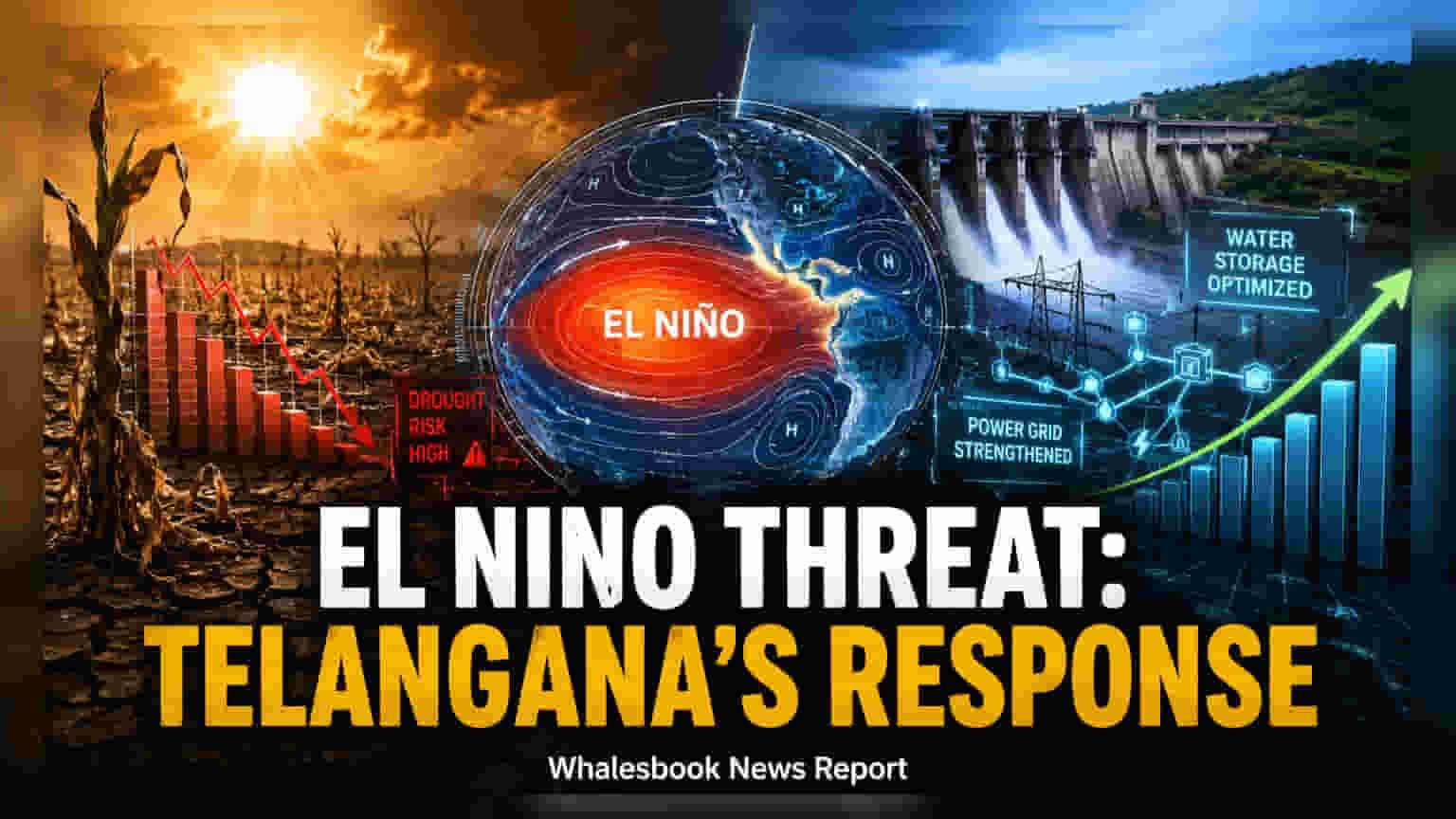
Telangana has introduced a strategic plan to protect agriculture and power infrastructure from potential El Nino impacts. The state is focusing on scientific weather forecasting, crop diversification, and smart energy management to ensure stability for farmers and essential services. This proactive approach aims to mitigate drought risks and maintain a steady power supply during unpredictable weather cycles.
Detailed Coverage
The Telangana government has announced a proactive strategy to safeguard the state’s agricultural productivity, water security, and power infrastructure against the risks posed by the El Nino phenomenon. As climate volatility creates uncertainty for monsoon patterns, Deputy Chief Minister Mallu Bhatti Vikramarka confirmed that the state is integrating scientific forecasting with localized preparedness to protect its primary economic sectors.
Crop Resilience and Water Management
To address the potential for below-average rainfall, the state is shifting focus toward water-efficient agricultural practices. Agricultural extension services are encouraging farmers to adopt alternative, drought-resistant crop varieties that require lower irrigation levels. By utilizing expert-led data on weather patterns, the government aims to minimize the financial impact on the farming community, which remains sensitive to irrigation fluctuations. District-level awareness programs are currently being scaled up to help local farmers implement these climate-adaptive planting strategies before the peak of the season.
Ensuring Power Grid Stability
Beyond agriculture, the state is prioritizing energy security amid rising demand. Even during periods typically marked by monsoon-led cooling, electricity consumption in the state has remained elevated. The government is deploying smart energy management protocols to manage grid load and prevent supply interruptions. These measures are designed to shield essential services and industrial activity from potential outages caused by heat stress or hydro-power supply constraints often associated with severe weather events.
Strategic Importance for Economic Stability
For investors and market participants, the stability of Telangana’s rural economy and its industrial power infrastructure are critical. The state has been a significant contributor to India’s agricultural output and a growing hub for technology and manufacturing. Ensuring that power supply remains consistent during potential dry spells helps protect industrial output and maintains the operational stability of businesses located in the region. The effectiveness of this mitigation strategy will depend on the speed of implementation at the district level and the precision of the weather models used to guide water allocation. Market watchers will likely track subsequent progress reports on reservoir levels, crop insurance participation, and the reliability of power distribution data to assess how effectively the state manages these climate-linked operational risks.