

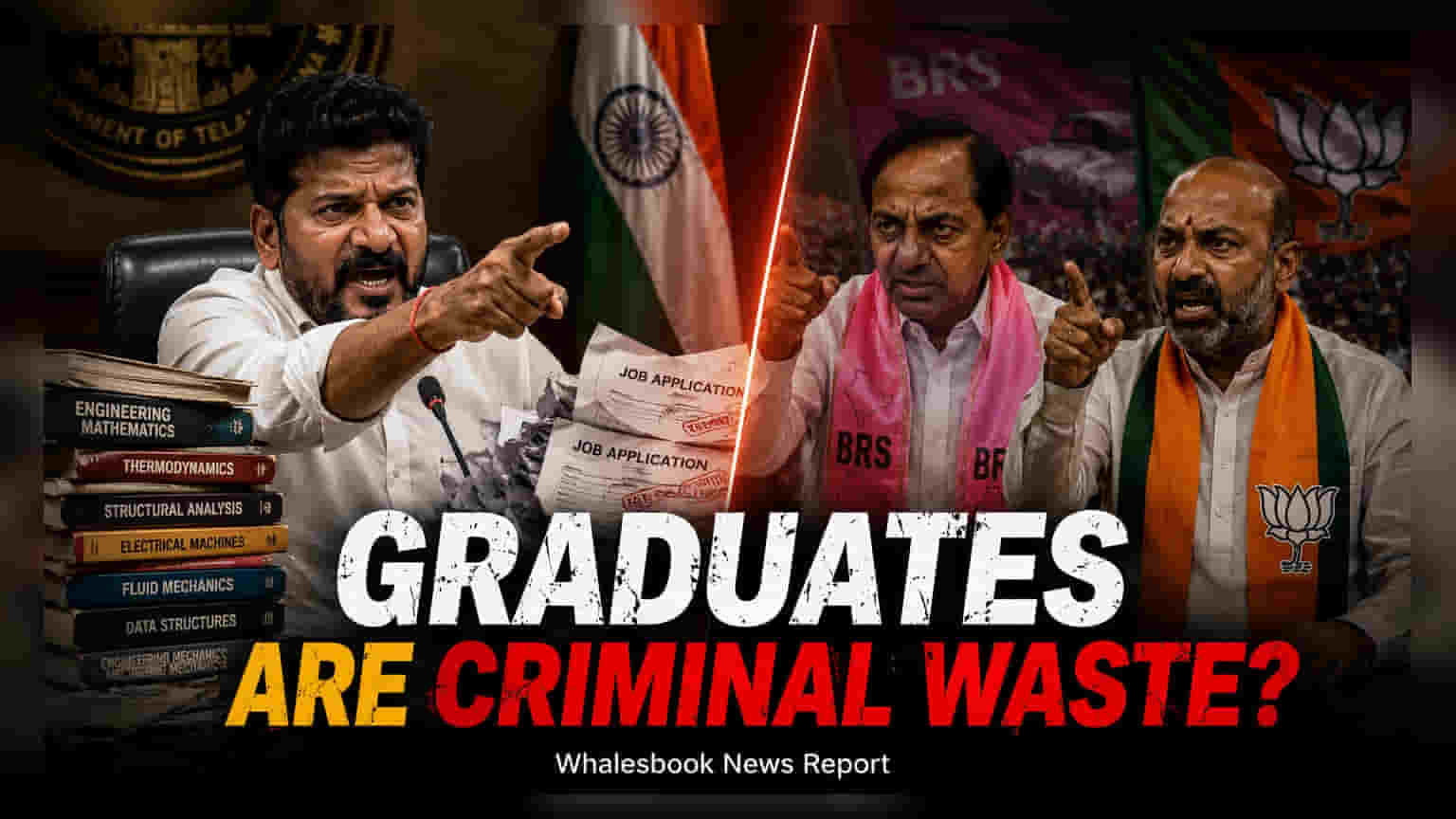
Telangana Chief Minister A Revanth Reddy recently commented that many engineering graduates lack basic job-ready skills, sparking political backlash. The debate highlights ongoing concerns regarding the gap between higher education outcomes and industry requirements in India's workforce.
Telangana Chief Minister A Revanth Reddy has triggered a sharp political debate following his comments regarding the quality of engineering graduates in the state. During a public event held in Hyderabad, the Chief Minister raised concerns about the employability of students, stating that many of the approximately 1.10 lakh engineering graduates passing out annually in Telangana face difficulties with foundational tasks such as writing a formal job application.
The Chief Minister characterized the current output of the education system as a failure to impart necessary skills, using the term "criminal waste" to describe the outcome. While the remark initially caused significant friction, the Chief Minister later clarified that his critique was directed at the existing education framework and institutional shortcomings rather than the students themselves.
Political Backlash and Opposition Response
The comments drew immediate condemnation from opposition parties, including the Bharat Rashtra Samithi (BRS) and the Bharatiya Janata Party (BJP). BRS Working President K T Rama Rao publicly challenged the Chief Minister’s remarks, questioning the basis for such broad generalizations. Similarly, the state BJP leadership criticized the statement, framing it as an insult to the engineering community and highlighting the role of engineers as a core pillar of the country's technical workforce. Supporters of the Chief Minister within the Congress party have defended his stance, arguing that he is highlighting a critical need for structural reform in higher education.
Industry Context and Educational Challenges
Beyond the political controversy, the incident reflects broader structural issues facing the Indian technical education sector. Industry reports and various employability surveys often point to a disconnect between the curriculum taught in technical institutions and the practical requirements of the job market. While the number of engineering graduates remains high, companies frequently cite a lack of "industry-ready" skills—such as critical thinking, communication, and hands-on application of theory—as a primary hurdle in recruitment.
For students and stakeholders in the education sector, the situation underlines the growing emphasis on vocational training, internships, and curriculum updates that align with modern industry needs. Investors and market watchers often monitor such trends because the quality of the local talent pool directly influences the state's attractiveness for IT, manufacturing, and R&D investments. The evolution of policy regarding higher education and potential shifts in government-led skill development programs will be the next important areas to monitor for those tracking the state's economic and human capital development.