

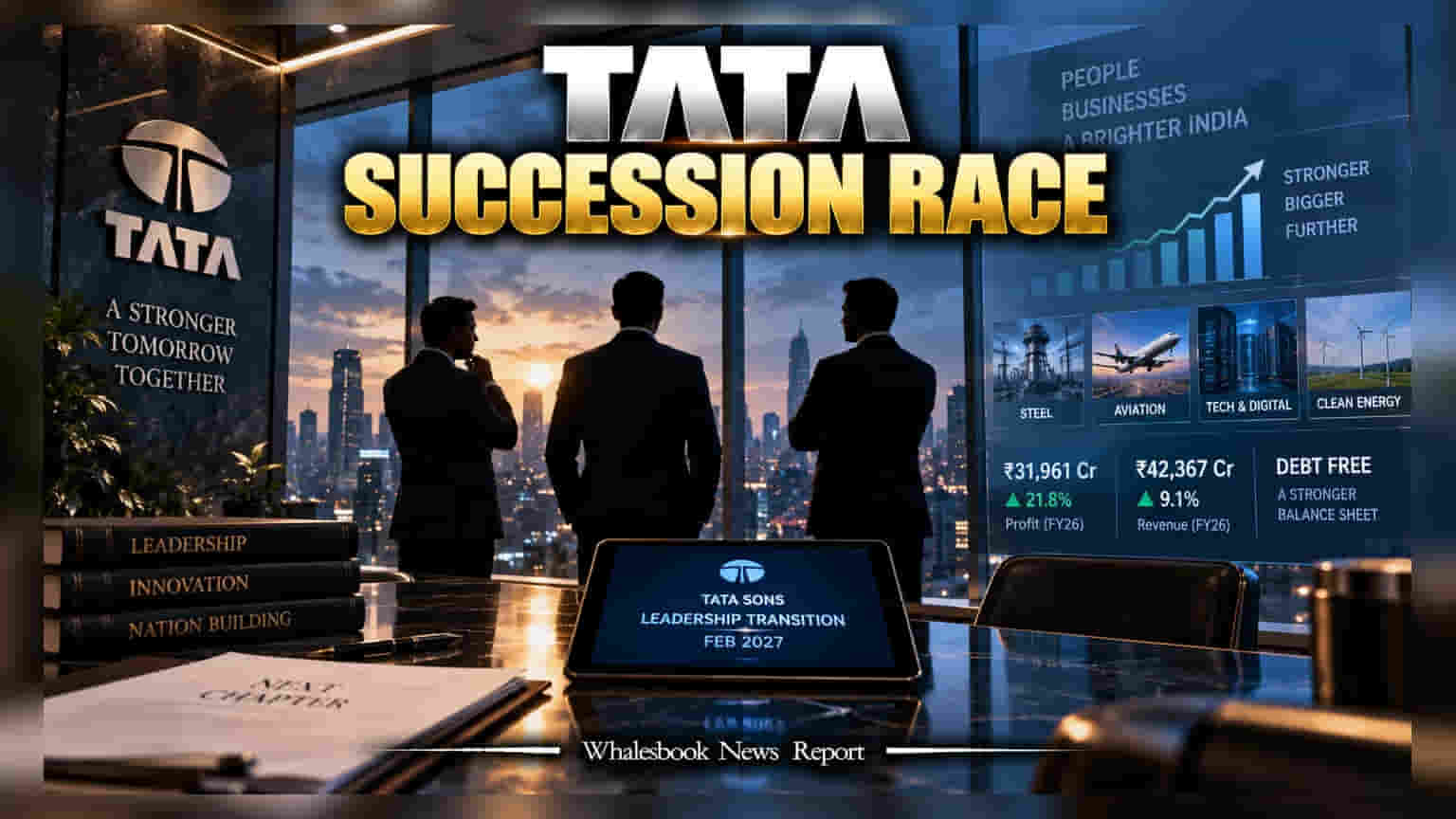
Tata Sons has shortlisted T V Narendran, Saurabh Agrawal, and Ashish Chauhan as potential successors to Chairman N. Chandrasekaran, who will step down in February 2027. The selection marks a pivotal transition for the group as it balances massive investments in aviation and digital services with a debt-free balance sheet. Investors are now closely watching the board's decision-making process for clues on the group’s future strategic direction.
The race to lead Tata Sons has officially begun, as the conglomerate sets its sights on a leadership transition for February 2027. Chairman N. Chandrasekaran, who has guided the group through a period of significant expansion, will be stepping down on February 20, 2027, and will not seek reappointment. The board has narrowed its search to three key candidates: T V Narendran, the current CEO of Tata Steel, Saurabh Agrawal, the group CFO, and Ashish Chauhan, the MD and CEO of the National Stock Exchange.
The Three Contenders
The choice of candidates reflects the group’s need to balance operational stability with financial and technological modernization. T V Narendran is widely viewed as the internal frontrunner. Having led Tata Steel, his track record includes navigating volatile global commodity markets and managing complex international operations. His selection would signify a preference for operational continuity and deep familiarity with the group's culture.
Saurabh Agrawal, as the current group CFO, brings a different skill set. Since joining in 2017, he has been central to the group's portfolio optimization and capital management. His deep understanding of the conglomerate's financial architecture makes him a strong candidate for a future where capital allocation will be critical to the success of diverse, large-scale projects.
Ashish Chauhan represents a distinct choice for modernization. Known for his tenure at the National Stock Exchange and Bombay Stock Exchange, he is recognized for his ability to transform institutions using technology and handle complex regulatory environments. For a group increasingly focused on digital services and facing scrutiny as an 'upper-layer' non-banking financial company (NBFC), his profile offers a mix of governance and tech-forward thinking.
Financial Health and Strategic Challenges
The incoming chairman will inherit a group that is in a strong financial position but faces heavy operational pressure in new sectors. Tata Sons ended the financial year 2026 as a debt-free company, reporting a standalone profit of ₹31,961 crore, a 21.8% increase from the previous year. This solid balance sheet provides the new leadership with financial flexibility. Revenue for the period reached ₹42,367 crore, reflecting a 9.1% growth.
However, the new leader must immediately confront the profitability of aggressive new bets. Air India, a cornerstone of the group's expansion, reported a significant loss of ₹22,238 crore in FY26. Turning around these large-scale investments while maintaining the health of core manufacturing businesses like steel will be the primary task for the next chairman.
Investors may monitor the progress of these specific ventures, alongside the regulatory status of the company. Tata Sons is currently dealing with the complexities of its 'upper-layer' NBFC classification and is navigating a transition in leadership structure following the passing of Ratan Tata in 2024. The next important updates will likely come from the board’s final selection process and the company’s approach to resolving losses in newer digital and aviation ventures.