 Whalesbook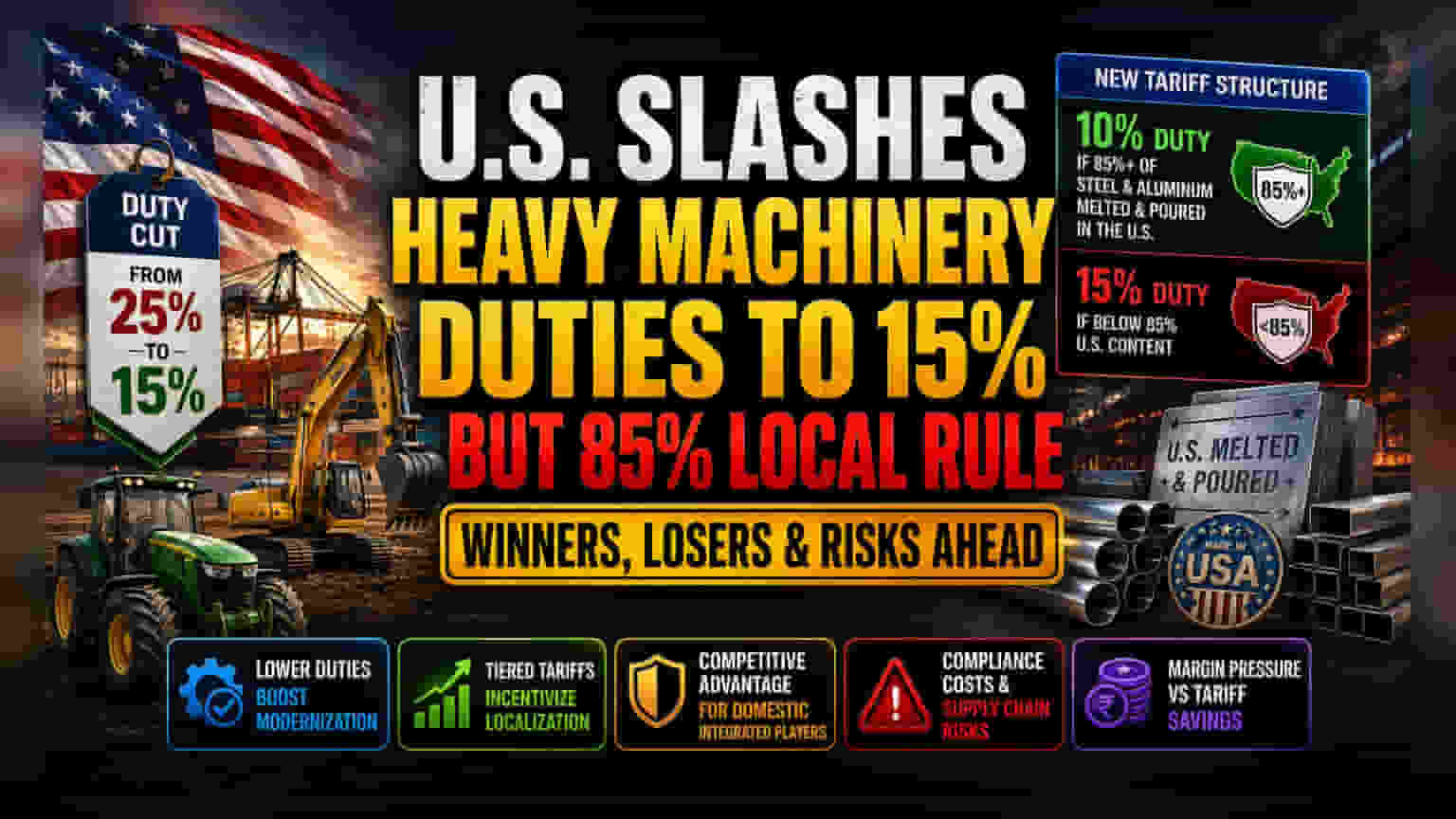


The Efficiency Pivot
The shift from 25% to 15% duties serves as a tactical lever to manage persistent inflation in capital-intensive sectors. By lowering the entry barrier for foreign-made heavy machinery, the administration is effectively subsidizing the modernization of domestic farm operations and infrastructure projects. However, the true policy objective lies in the tiered structure, which functions less as a broad liberalization and more as a high-stakes mandate for supply chain localization. Firms relying on international components now face a stark choice: maintain legacy procurement routes at the new 15% baseline or aggressively pivot toward US-melted and poured steel to secure the 10% tariff floor.
Competitive Landscape and Market Dynamics
Large-cap agricultural and construction equipment manufacturers—specifically those with globalized production footprints—must now reconcile this domestic content threshold with existing supply agreements. Rivals with higher levels of domestic integration will likely gain a structural pricing advantage in the US market, potentially pressuring margins for international competitors who cannot immediately diversify their procurement. Historical analysis of similar trade shifts suggests that equipment manufacturers often see initial margin compression as they navigate the administrative and logistical costs of re-certifying raw materials under strict 'melted and poured' definitions. Market participants are already weighing whether the savings passed to buyers will be offset by the elevated costs of qualifying for the lowest tariff tier.
The Forensic Bear Case
The primary risk inherent in this policy is a potential surge in operational complexity and compliance overhead. Manufacturers that attempt to pivot toward US-sourced materials face the reality of higher localized production costs, which may negate the 5% margin benefit of the lower tariff. Furthermore, firms that lean too heavily on international supply chains remain exposed to retaliatory measures from trade partners who view the 85% domestic content requirement as a non-tariff barrier. Investors should monitor for signs of supply chain bottlenecks, as the limited domestic capacity for high-grade steel and aluminum may struggle to meet a sudden influx of demand from heavy machinery producers scrambling for compliance. Any failure to meet these thresholds will likely result in higher-than-expected tax liabilities as the 15% duty becomes the default floor for non-compliant equipment.
Outlook and Sector Sentiment
Sector analysts are currently evaluating the impact on bottom-line profitability for heavy equipment OEMs. While the lower duty provides a modest tailwind for sales volume, the competitive advantage will likely accrue to those already possessing deep ties to domestic raw material suppliers. Forward-looking guidance from major industrial players will likely focus on the speed of transition toward compliant supply chains, as the industry navigates the trade-off between tariff savings and the inherent cost volatility of domestic inputs.