

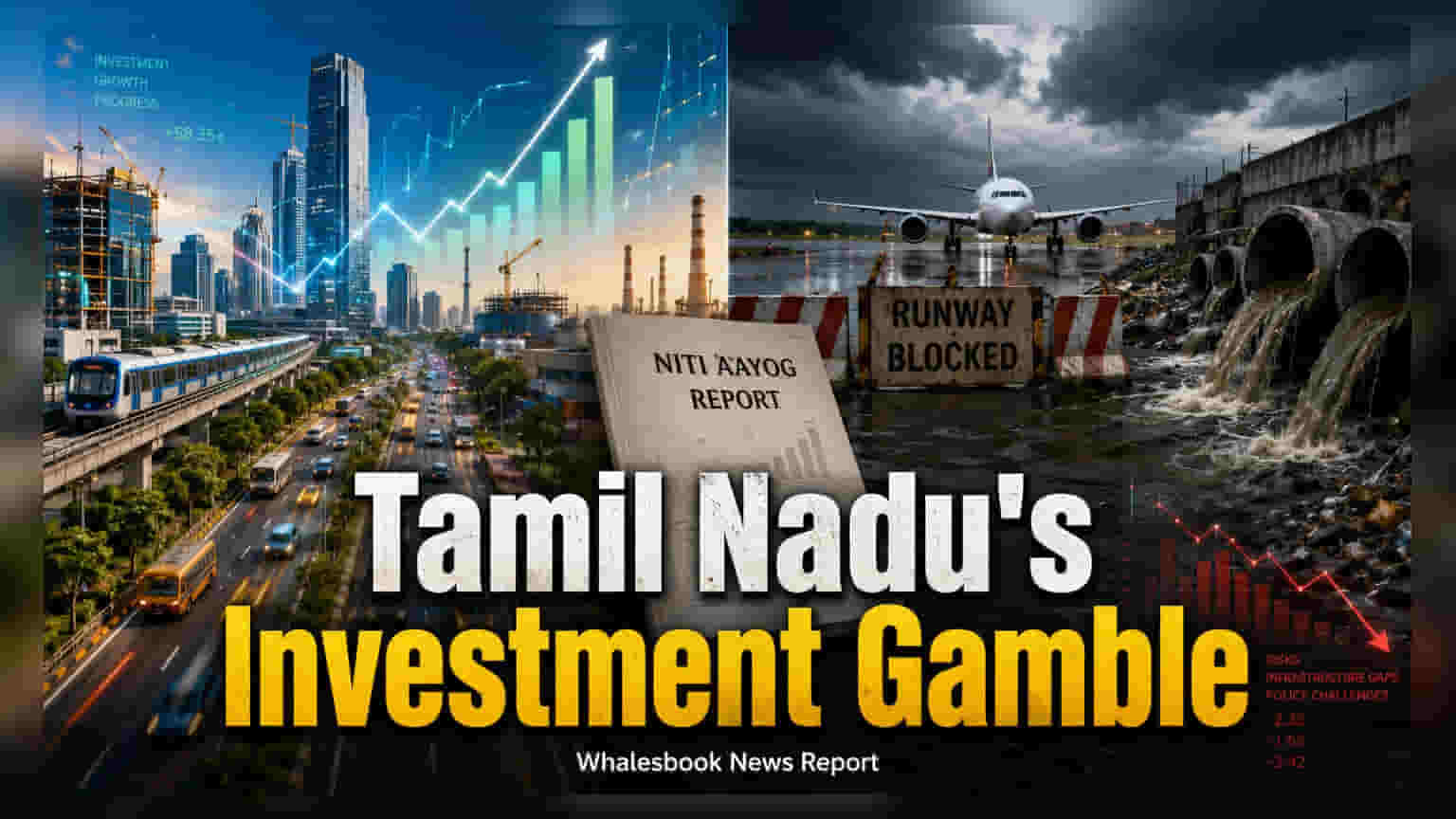
Tamil Nadu has secured the third position in Niti Aayog’s 2026 Investment Friendliness Index. While the state is praised for strong infrastructure and policy stability, the report identifies critical gaps in airport capacity, logistics, and sewage management that investors should monitor for future project growth.
Detailed Coverage
Tamil Nadu has secured the third spot in Niti Aayog’s inaugural Investment Friendliness Index for 2026, which was released on July 18. The state received high marks for its industrial corridors, port efficiency, and institutional capacity, solidifying its status as a preferred destination for both domestic and global investments. The report highlights the state’s effective conversion of investment memorandums into active operational projects as a key indicator of its policy consistency.
Infrastructure and Economic Strengths
The report underscores the state's energy sector as a major competitive advantage, noting low power downtime and increasing capacity in renewable energy sources like wind and solar. Additionally, Tamil Nadu’s innovation ecosystem remains a standout feature, supported by a significant number of Atal Tinkering Labs and a successful electric vehicle policy that has drawn several global manufacturers. With an export-to-Gross State Domestic Product ratio that outperforms the national average for large states, the region continues to demonstrate high economic vitality, having attracted $2.436 billion in Foreign Direct Investment during the 2024 fiscal year.
Challenges Impacting Industrial Growth
Despite the positive ranking, the Niti Aayog report highlights specific infrastructure bottlenecks that could limit future industrial expansion. Airport capacity, particularly in Chennai, has been flagged as insufficient to support the state’s growing international connectivity needs. Logistics infrastructure also faces pressure, with the report identifying a lack of adequate Container Freight Station and Inland Container Depot capacity to handle current manufacturing output. Chronic congestion around Chennai Port, which often leads to long wait times for freight trucks, remains a primary concern for supply chain efficiency.
Fiscal and Environmental Considerations
From a fiscal perspective, Tamil Nadu’s outstanding liabilities reached 31% of its Gross State Domestic Product, putting it close to the average for large Indian states. Interest payments consume approximately 3.4% of the state's total economic output, an area where the report suggests fiscal discipline is necessary to maintain long-term stability. Water security also presents a long-term risk, as industries struggle with the availability of water for production. The report specifically calls for increased investment in wastewater treatment and recycling infrastructure to ensure that industrial expansion remains sustainable.
Investors may monitor future state government actions regarding logistics policy, airport expansion timelines, and water treatment initiatives. The effectiveness of the state’s efforts to resolve these infrastructure and fiscal bottlenecks will be a critical factor in determining whether it can improve its investment standing in coming years.