

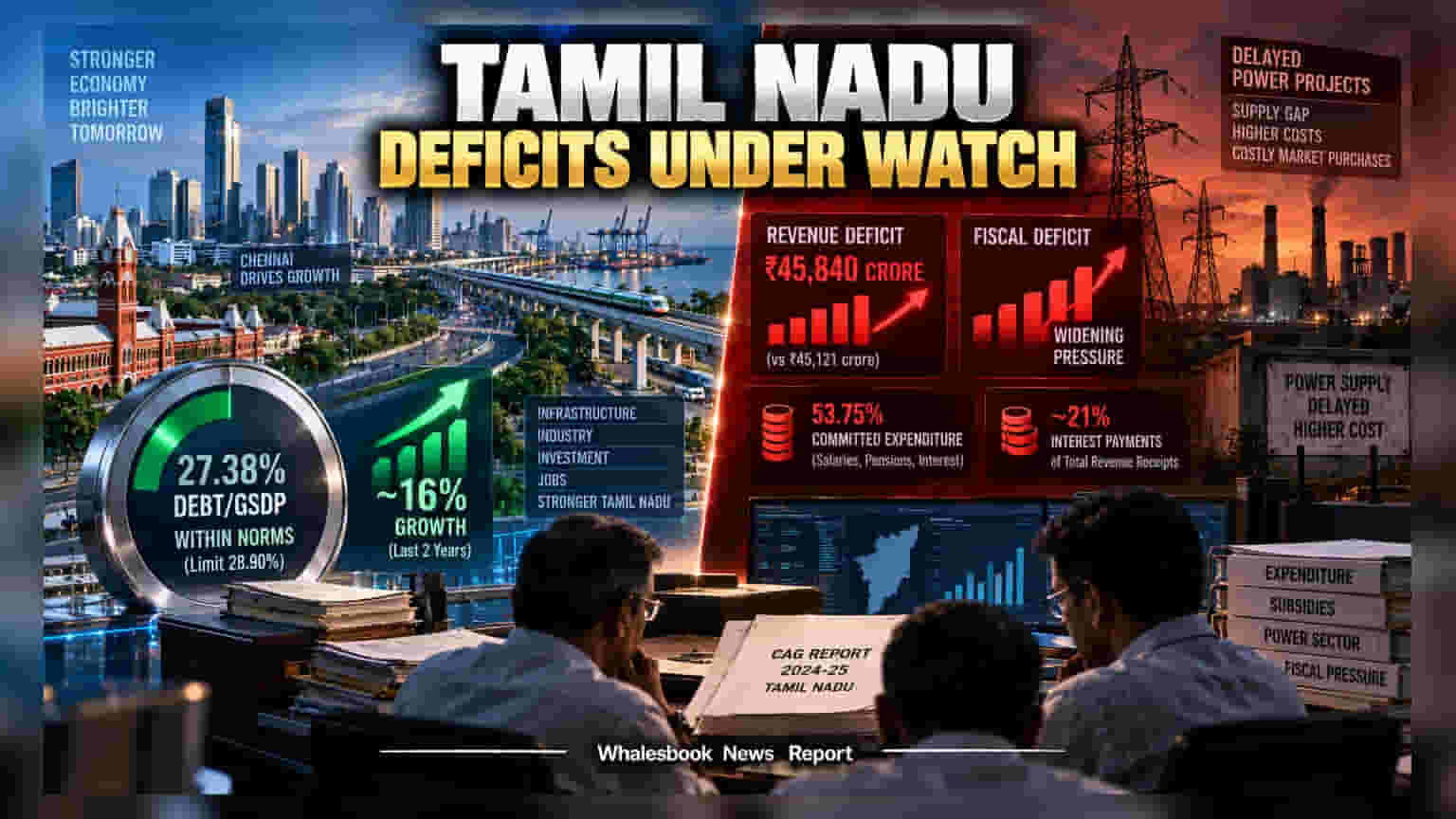
The latest Comptroller and Auditor General (CAG) report reveals Tamil Nadu's debt-to-GSDP ratio is 27.38%, safely within the 28.90% limit. However, the audit warns that rising revenue and fiscal deficits, combined with inefficiencies in the power sector, are putting pressure on the state’s financial health.
The Comptroller and Auditor General (CAG) has released its audit report for 2024-25, offering a detailed look at the financial health of Tamil Nadu. While the report brings some relief regarding the state’s total debt burden, it highlights significant challenges related to annual spending and operational inefficiencies in state-run utilities.
Debt Levels Remain Within Prescribed Limits
The CAG report indicates that Tamil Nadu’s total debt stands at ₹8.53 lakh crore. When measured against the state’s economic output, the debt-to-GSDP ratio is 27.38%. This figure remains within the threshold of 28.90% recommended by the 15th Finance Commission and outlined in the state’s Fiscal Responsibility Act. This suggests that, for now, the state is not facing an immediate debt-sustainability crisis, supported in part by a 16% economic growth rate over the last two years.
Growing Fiscal and Revenue Deficits
Despite the manageable debt ratio, the audit points to a concerning trend in the state’s annual finances. Revenue and fiscal deficits have continued to widen. Specifically, the revenue deficit increased to ₹45,840 crore in 2024-25, compared to ₹45,121 crore in the previous financial year.
A major contributor to this financial pressure is "committed expenditure," which includes recurring costs like salaries, pensions, and interest payments. The CAG report notes that these mandatory expenses account for approximately 53.75% of the state's total revenue expenditure. Furthermore, interest payments alone are consuming nearly 21% of the state’s total revenue receipts, leaving a smaller portion of funds available for new infrastructure projects or developmental schemes.
Energy Sector Inefficiencies
The audit also uncovered operational issues within the state's energy sector. State-owned power companies have struggled to complete planned infrastructure projects on time. These delays have created a supply gap, forcing these entities to purchase electricity from the open market at much higher prices to meet demand. This practice has negatively impacted the financial performance of these power utilities, adding to the state's overall fiscal burden.
What Investors Should Track Next
For those monitoring the state’s financial resilience, the key takeaway is the distinction between the total stock of debt and the annual fiscal flows. While the total debt is currently contained, the trend of rising deficits and high committed expenditure limits the state's flexibility to handle economic shocks or fund large-scale projects without further borrowing. Future CAG updates and state budget documents will be essential to watch for any improvements in deficit management and the timely completion of energy infrastructure projects.