

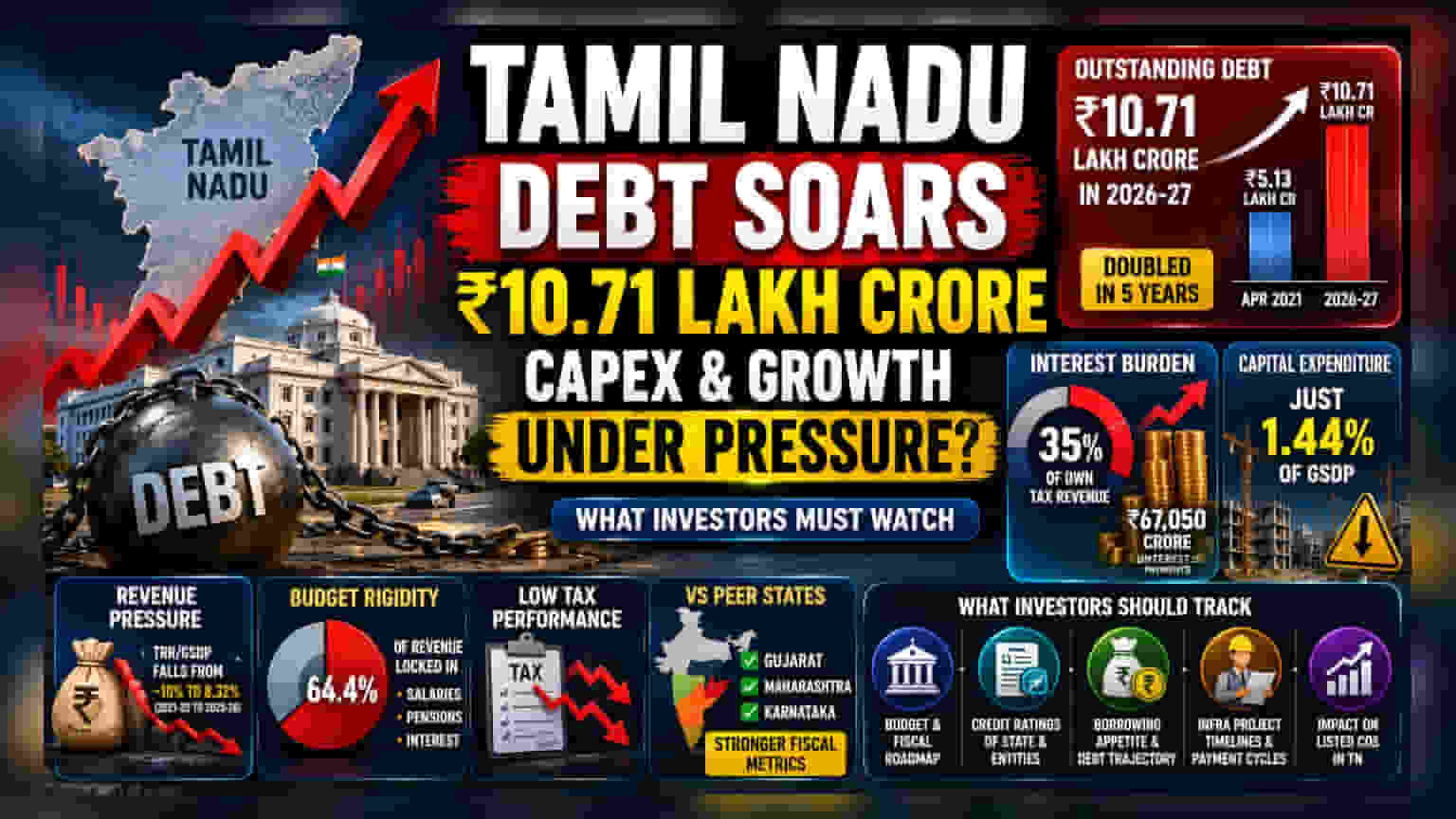
Tamil Nadu’s public debt is projected to hit ₹10.71 lakh crore in the 2026-27 fiscal year, with interest payments consuming 35% of the state’s tax revenue. This high debt burden is limiting the government's ability to fund infrastructure and development. Investors should track how this fiscal constraint impacts state-led projects and future policy decisions.
What Happened
The Tamil Nadu government is facing a challenging fiscal environment characterized by rising debt levels and limited financial flexibility. Recent data indicates that the state's outstanding debt is expected to climb to ₹10.71 lakh crore in the 2026-27 financial year. This marks a sharp increase from ₹5.13 lakh crore in April 2021, effectively doubling in five years. The state’s debt-to-GSDP (Gross State Domestic Product) ratio remains high at approximately 28.3%, indicating a persistent structural imbalance.
The Debt And Capex Trade-Off
The most critical issue for the state's balance sheet is the crowding out of development spending. Interest payments on existing debt have ballooned to ₹67,050 crore, now consuming 35% of the State’s Own Tax Revenue (SoTR). This interest burden is currently higher than the state's total annual capital expenditure. As a result, capital spending has fallen to just 1.44% of the state's GSDP. For investors, this suggests that funds which could have been allocated to infrastructure—such as roads, power, or water supply projects—are instead being directed toward servicing debt.
Revenue Mobilization Challenges
Beyond debt, the state is grappling with revenue generation pressure. Despite a growing economy, the Total Revenue Receipts (TRR) as a percentage of GSDP have dropped from nearly 10% in 2021-22 to approximately 8.32% in 2025-26. The report points to structural weaknesses in internal tax collection, specifically highlighting low performance in domestic tax efforts over the last two decades. Budgetary rigidity is also a concern, with committed expenses like salaries, pensions, and interest payments taking up 64.4% of total revenue, leaving very little room for discretionary spending on new initiatives.
Regional Context And Peers
Fiscal health is often a key differentiator for states attracting private investment. Compared to peer states like Gujarat, Maharashtra, and Karnataka, which implemented strategies to consolidate their finances following the pandemic, Tamil Nadu’s fiscal metrics indicate a slower pace of recovery. The reliance on borrowing for consumption rather than capital investment places the state in a challenging position compared to these peers, who have generally managed to keep debt levels more sustainable while maintaining higher levels of infrastructure investment.
What Investors Should Track
Investors with exposure to state-related infrastructure, municipal bonds, or entities dependent on state government contracts should remain cautious. The key monitorable will be the state government's future budget announcements, specifically any plans to improve revenue mobilization or implement fiscal consolidation measures. Credit rating updates for state-run entities and any changes in the state's borrowing appetite will be important indicators of fiscal stability. Additionally, management commentary from listed companies operating extensively in Tamil Nadu may provide insights into how state-level budgetary constraints are affecting project timelines and payment cycles.