

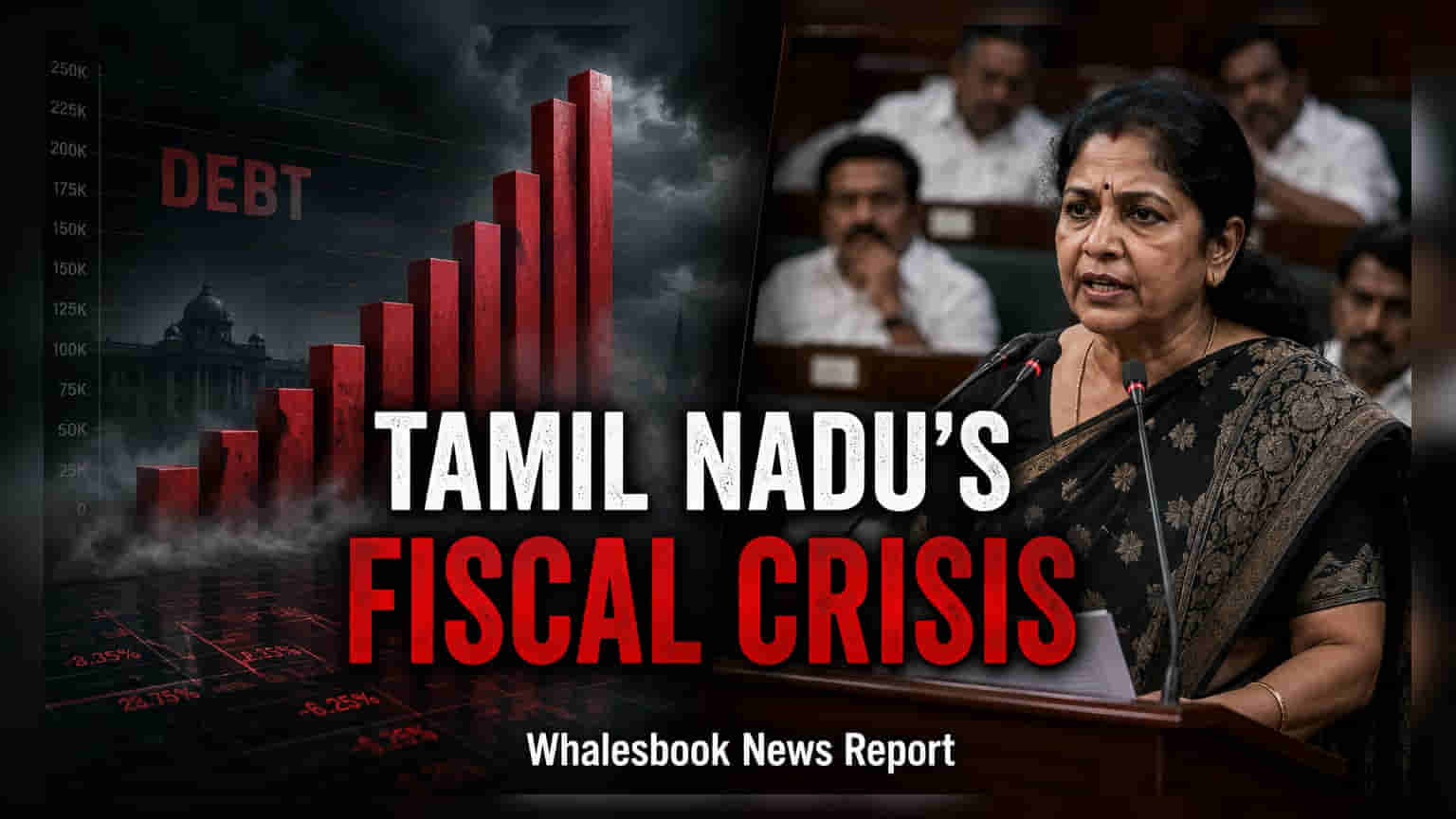
Tamil Nadu's new government, led by the TVK, has presented its first budget amid significant financial pressure, with state debt reaching ₹10 lakh crore. Finance Minister N. Marie Wilson noted that high interest payments are limiting funds for new public programs. Investors are monitoring the state's infrastructure spending, which saw a decline in the first quarter, and upcoming procurement reforms aimed at improving efficiency.
Tamil Nadu’s newly formed government, led by the Tamilaga Vettri Kazhagam, presented its maiden budget on August 5, 2026, revealing a challenging financial position. Finance Minister N. Marie Wilson reported that the state’s outstanding direct debt has reached ₹10 lakh crore. This heavy debt burden, compounded by rising interest payments, is placing significant limits on the state's financial flexibility to launch new welfare and developmental initiatives.
The government’s 'White Paper on Financial Management' highlighted a strained fiscal situation, with a projected revenue deficit of ₹55,775 crore and a fiscal deficit of ₹1,21,819 crore for the 2026-27 financial year. A significant portion of the state's revenue is now being used to service existing debt, leaving little room for new capital spending.
For investors and companies operating in the state, the current fiscal squeeze has had a direct impact on project activity. Financial data indicates that the state's capital expenditure—the money spent on building physical assets and infrastructure—fell by 20% in the first quarter of the 2026-27 financial year. A consistent decline in state-level infrastructure spending can impact demand for materials such as steel, cement, and construction services, as well as the execution timelines for regional infrastructure projects.
To address these gaps, the government has introduced reforms to the public procurement process. The new measures aim to remove the requirement for unnecessary certificates from contractors and allow vendors registered with any government department to bid for tenders. By broadening the eligibility criteria, the government hopes to increase competition among contractors. The stated goal is to lower project costs and ensure more efficient use of funds, which is critical given the current constraints.
Despite the immediate fiscal hurdles, the state has set an ambitious long-term target to grow its economy to USD 1.5 trillion by 2031. Whether this goal can be met will depend on the government's success in mobilizing revenue and managing its deficits. The key monitorable for the coming months will be the government's ability to stabilize its finances while ensuring that spending on essential infrastructure begins to recover. Market participants will likely track upcoming monthly revenue collections and quarterly updates on capital expenditure to gauge the state's fiscal health.