

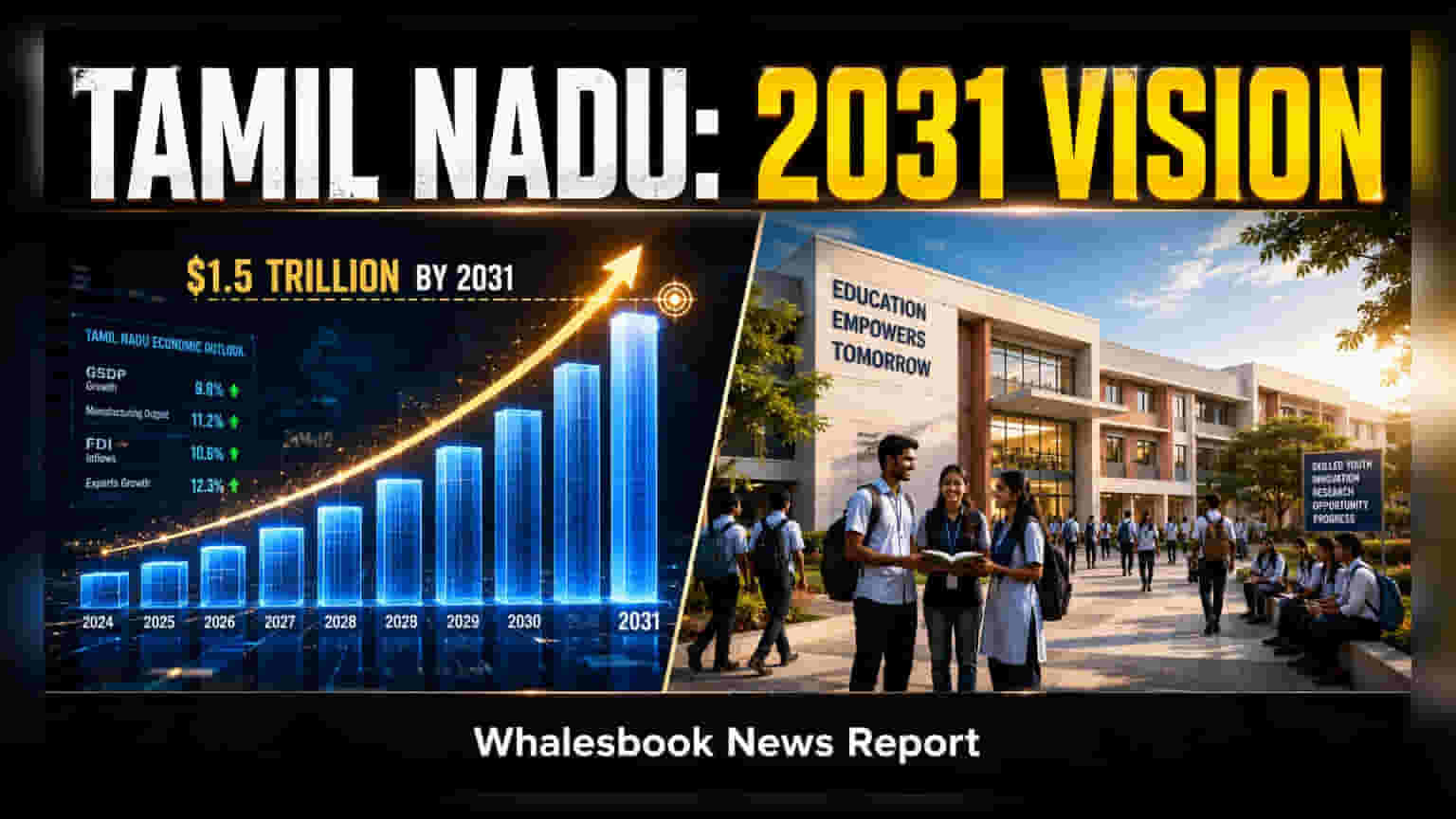
Tamil Nadu Finance Minister N. Marie Wilson has presented the state budget for 2026-27, aiming for a $1.5 trillion economy by 2031. While the plan highlights new education initiatives and welfare spending, the government acknowledged significant fiscal challenges, including a high debt burden and the need for improved revenue mobilization.
Finance Minister N. Marie Wilson presented the maiden budget for the 2026-27 fiscal year on August 5, 2026, outlining a long-term economic roadmap to elevate Tamil Nadu’s economy to $1.5 trillion by 2031. The budget balances ambitious development goals with a focus on addressing the state's tightening fiscal constraints.
Fiscal Challenges and Revenue Measures
A critical focus of the budget was the acknowledgement of the state's financial health. The government noted that total financial liabilities have doubled over the last five years, with total outstanding debt reaching ₹13.18 lakh crore as per recent official white papers. To manage this pressure, the administration has announced a new cess on liquor production, which is projected to generate approximately ₹1,000 crore in additional revenue. The government also intends to form a Revenue Enhancement Committee to identify further ways to mobilize funds, signaling that tax and non-tax revenue growth remains a top priority for balancing the books.
Education and Welfare Allocation
The budget allocated significant funds toward human capital development. The School Education Department has been granted ₹44,527 crore, while the Higher Education Department received ₹8,393 crore. Key initiatives include the 'Vetri Laptop Scheme' for college students, with an allocation of ₹2,000 crore aimed at supporting digital learning. Additionally, a modernization program for 3,734 state-run schools is set to receive ₹300 crore, while the 'Super Clean, Super Campus' initiative will dedicate ₹139 crore to upgrading facilities across 10,000 schools.
Governance and Tendering Reforms
To improve fiscal transparency and prevent misuse of public funds, the government is introducing reforms to its public tendering system. This move is aimed at reducing favoritism in government contracts, which is a key part of the administration's broader strategy to restore fiscal discipline. These reforms follow political discussions regarding the state’s economic management and the need for a more accountable spending framework.
Monitoring the Economic Roadmap
For investors and market participants, the ability of the state to meet its $1.5 trillion economic target while managing a debt load of over ₹13 lakh crore will be the primary monitorable. Success will depend on the government's ability to execute its revenue-raising measures, control expenditure, and foster private investment to drive growth. Stakeholders will be watching for the effectiveness of the new Revenue Enhancement Committee and the implementation timeline for planned infrastructure and industrial projects in the coming quarters.