 Whalesbook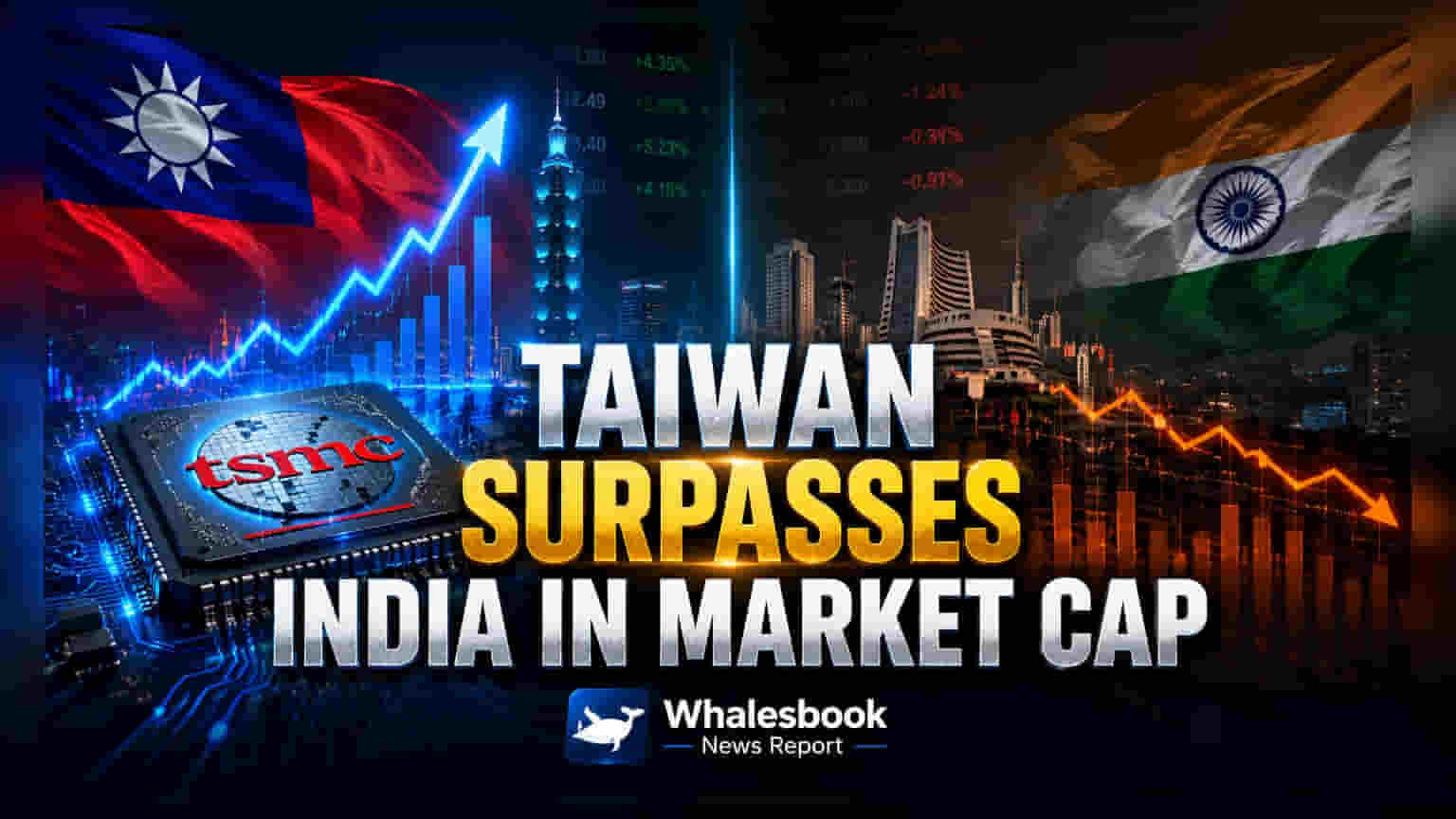


Market Leadership Shifts on AI Demand
The global allocation of institutional funds in Asia is changing significantly. Indian markets, long seen as a strong growth option, are now being rebalanced as the semiconductor cycle accelerates. Taiwan's TAIEX index has become a proxy for AI infrastructure development, with semiconductor companies driving the market's momentum. In contrast, India's Nifty 50 index is rooted in financial services and consumer spending, sectors showing signs of slowing as inflation persists and consumer data softens.
Different Economic Drivers Clash
Economies reliant on hardware are diverging from those focused on consumption. Taiwan is at the heart of global capital spending, benefiting from major investments by tech giants like Microsoft and Google in data centers. Meanwhile, Indian stocks face valuation concerns, with many trading at high price-to-earnings ratios compared to their average growth. This has led some foreign investors to take profits, and a previous surge in local investment has waned, making the market vulnerable to outflows.
Risks in Taiwan's Focused Growth
Despite the current excitement, Taiwan's market faces structural risks. Its entire index performance is heavily dependent on the semiconductor sector, the geopolitical situation in the Taiwan Strait, and the capital spending of a few major U.S. tech companies. If the AI build-out slows or competition increases, margin pressure could cause significant volatility. The market also relies on a single Dutch supplier for critical high-end lithography equipment, posing a single point of failure for the supply chain.
Strategic Market Outlook
Investors are now weighing the sustainability of chip manufacturing margins against the recovery prospects of India's domestic sectors. While Taiwan's tech-heavy model currently leads, opinions are divided on whether this is a long-term structural change or a temporary AI-driven trend. Data suggests that institutional investors will likely continue to favor East Asia's semiconductor markets until Indian companies show clear margin improvements and more reasonable valuations.