

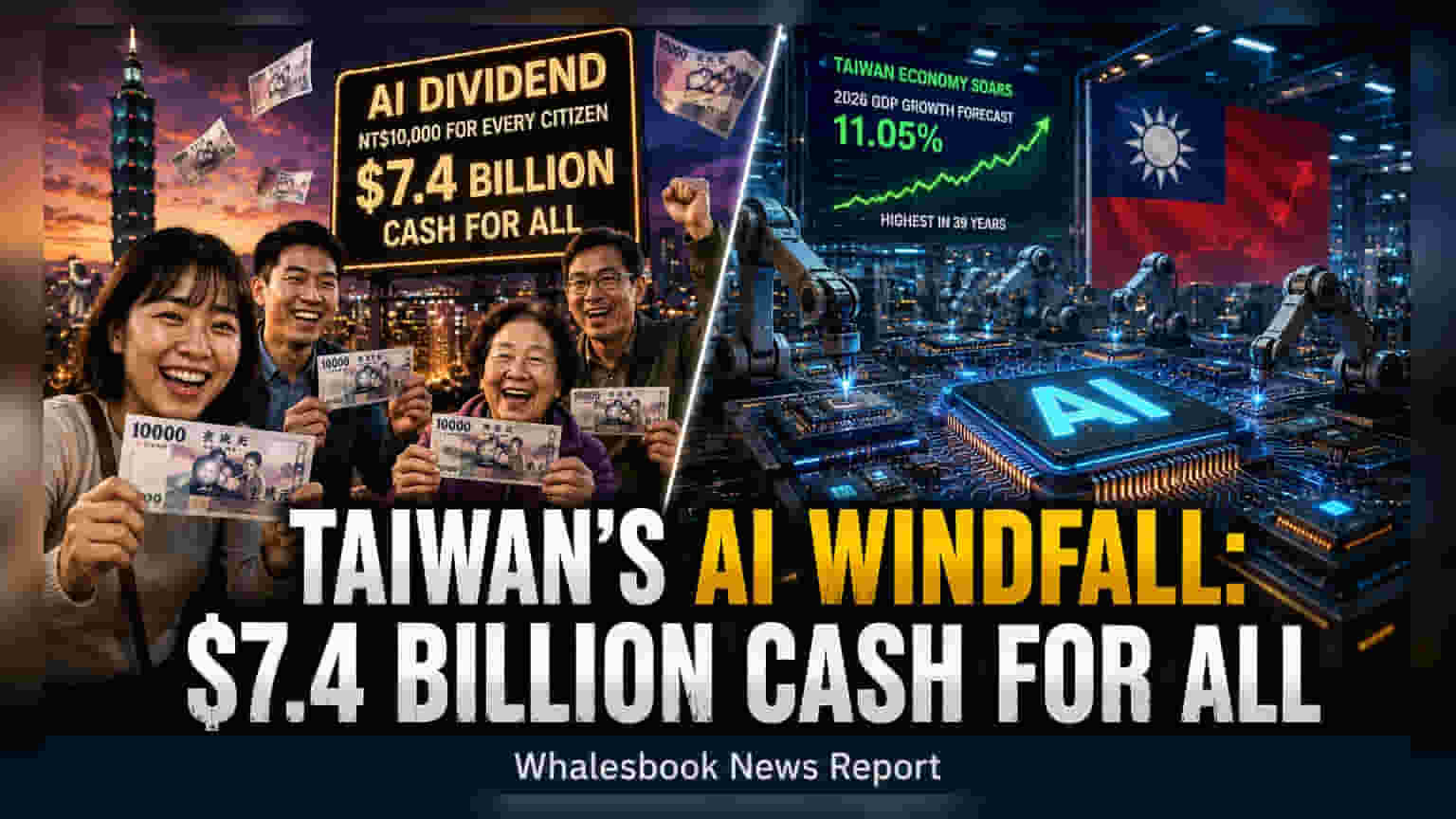
Taiwan's government plans to distribute NT$10,000 to every citizen in 2027, totaling NT$235.7 billion (~$7.4 billion), funded by record tax revenue from the booming AI and semiconductor sector. While the proposal aims to share the nation's 11.05% economic growth, it faces legislative challenges and criticism over potential political motivations.
The government of Taiwan has announced a proposal to distribute NT$10,000 (approximately $314) in cash to every citizen in 2027. This initiative, valued at NT$235.7 billion (roughly $7.4 billion), is being framed as an "AI dividend" by the administration. The plan is designed to share the financial rewards of the island's surging economic performance, which is largely powered by the global demand for artificial intelligence, cloud services, and high-performance computing hardware.
AI-Driven Economic Growth
Taiwan's economy has seen a rapid expansion in 2026, with the government raising its growth forecast to 11.05%, marking the highest projection in 39 years. This economic jump is primarily driven by the massive inflow of orders for semiconductors and related ICT products that are essential for the global AI boom. In the first half of 2026 alone, the economy grew by 14.15%. This surge in manufacturing activity has significantly boosted government revenue, creating a surplus that the administration intends to use for this handout without resorting to new borrowing or increasing the national debt.
Legislative and Economic Hurdles
The proposed handout is not yet finalized and must pass through the Legislative Yuan. The initiative has encountered immediate resistance from opposition parties, including the Kuomintang (KMT). Critics have labeled the move as populist, suggesting that it is timed to gain political favor ahead of local elections. There are concerns about potential legislative gridlock, as seen with past budget deliberations in the country.
Beyond the political debate, the proposal highlights a structural imbalance in the economy. While the technology and semiconductor sectors are thriving due to the AI wave, many traditional industries, small businesses, and the service sector have not seen the same level of prosperity. President Lai Ching-te has acknowledged that this growth has been uneven, and while the handout is intended to help households cope with expenses such as education and elder care, some economists argue that it does not address the underlying gap between the high-tech sector and the rest of the economy.
Global Supply Chain Impact
For international observers and market participants, the situation underscores the extreme reliance of the global economy on Taiwan's technology prowess. The revenue surge that makes this handout possible is a direct result of Taiwan’s dominance in chip manufacturing. As the government prepares to present the full 2027 budget, which will also include a significant increase in defense spending to over NT$1 trillion, the focus will remain on whether the legislature approves the spending plan and how the government balances these populist payouts with long-term infrastructure and security needs.