

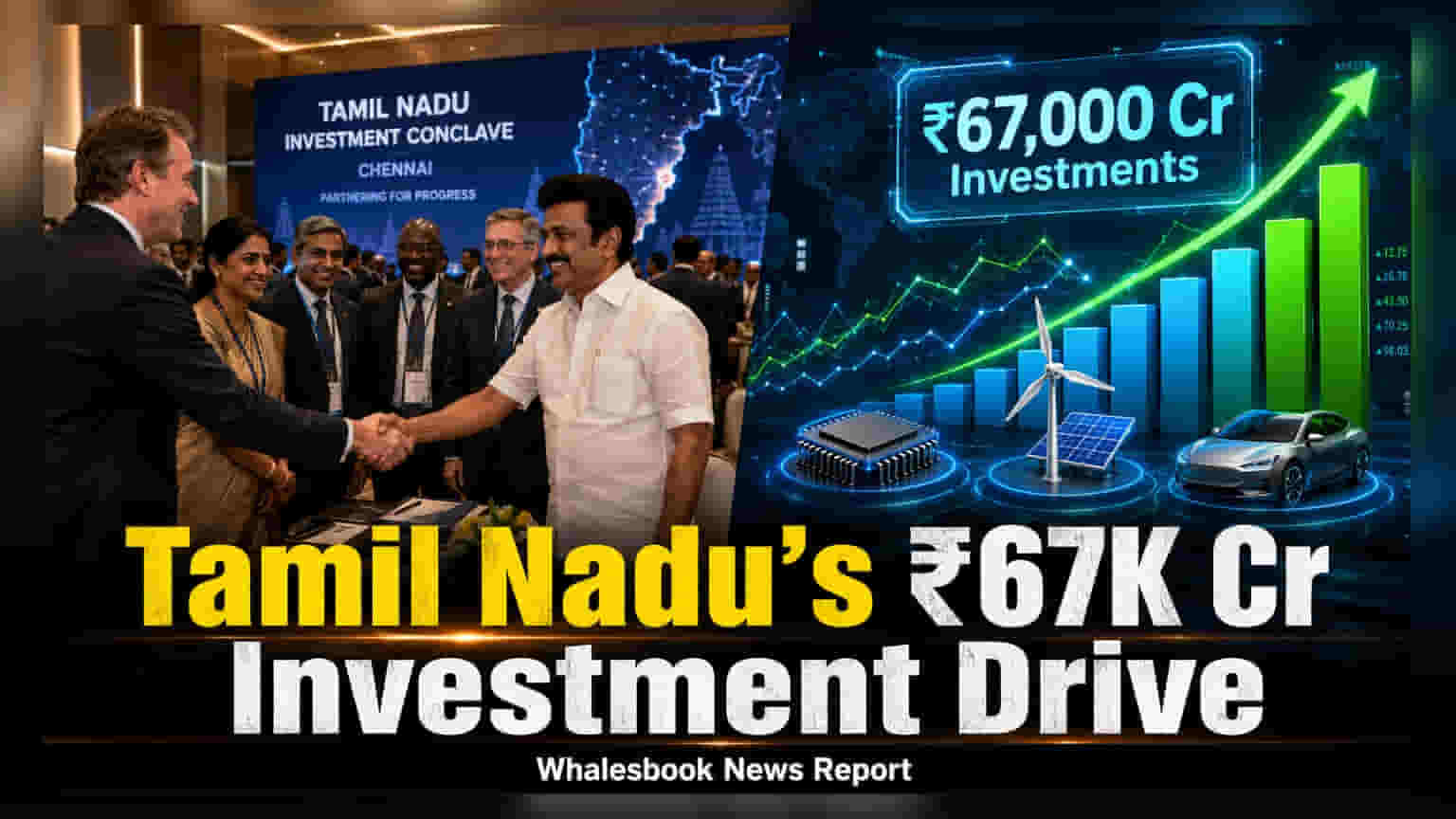
The Tamil Nadu government secured 97 agreements worth over ₹67,452 crore during its first major investment event. The deals prioritize spreading industrial development across 20 districts to boost local jobs. Investors will now watch how effectively these pledges convert into actual construction and operational factories.
The Tamilaga Vettri Kazhagam (TVK) government held its inaugural Vettri Tamil Nadu Investment Conclave 2026 in Chennai on August 13, aiming to establish its economic development agenda. The event resulted in the signing of 97 Memorandums of Understanding (MoUs) with a total investment value of ₹67,452 crore. This initiative is designed to create approximately 106,998 new jobs across various sectors.
Strategic Focus on Decentralization
A key theme of this conclave is the geographical distribution of industrial growth. Unlike previous trends that heavily favored established industrial corridors near major cities, more than half of these new projects are planned for regions outside traditional hubs. By spreading investments across 20 districts, the government aims to balance industrial activity throughout the state and reduce regional economic disparities. The project portfolio includes sectors such as electronics, renewable energy, aerospace, mobility, and Global Capability Centers (GCCs).
Investment Reality and Execution Risks
For investors monitoring the state's economic health, it is important to distinguish between announced MoUs and actual realized investment. Historically, state-level investment conclaves often see a gap between the value of signed MoUs and the capital that is eventually deployed on the ground. The conversion of these pledges into operational factories depends heavily on the government’s ability to provide land, power, water, and road connectivity efficiently.
Furthermore, the state budget currently accommodates significant welfare expenditure. Analysts often watch whether this high spending on social programs limits the fiscal space available for large-scale industrial infrastructure development. If fiscal resources are stretched, the speed of project execution could be impacted.
What Investors Should Monitor Next
The ultimate impact of this conclave will depend on the implementation timeline. Interested observers and market participants will likely track the progress of land allotment for these projects, the speed at which developers secure necessary environmental clearances, and updates on infrastructure projects in the 20 districts identified for expansion.
Because many of these are greenfield projects—meaning they are starting from scratch in new locations—the ability of the administration to resolve local regulatory or logistical issues will be a primary indicator of the project’s success. The government’s ability to maintain a consistent policy environment while managing its fiscal balance will be the key factor determining how many of these ₹67,452 crore in pledges turn into functioning businesses.