

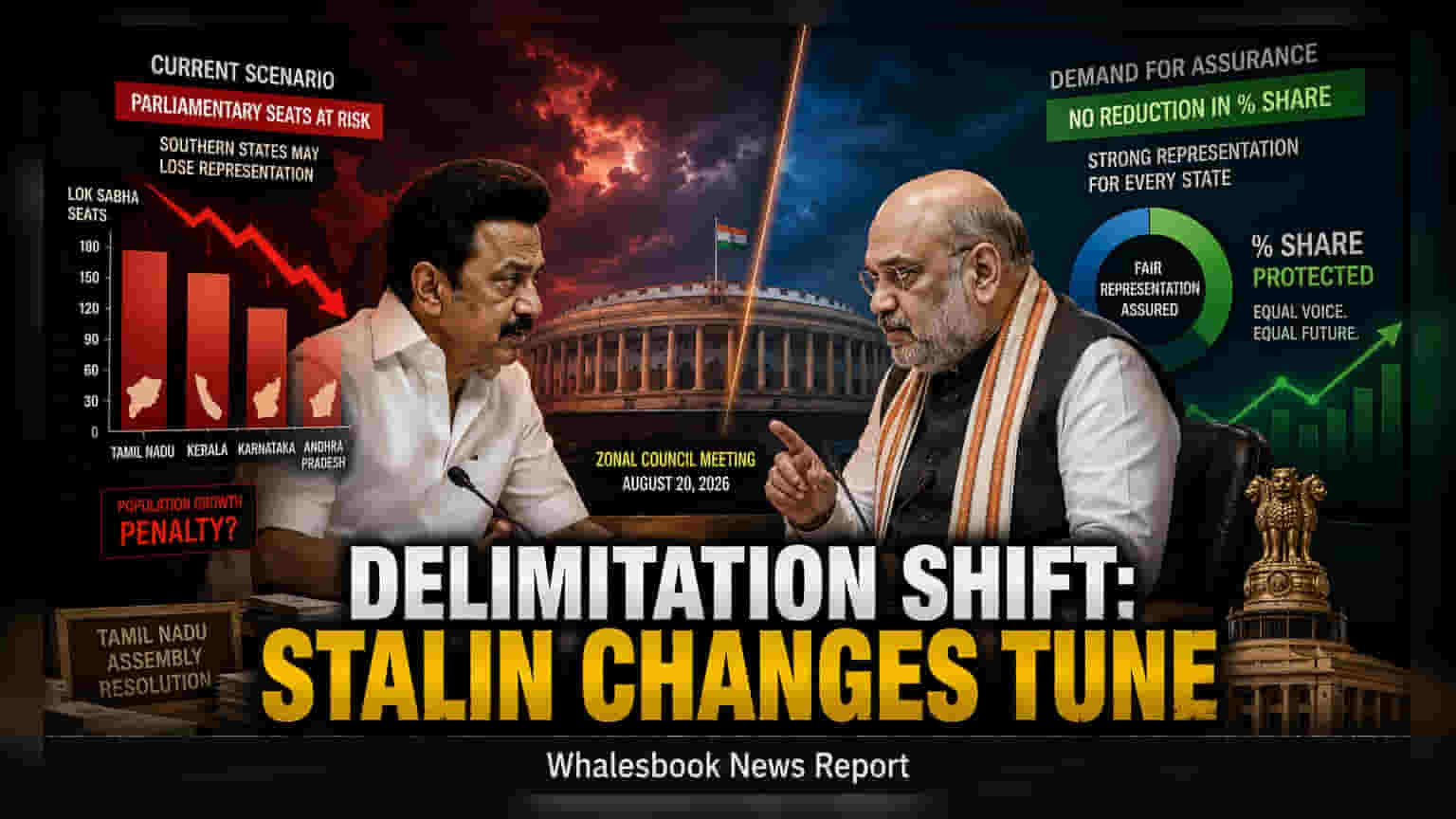
Tamil Nadu Chief Minister C. Joseph Vijay has adjusted his position on the parliamentary delimitation issue following a meeting with Union Home Minister Amit Shah. While the state previously sought a strict freeze on Lok Sabha seats, the government is now calling for legislative assurances regarding state representation. This policy shift has drawn criticism from opposition parties, who have termed the move a reversal of the state's official assembly resolution.
Tamil Nadu Chief Minister C. Joseph Vijay has signaled a change in the state's approach regarding the delimitation of parliamentary constituencies. This development follows a high-level meeting with Union Home Minister Amit Shah at the 31st Southern Zonal Council conference held on August 20, 2026.
Only days prior, on August 12, 2026, the Tamil Nadu Assembly had passed a formal resolution demanding a permanent freeze on the total number of Lok Sabha seats at 543 and the maintenance of current state-wise seat allocations. The opposition and many state stakeholders had argued that states like Tamil Nadu, which have successfully controlled population growth, should not be penalized with reduced parliamentary representation compared to states with higher population increases.
However, during the zonal council meeting, Chief Minister Vijay did not reiterate the demand for a permanent 543-seat freeze. Instead, his remarks focused on requesting a clear legislative assurance from the Union government that no state would face a reduction in its percentage share of parliamentary representation due to population stabilization measures. This subtle change in language has been interpreted by many observers as a move away from the assembly's previous hardline position.
The shift in tone has sparked significant political friction within the state. Opposition parties, including the DMK and AIADMK, have accused the Chief Minister of executing a sudden policy reversal or U-turn. Critics argue that the move undermines the state's initial resolution and suggest it reflects pressure from the central government. Political analysts note that such flip-flops on sensitive federal issues can complicate the state's bargaining power in national legislative negotiations.
For investors and market participants, policy stability and federal-state relations are important factors in assessing regional governance. While the current development is primarily a political and constitutional issue, the lack of a unified front from southern states on the delimitation bill could potentially influence the legislative roadmap in Parliament. Investors typically monitor such policy debates as they can impact center-state cooperation on infrastructure, taxation, and economic projects.
The next phase of this issue will depend on whether the Union government provides the legislative assurances the Chief Minister has requested. Market participants and political observers will likely track the upcoming parliamentary sessions, where any proposed delimitation legislation will be the primary indicator of how the Centre plans to balance the demands of different states. The ability of the state government to maintain political consensus while navigating these federal policy discussions remains a key monitorable.