

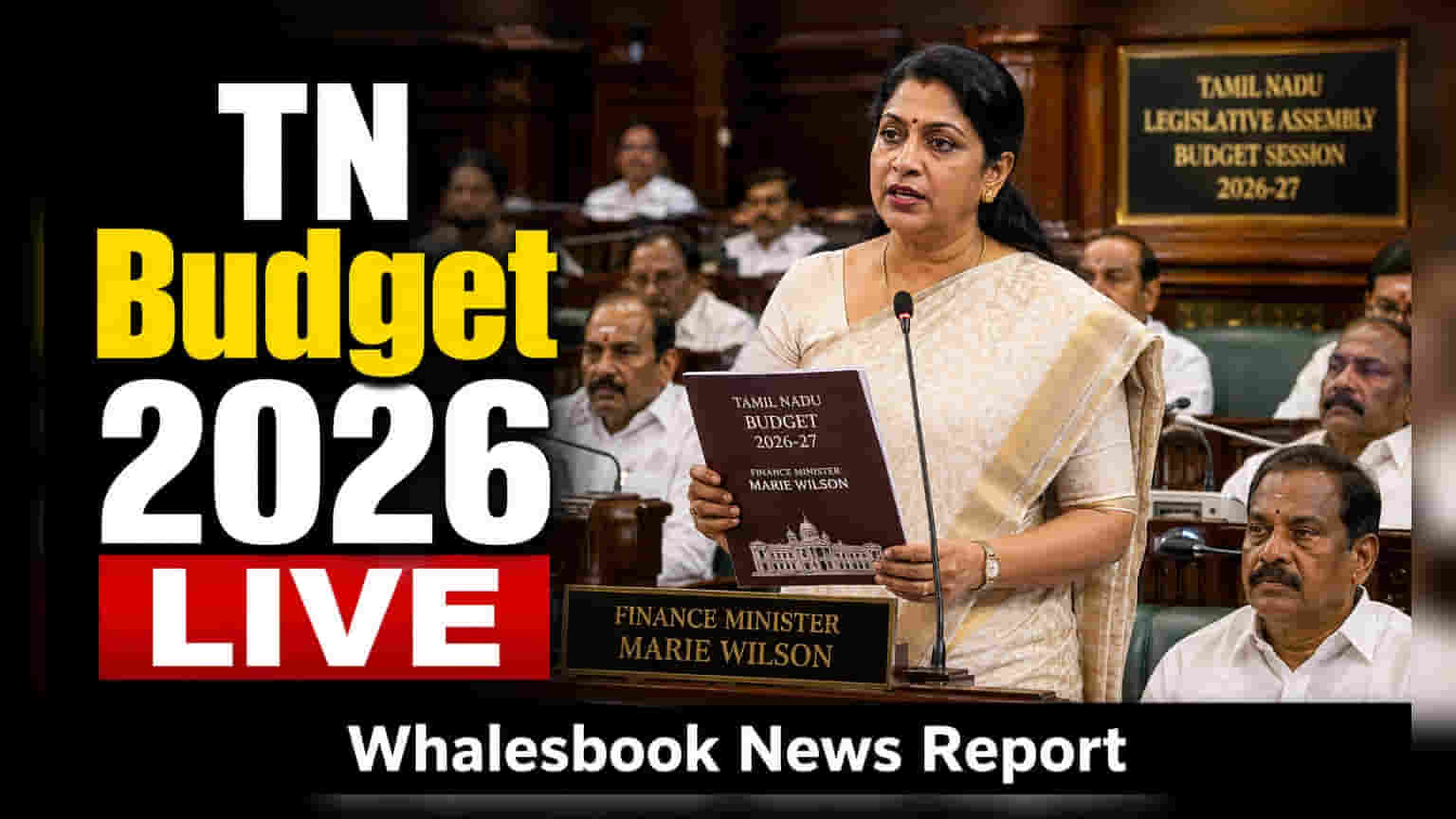
Tamil Nadu Finance Minister N. Marie Wilson today presented the maiden budget for the TVK-led government. The focus remains on managing the state's reported ₹13.18 lakh crore debt while fulfilling welfare promises. This budget sets the roadmap for the administration's fiscal policy and development plans, which are critical for the state's economic outlook.
Tamil Nadu Finance Minister N. Marie Wilson presented the first budget of the newly formed Tamilaga Vettri Kazhagam (TVK) government in the state Legislative Assembly today. Led by Chief Minister C. Joseph Vijay, the administration faces the critical task of balancing ambitious welfare promises with the state's challenging financial position.
Investors and industry observers are closely examining the budget documents for the government's stance on fiscal consolidation and its strategy for managing the state's debt burden. A White Paper released by the government in June 2026 highlighted a total state debt of approximately ₹13.18 lakh crore, a figure that remains a central point of concern for analysts monitoring the state’s long-term financial health and creditworthiness.
The core challenge for the administration is to implement election manifesto commitments—such as enhanced financial support for women and youth—without crowding out essential capital expenditure. In a state where infrastructure development and industrial growth are vital, the allocation of funds toward long-term assets versus recurring welfare subsidies will determine the fiscal trajectory for the coming years.
The budget is expected to outline the government's approach to revenue reforms to improve the state's income, which has been under pressure. For sectors linked to Tamil Nadu's economy, including manufacturing, textiles, and information technology, the government's plans for land acquisition, policy incentives, and infrastructure upgrades will be important monitorables.
From a financial perspective, the government's ability to navigate these fiscal constraints will influence the state's capacity to undertake new projects. Any shift toward high-subsidy spending could put pressure on the state’s fiscal deficit, whereas a focus on productivity-linked spending could support economic growth. Investors will likely look for clarity on the timeline for major infrastructure projects and the government's strategy to address the ongoing revenue deficit. The next important step will be the detailed sector-wise breakdown and the government's timeline for implementing these new policy initiatives.