

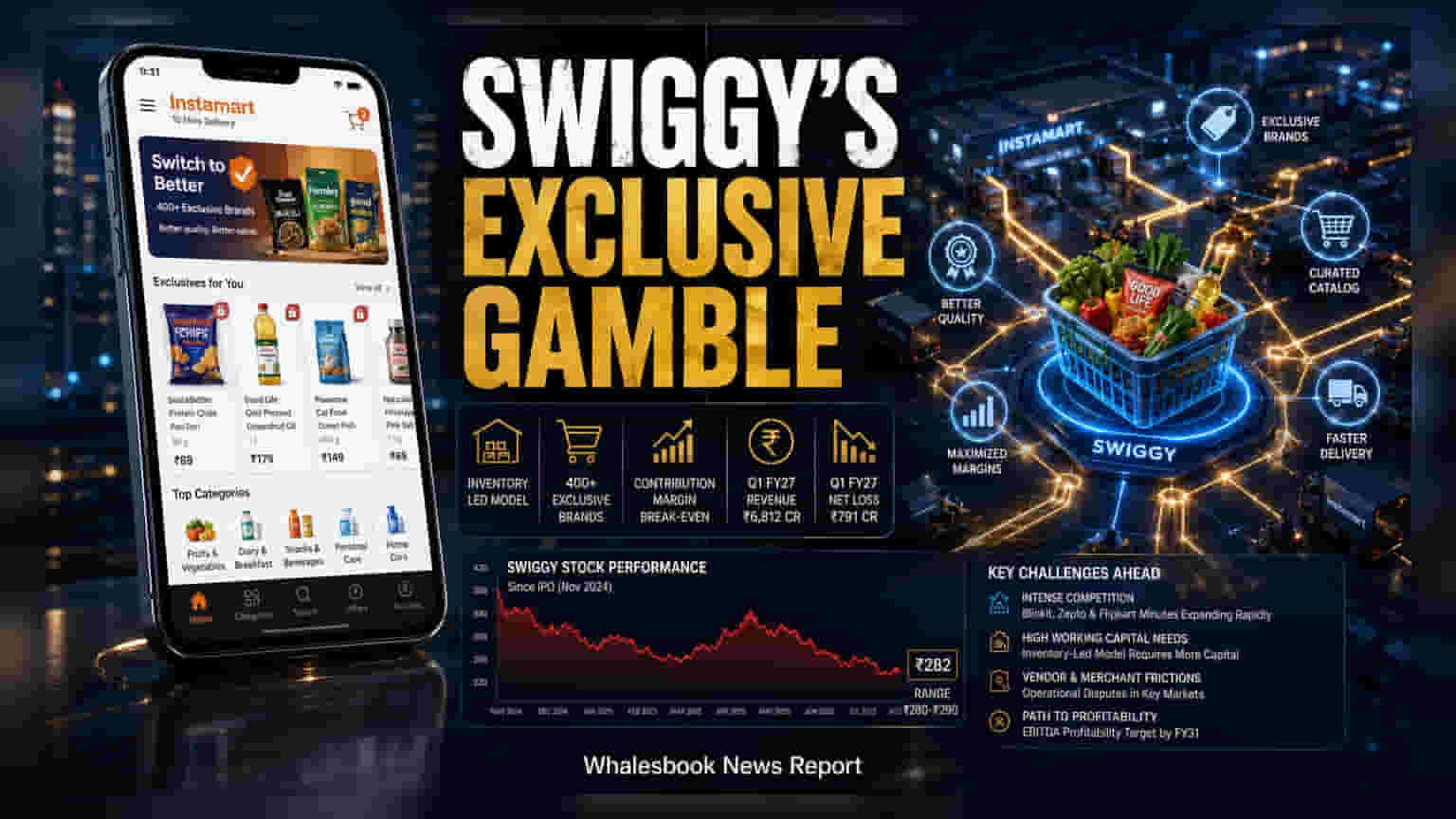
Swiggy Instamart is prioritizing exclusive product ranges and the 'Switch to Better' initiative to differentiate itself from quick-commerce rivals. As the company shifts toward an inventory-led model, investors are monitoring its progress toward sustainable profitability despite persistent consolidated losses and rising competition from platforms like Flipkart Minutes.
Swiggy is intensifying its focus on platform-exclusive products and emerging brands to distinguish its Instamart service from a crowded quick-commerce market. Through its 'Switch to Better' initiative, which includes over 400 partner brands, the company is curating a catalog of unique items and custom pack sizes. This strategy aims to reduce direct price comparisons with competitors, moving away from a commoditized model where apps compete primarily on delivery speed and discounts.
The strategic push comes as Swiggy pivots Instamart toward an inventory-led model. In this setup, the company takes greater control over stock, a shift designed to improve product availability and margins, mirroring the approach taken by market leader Blinkit. The company’s recent performance shows progress, with Instamart reaching contribution margin break-even, meaning it is successfully covering the direct costs associated with fulfilling orders. For the first quarter of fiscal year 2027, Swiggy reported consolidated revenue of ₹6,812 crore and a net loss of ₹791 crore.
Despite these operational improvements, the quick-commerce sector remains highly competitive. Blinkit continues to hold a significant market share, while Zepto remains a key rival. Furthermore, Flipkart Minutes has expanded aggressively, recently surpassing Swiggy Instamart in the number of dark stores—local distribution centers—across several of India's top cities. This rapid expansion by competitors adds pressure on Swiggy to maintain its market position while balancing the high costs of building a vast network.
For investors, the stock’s performance since its IPO in November 2024 has been challenging. Listing at ₹390 per share, the stock has traded downward, recently hovering in the ₹280 to ₹290 range. This price movement reflects broader market caution regarding the path to profitability for quick-commerce giants. While the move to an inventory-led model is intended to boost efficiency, it introduces new risks, including increased working capital requirements and the need for stricter inventory management to avoid waste or stockouts.
Additionally, the company faces operational friction. The push for tighter control over inventory and exclusive partnerships has led to occasional tensions with vendors and merchants, with some disputes over operational terms surfacing in key markets. Managing these relationships is essential as the company attempts to scale. The long-term success of Swiggy’s current strategy will depend on its ability to maintain growth while narrowing its consolidated losses, with the company facing significant pressure to hit EBITDA profitability targets by the 2031 fiscal year.