

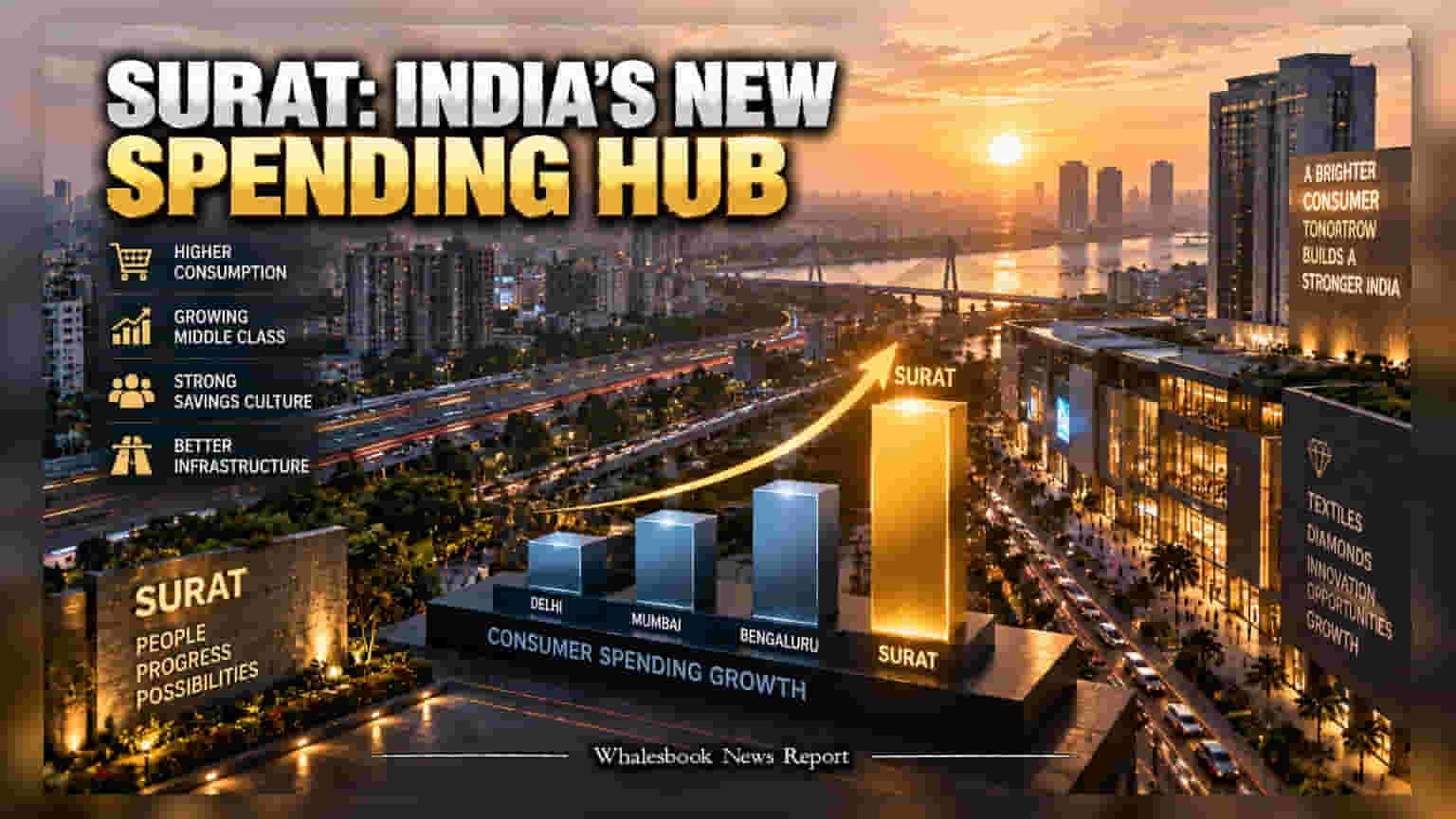
Surat has emerged as a $30 billion consumption market, outpacing major metros like Bengaluru in household spending. Driven by a shift toward discretionary purchases and a disciplined financial approach, the city is leading a new wave of 'Boomtowns.' This trend signals a major change in where consumer growth is happening, impacting businesses focused on retail, automotive, and lifestyle products.
Surat is fundamentally changing the map of India’s consumer economy. While established metros like Mumbai, Delhi, and Bengaluru have long been the primary focus for businesses, the emergence of Surat as a $30 billion consumption market marks a structural shift in where the money is being spent. Recent economic data confirms that Surat now rivals, and in some household spending metrics, even surpasses, traditional Tier-1 cities, signaling the rise of a new category of 'Boomtowns.'
This growth is not just about a higher number of households but a transformation in how those households allocate their income. A decade ago, a large portion of the average family budget was reserved for essential food items. Today, that share has dropped to roughly 31%, as families shift their spending toward discretionary categories like transport, education, and housing. Surat’s high weekend spending, which reaches over twice the levels seen on weekdays, confirms a growing appetite for lifestyle and premium experiences.
Financial discipline sets the city apart from older, more saturated urban centers. Households in Surat demonstrate a strong focus on security, with 92% saving for potential emergencies. Furthermore, the city maintains a debt-to-income ratio of 15.4%, which is significantly lower than the 18.5% observed in India's six largest metros. This fiscal health suggests that the surge in consumption is likely backed by steady income rather than excessive borrowing, offering a more stable foundation for businesses looking to expand.
However, this rapid growth brings specific structural risks that investors and businesses should acknowledge. The local economy remains heavily concentrated in traditional sectors like diamond processing and textiles. This heavy reliance makes the city’s economic performance particularly sensitive to global commodity cycles, trade policy changes, and fluctuations in international demand for these goods. Any downturn in these core industries could impact local purchasing power more severely than in more diversified economies.
Furthermore, broader economic pressures pose challenges for this consumption hub. Global geopolitical tensions have contributed to input cost inflation, making consumer goods more expensive and potentially straining discretionary budgets. Rising energy costs also continue to pressure the price of both products and services, which could temper the speed of growth if sustained over the long term. Despite these hurdles, infrastructure development remains a strong tailwind, with over ₹18,800 crore in government-backed projects recently focused on strengthening the city’s connectivity and industrial capacity.
For those monitoring this economic shift, the key focus areas will be how Surat’s consumer demand holds up against inflation and whether the city can successfully diversify its industrial base. The pace of infrastructure commissioning and the ability of local businesses to manage input costs in the face of global commodity volatility will be the primary factors determining if this growth trend remains sustainable.