 Whalesbook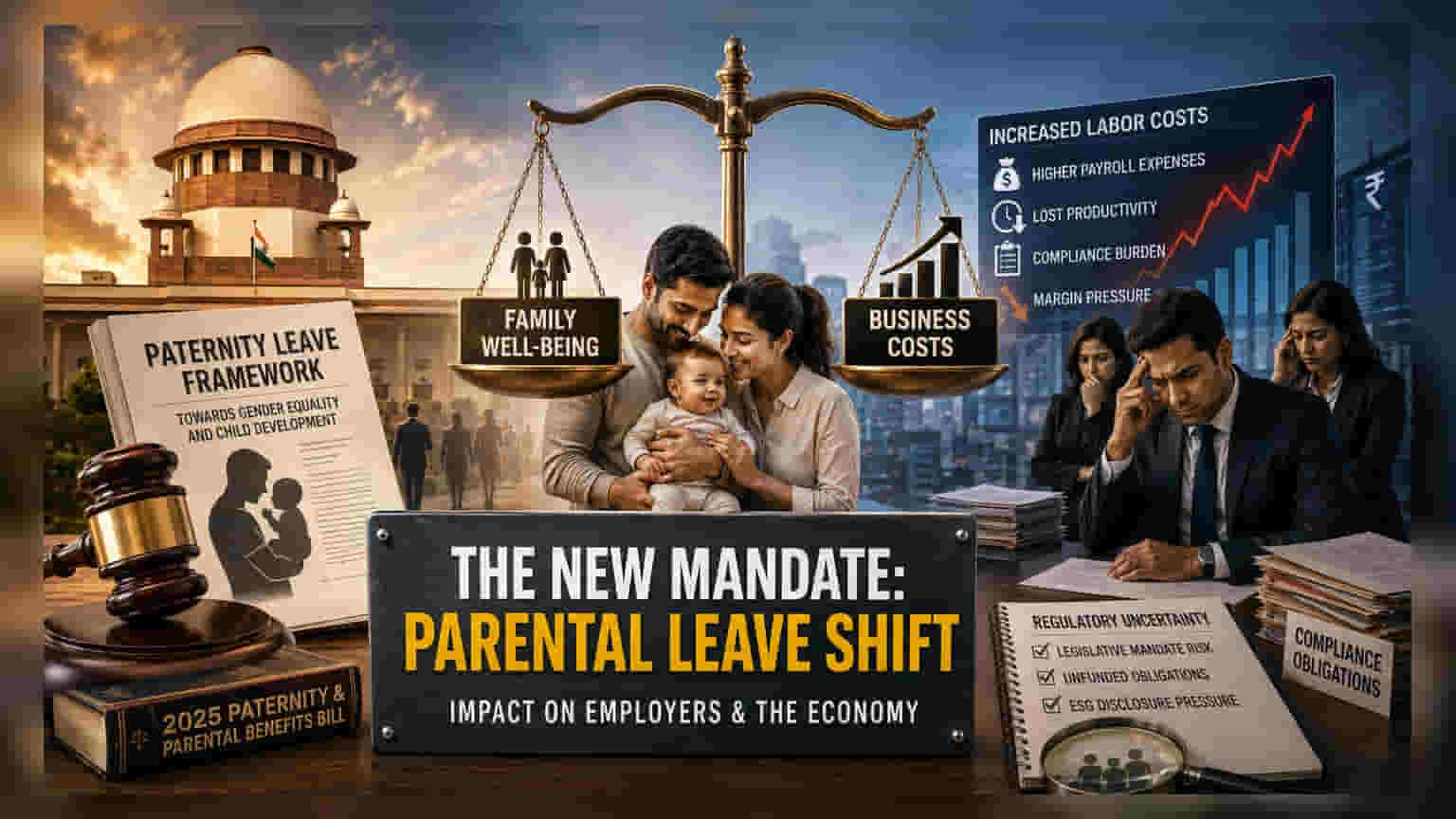


The Shift in Operational Liability
The judicial push for a comprehensive paternity leave framework represents a transition from voluntary workplace culture to potential legislative mandate. By framing paternal absence as a developmental hurdle for children and a barrier to gender equality, the Supreme Court is actively narrowing the gap between public sector benefits and private sector obligations. For firms, this signifies that human capital costs may soon include expanded statutory leave, moving beyond existing localized or sector-specific arrangements.
Economic Implications and Hiring Bias
Economically, the current lack of uniform paternity leave distorts labor market dynamics by inadvertently penalizing female candidates. When caregiving burdens remain asymmetrical, firms often internalize the cost of maternity leave as a gender-based hiring risk. However, the introduction of universal paternity benefits—as proposed in the 2025 Paternity and Parental Benefits Bill—would effectively socialize these costs across the workforce. While this could theoretically mitigate hiring bias against women, it introduces a permanent increase in payroll expenditures for employers. Analysts suggest that sectors with high labor intensity and tight profit margins, such as retail and manufacturing, are most vulnerable to these potential legislative adjustments.
The Forensic Bear Case: Legislative and Cost Risks
The primary risk for corporate stakeholders lies in the potential for erratic regulatory implementation. Unlike the more stable environments found in Nordic models, domestic implementation of paternity leave often struggles with bureaucratic inefficiency and unfunded mandates. If the legislature moves to adopt a rigid quota system without tax incentives or compensation pools, companies will bear the full weight of lost productivity. Furthermore, historical data on labor law reforms suggests that statutory changes rarely come with cost-offset mechanisms, leaving smaller firms—which lack the balance sheet capacity of multinational corporations—to absorb the financial impact. The reliance on the 2025 Bill as a benchmark remains speculative, as the current legislative session has yet to demonstrate the appetite required to harmonize such a significant shift in labor law.
Anticipating Future Regulatory Creep
Market participants should prepare for a period of heightened uncertainty regarding employment contracts and social security obligations. As the judiciary continues to emphasize these requirements, institutional investors are likely to monitor ESG-related filings more closely for parental leave disclosures. Companies that proactively adopt flexible leave policies may avoid the regulatory drag associated with sudden, non-negotiable legal mandates, yet this proactive stance carries an immediate burden on operating cash flow. The trajectory suggests that paternity leave is moving from a talent-acquisition perk to a baseline regulatory requirement, fundamentally altering the cost-benefit analysis for domestic employers.