

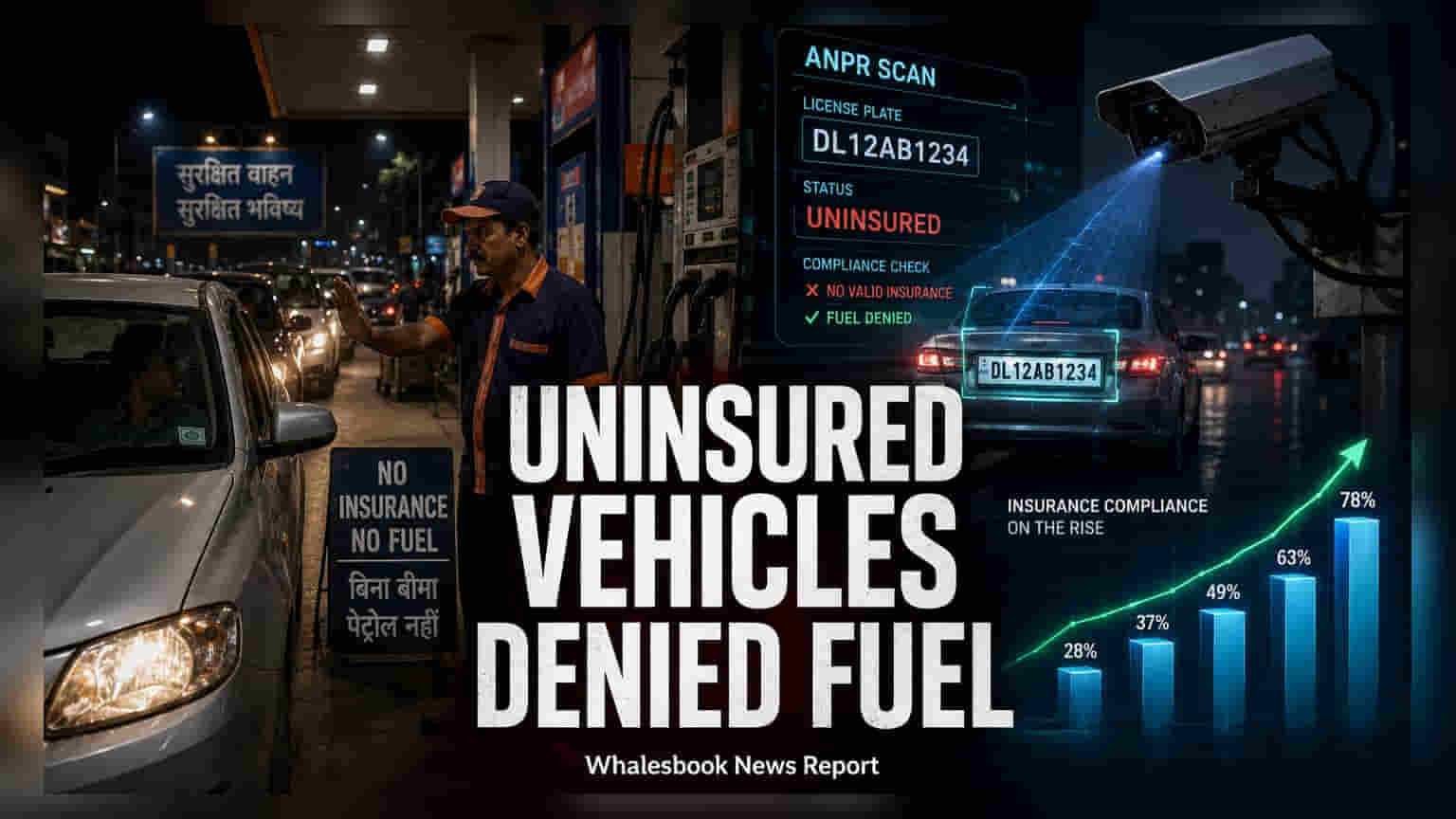
The Supreme Court has ordered authorities to create a pilot program to deny fuel to vehicles without valid third-party insurance. This move aims to fix the issue of approximately 56% of vehicles currently plying on Indian roads without coverage. The initiative will use technology for enforcement, though it faces potential operational challenges at fuel stations.
The Supreme Court of India has directed the government and the Insurance Regulatory and Development Authority of India (IRDAI) to develop a pilot project that links fuel sales at petrol pumps to a vehicle's valid third-party insurance status. A bench led by Justices Sanjay Karol and Prashant Kumar Mishra issued this directive to strengthen enforcement of the Motor Vehicles Act, which requires all vehicles on the road to be insured.
The initiative addresses a critical compliance gap in the Indian transport sector. According to data from the 2024-25 Standing Committee on Finance cited during the proceedings, approximately 56% of vehicles in India—roughly 16.54 crore out of 30.48 crore—are currently uninsured. This lack of coverage poses significant problems for accident victims who struggle to secure financial compensation when involved in collisions with uninsured vehicles.
To facilitate this, the Ministry of Petroleum and Natural Gas has expressed that it has no objection in principle to the proposal. The court also suggested that the government increase the mandatory period for third-party insurance for new vehicles. Under the proposed changes, the requirement for new cars would rise from 3 to 4 years, and for new two-wheelers, it would move from 5 to 6 years.
Technological integration will form the backbone of this enforcement strategy. The court proposed linking Automatic Number Plate Recognition (ANPR) cameras with the VAHAN portal and the Insurance Information Bureau (IIB) database. This system would allow authorities to instantly identify uninsured vehicles and issue electronic challans. By automating this process, the government aims to reduce the need for manual traffic stops and improve the speed of compliance enforcement.
While the objective is to improve safety and financial security for road users, the proposal brings potential operational risks. Implementing such a system requires seamless real-time connectivity between fuel station databases and insurance records. Any lag or system glitch could result in long queues, delays at fuel pumps, and public inconvenience. Petrol pump operators and oil marketing companies may face administrative hurdles in managing these verification processes without disrupting daily operations. Investors and industry observers will be watching the pilot project closely to see how the government balances strict enforcement with the operational efficiency required at fuel stations.