

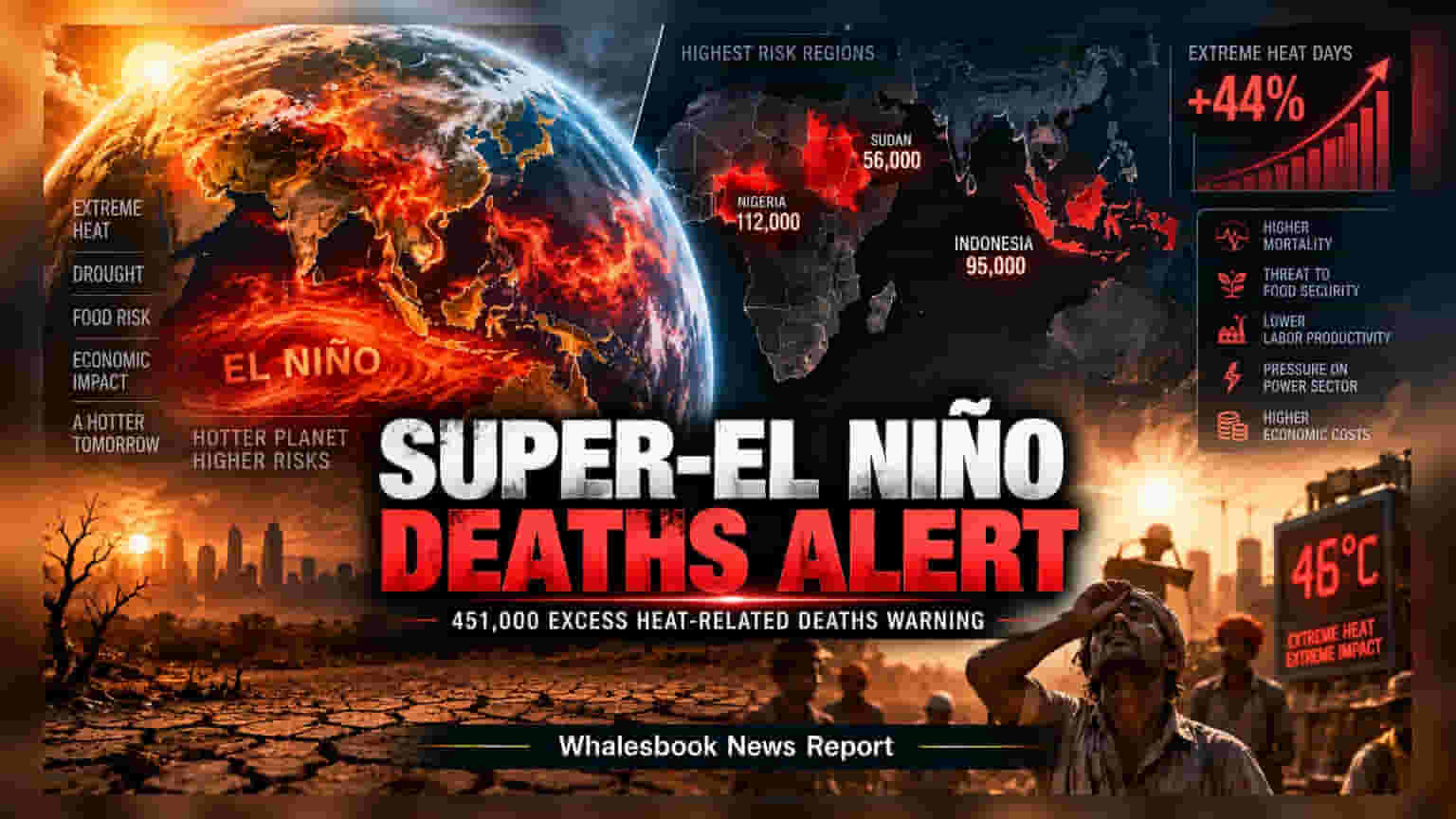
A report from the University of Chicago’s Climate Impact Lab predicts 451,000 excess heat-related deaths by February 2027. The findings highlight significant economic risks for developing nations, including India, where extreme heat impacts labor productivity, agricultural yields, and energy infrastructure demands.
The Climate Impact Lab at the University of Chicago has released a report warning that a powerful super-El Niño event could trigger 451,000 excess heat-related deaths worldwide between September 2026 and February 2027. The research indicates that the frequency of extreme heat days is expected to increase by 44% during this period, presenting a severe challenge for public health and economic stability in equatorial and arid regions. Nigeria, Indonesia, and Sudan are identified as the most vulnerable, with significant projected mortality figures, though the study highlights that these conditions serve as a broader warning for long-term climate trends.
For investors and policymakers in India, these findings carry implications for the domestic economy. Extreme heat is closely linked to productivity losses in labor-intensive sectors such as construction and manufacturing. When temperatures breach safety thresholds, labor efficiency typically declines, and companies may face increased operational costs as they implement heat mitigation measures for their workforce. Historically, similar climate patterns have also exerted pressure on the power sector, as increased demand for cooling systems strains the electricity grid and raises energy consumption costs for both residential and industrial users.
Agriculture remains the sector most sensitive to these shifts. Changes in rainfall patterns and extreme temperature spikes can directly affect crop yields for critical staples. Any significant disruption in production levels often filters through to food inflation, a metric closely tracked by the Reserve Bank of India when setting monetary policy. Because food prices carry a substantial weight in the Consumer Price Index, supply-side shocks caused by heat stress on crops can complicate inflation management for the government and affect margins for food processing and fast-moving consumer goods companies.
Furthermore, the report highlights the potential for increased government expenditure on emergency response and public infrastructure as policymakers attempt to mitigate the humanitarian and economic impact of severe weather. The focus is shifting toward whether long-term urban planning and power grid resilience can keep pace with the rising frequency of extreme temperature events. The most important monitorables for investors in the coming months will be agricultural harvest data, food inflation trends, and any government policy updates regarding disaster management and energy infrastructure investments intended to combat heat-related economic disruptions.