 Whalesbook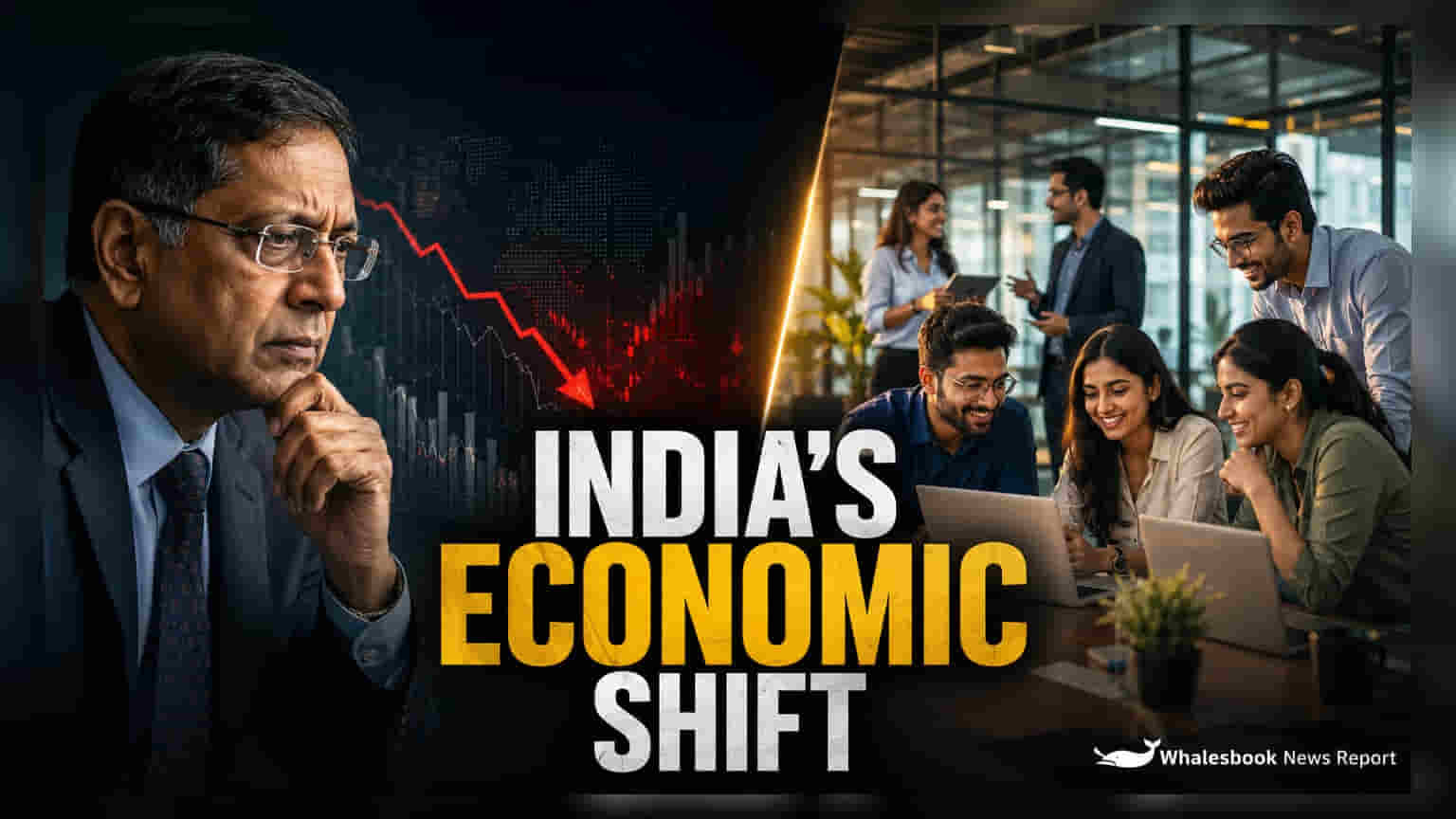


The Credibility Crisis and Policy Inertia
Beyond the headline figures of resilient GDP growth, a widening chasm exists between official optimism and the reality of private capital formation. Former Chief Economic Adviser Arvind Subramanian has pinpointed a central paradox in the current economic environment: while the government has aggressively pursued reforms to reduce the cost of doing business—such as simplifying the Goods and Services Tax and liberalizing foreign investment—these measures have failed to arrest the decline in private corporate investment. This investment metric, a critical indicator of long-term economic health, has stagnated at roughly half the levels seen in the early 2000s, suggesting that investors are increasingly focused on the "risks of doing business" rather than just the "costs."
Leadership and the Performance Gap
The perception of drift within New Delhi has reached a point where market participants are openly questioning the efficacy of the current economic stewardship. Subramanian's critique centers on the absence of a proactive, decisive interlocutor capable of steering the economy through a period of heightened external volatility, particularly in the wake of surging global energy prices and persistent geopolitical tensions. Unlike the post-pandemic recovery which benefited from fiscal and monetary support, the current landscape requires a structural shift toward entrepreneurial policymaking that can navigate uncertainty. The administration’s reliance on continuity is being viewed by some as a liability, with calls for a fundamental infusion of fresh, independent talent to replace what critics label as institutional staleness.
The Forensic Bear Case: Structural Vulnerabilities
Critics argue that the current economic strategy suffers from a significant disconnect between central mandates and ground-level execution. This is reflected in the Business Confidence Index, which has struggled below the 50-mark, indicating severe stress among CEOs and CFOs. A primary concern is the government's approach to the energy sector, where the refusal to fully pass through global price fluctuations to domestic consumers—compounded by heavy subsidization—creates an unsustainable fiscal burden and distorts market signals. Furthermore, the arbitrary nature of tax enforcement and the aggressive utilization of state institutions against private enterprises are frequently cited by international observers as major deterrents to foreign capital. These governance concerns, when paired with the 'price adjustment' challenges of the rupee, create a environment where macro-stability measures often mask underlying structural decay.
Future Outlook and Policy Dilemmas
The consensus among market analysts remains bifurcated; while the Reserve Bank of India and government officials point to robust long-term growth prospects and strong external buffers, the immediate outlook is dominated by stagflationary risks. Policymakers face a classic dilemma: balancing the need for inflation control with the requirement to support an economy grappling with high energy costs. As the administration looks toward the next fiscal cycle, the pressure to pivot from defensive maneuvering to aggressive, transparency-led reform is mounting. Whether this results in a personnel overhaul or a mere adjustment of existing strategies will be the definitive marker of India's economic trajectory through 2026.