 Whalesbook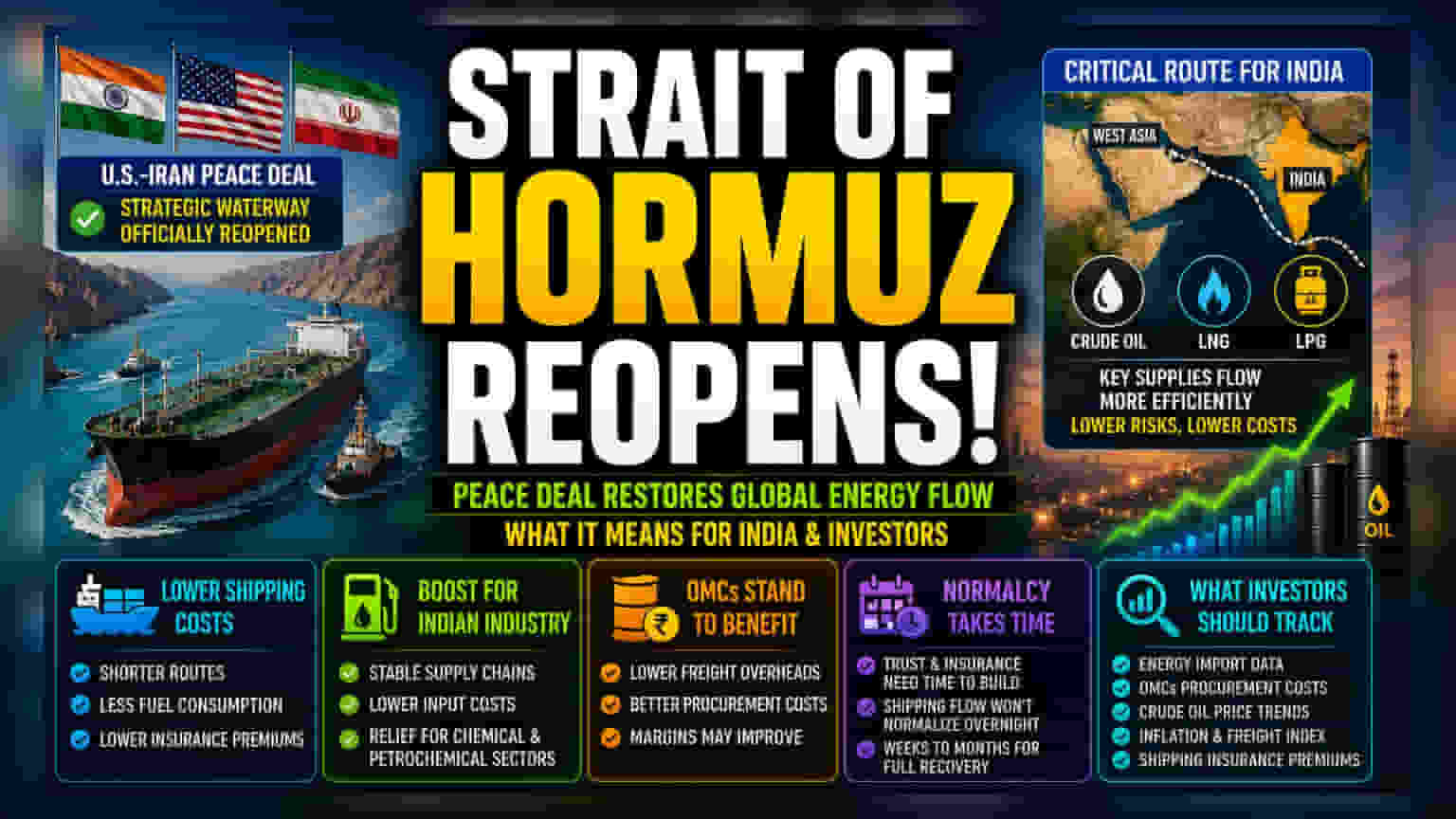


The reopening of the Strait of Hormuz following a US-Iran peace deal provides relief for India's energy imports and manufacturing supply chains. While this development is positive for reducing import costs and stabilizing the rupee, operational normalcy will take time. Investors should monitor the impact on oil marketing company margins, inflation, and industrial input costs in the upcoming quarters.
What Happened
The Strait of Hormuz, a vital maritime corridor for global oil and gas trade, has officially reopened following a new peace agreement between the United States and Iran. This shipping lane is critical for international energy flows, and its closure had caused significant logistical challenges for countries heavily dependent on energy imports, including India.
Why This Matters For Indian Investors
India relies heavily on West Asia for its energy needs, importing a significant portion of its crude oil, LNG, and LPG from this region. When the Strait was disrupted, it caused a ripple effect throughout the economy. Shipping companies were forced to reroute vessels, which increased fuel consumption, extended delivery times, and spiked insurance premiums. These additional costs eventually filtered down to the Indian economy, putting pressure on the import bill, inflation, and the currency.
The reopening is expected to help normalize these logistics. For Indian industries, this could mean more predictable supply chains and potentially lower costs for raw materials, particularly for the chemical and petrochemical sectors that rely on imported inputs.
The Energy Sector Perspective
Oil Marketing Companies (OMCs) are among the most direct beneficiaries when supply chains stabilize. High freight costs and unpredictable supply routes often compress margins for energy companies. With the return of more efficient shipping routes, these companies may see a reduction in the overhead costs associated with crude procurement. However, investors should remember that fuel prices in India are influenced by a complex mix of global crude prices, government policies, and tax structures. A reduction in logistical costs does not automatically guarantee an immediate change in retail fuel prices.
Why Operational Normalcy Takes Time
While the political agreement is a major step, it is important for investors to understand that shipping markets do not restart overnight. The maritime industry relies on trust, insurance coverage, and vessel availability. Shipowners and insurers need time to assess the stability of the route before restoring full operations.
Even after a shipping lane reopens, it can take weeks or months for the flow of goods to return to pre-disruption levels. Investors should remain cautious about expecting an instant recovery in company earnings or a sudden drop in inflation data. The true test of this deal will be the consistent movement of tankers and cargo vessels without further incidents.
What Investors Should Track
Moving forward, the primary monitorable will be the stability of the route. Investors may want to track energy import data and the commentary from oil marketing companies regarding their procurement costs. Additionally, global crude oil price trends and inflation prints will provide clues on how much of this supply chain relief is actually benefiting the domestic economy. Keeping an eye on shipping insurance premiums and global freight indices can also provide early indicators of whether 'normalcy' is truly returning to the region.