

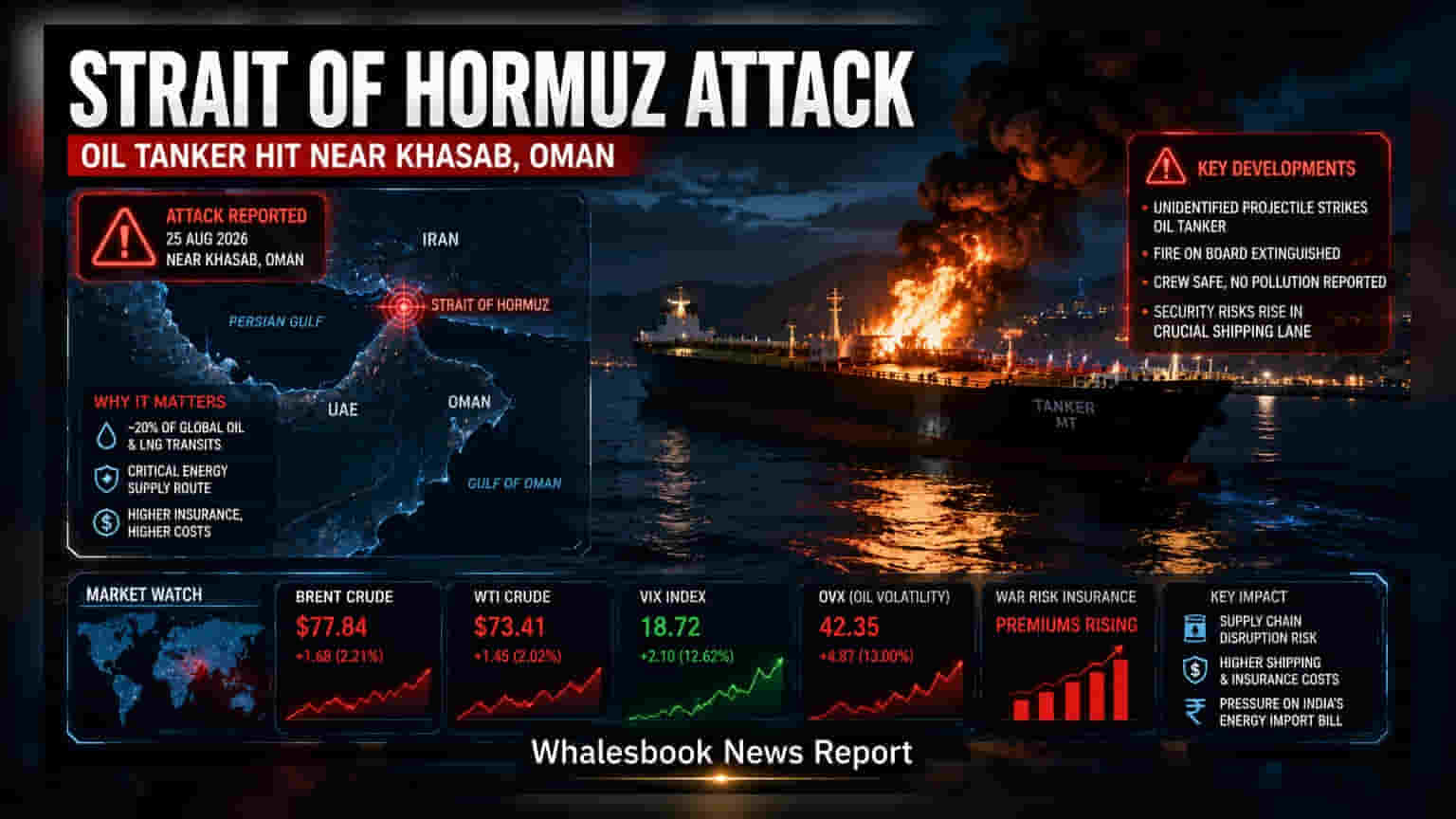
A projectile attack on an oil tanker in the Strait of Hormuz near Oman has increased security concerns for a vital global energy route. For investors, the incident brings risks of higher shipping insurance costs, logistics delays, and potential volatility in energy prices as geopolitical tensions remain high in the Middle East.
The United Kingdom Maritime Trade Operations (UKMTO) reported an attack on an oil tanker in the Strait of Hormuz on August 25, 2026. The vessel, located near Khasab, Oman, was struck by an unidentified projectile, causing a fire that was later extinguished. While the crew remains safe and no environmental damage has been reported, the incident draws attention to the instability in one of the most important energy transit points in the world.
The Strait of Hormuz serves as a primary passage for a significant portion of global oil and liquefied natural gas (LNG) exports. Any increase in security risks in this region tends to create immediate operational challenges for shipping companies. Investors often watch these developments because instability here can quickly translate into higher insurance premiums and elevated freight rates for maritime transport.
For the global economy, including India, the primary concern revolves around the reliability and cost of energy supplies. When shipping lanes become unsafe, insurance companies typically increase war-risk premiums for vessels. These added costs can eventually be passed down to consumers through higher energy import bills, putting pressure on import-dependent economies.
The region is currently dealing with complex diplomatic friction. Efforts by neighboring countries and international mediators to reduce tension have not yet led to a lasting reduction in maritime incidents. The standoff involving sanctions and ongoing regional security challenges continues to act as a barrier to consistent shipping operations.
Investors may want to watch for updates on maritime insurance rates and vessel traffic volumes in the region. Fluctuations in energy commodity prices, such as crude oil, often correlate with security reports from this area. If disruptions to shipping traffic persist or increase, the focus will remain on how global supply chains adapt to these higher costs and security constraints.