

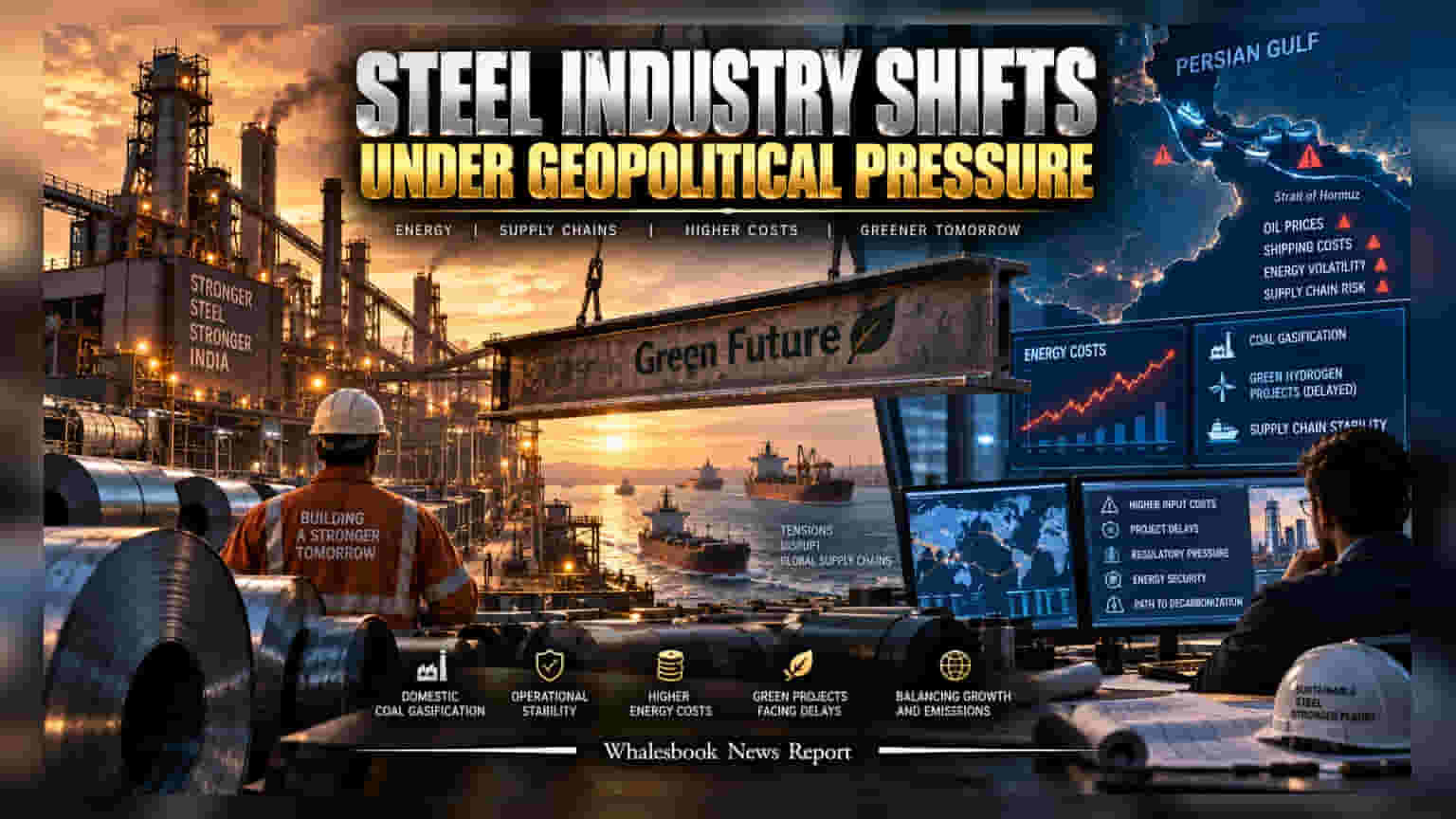
Geopolitical tensions in the Persian Gulf are forcing global steelmakers to prioritize fuel security over green hydrogen projects. In India, companies like Jindal Steel are adopting coal gasification to shield operations from energy volatility. While this ensures steady production, it creates a trade-off with long-term decarbonization goals that investors should monitor.
Rising tensions in the Persian Gulf are reshaping the global steel industry. Since early 2026, disruptions in shipping lanes and energy supply chains have forced steel producers to focus on operational stability over rapid decarbonization. This shift has slowed the adoption of greener technologies, as companies struggle to manage the immediate impact of volatile energy prices and logistics bottlenecks.
In India, the strategic response has been a pivot toward domestic coal gasification. Major players, including Jindal Steel, have integrated this technology into their operations to produce synthetic gas. This move helps the company act as a buffer against the high cost and irregular supply of imported fuels like coking coal and natural gas. This strategy aligns with the broader national push for energy self-reliance, supported by the government’s ₹37,500 crore scheme aimed at developing coal gasification capacity by 2030. For shareholders, this approach helps protect profit margins from sudden energy price spikes, providing a layer of stability during periods of global supply chain uncertainty.
The situation is more challenging in international markets, where many green steel projects are hitting roadblocks. For instance, Meranti Green Steel has had to recalibrate the timeline for its planned facility in Oman due to financing and supply chain pressures. This trend is widespread, with data as of mid-2026 indicating that approximately half of all planned green steel projects globally have faced delays. These delays are driven by a combination of high interest rates, limited access to green hydrogen supply chains, and the fundamental difficulty of securing funding in a high-risk geopolitical climate.
Investors should note the structural trade-off being made across the industry. While coal gasification ensures immediate and steady production, it is a carbon-intensive process. Relying on this technology may pose risks to a company’s long-term environmental targets, which could become a significant concern as global regulations and carbon accounting standards tighten. The primary risks for the sector remain the high cost of raw materials and energy, and the uncertainty of project timelines in a volatile climate. Going forward, the most important update for investors will be how effectively these companies can balance their immediate need for energy security with the eventual requirement to meet stricter emission standards.