

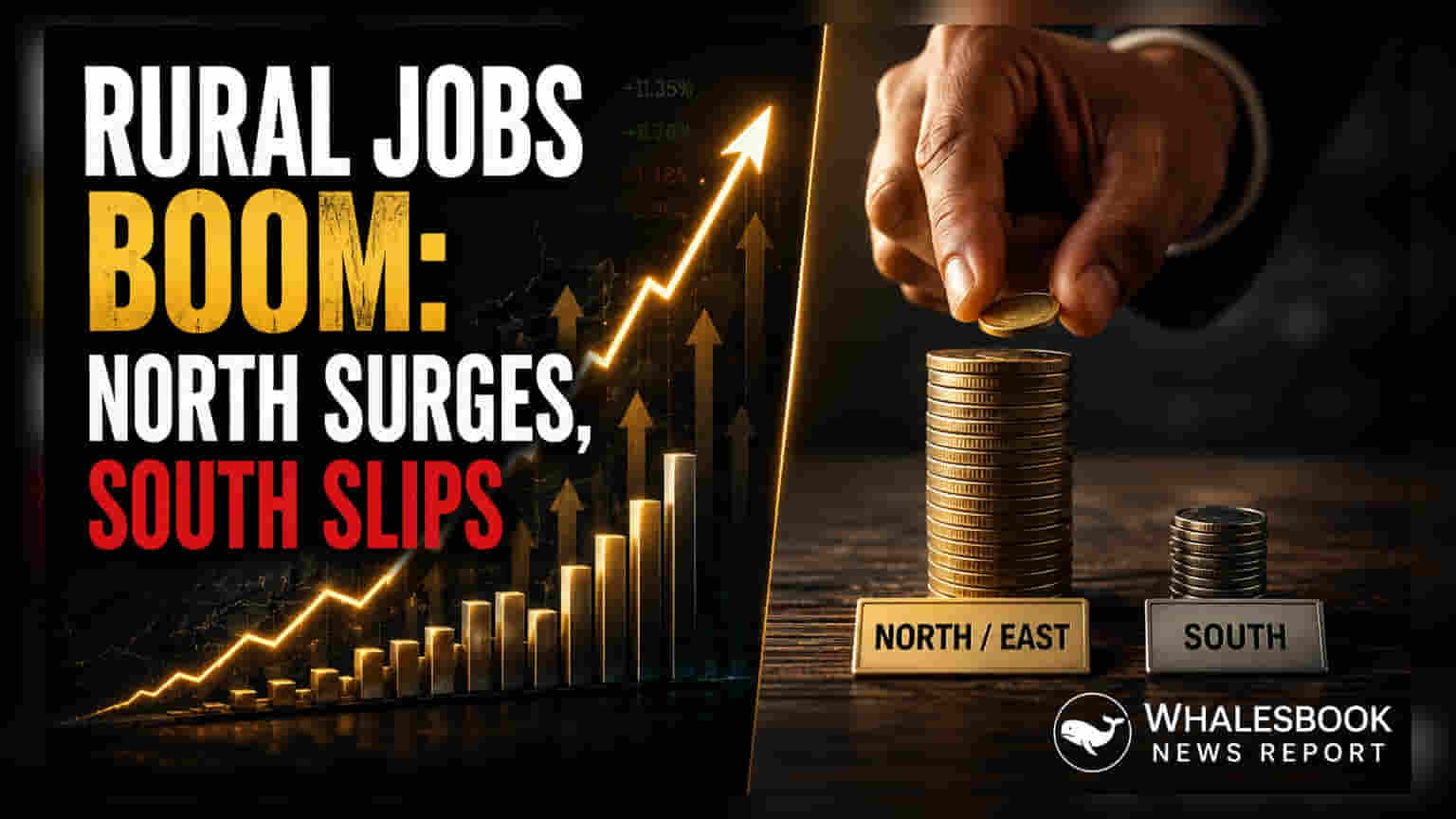
Indian states have increased rural employment budgets by 21% to ₹86,271 crore for FY27. This move, led by sharp hikes in northern and eastern states, indicates a shifting regional focus. For investors, this capital infusion into rural pockets could influence demand in sectors like FMCG and entry-level two-wheelers, though the actual consumption impact remains the key monitorable.
What Happened
In a push to strengthen rural livelihoods, Indian states have collectively increased their budget allocations for the VB G-RAM-G employment scheme by approximately 21% for the fiscal year 2027. The total outlay is set to reach ₹86,271 crore, rising from ₹71,068 crore in FY26. This scheme, which aims to provide up to 125 days of guaranteed wage employment with a national minimum wage floor of ₹300 per day, represents a significant fiscal commitment from state governments.
The Spending Trend and Regional Divide
Data on state budgets reveals a sharp divergence in how different regions are approaching rural employment. A clear north-south divide has emerged. Northern and eastern states are driving the bulk of this expansion. West Bengal, for instance, has increased its allocation more than five-fold to ₹9,764 crore. Other states like Odisha, Chhattisgarh, and Jharkhand have also significantly ramped up their budgets.
In contrast, many southern states are moving in the opposite direction. Tamil Nadu has reduced its allocation by 16.4% to ₹3,251 crore, while Andhra Pradesh has trimmed its spending by 9.1%. Maharashtra continues to be the largest spender, with an allocation of ₹21,208 crore, maintaining its position as the state with the highest absolute commitment to the scheme.
Why This Matters for Rural Consumption
For investors, rural government spending is often viewed as a proxy for potential demand in the rural economy. When rural households receive guaranteed wages, a significant portion is typically directed toward essential items, such as daily staples, household products, and affordable mobility solutions.
Companies in the fast-moving consumer goods (FMCG) and two-wheeler sectors often look at rural wage cycles to gauge demand. An increase in state spending of this magnitude could theoretically improve the purchasing power of the rural workforce in states like West Bengal and Odisha. If this spending translates into higher disposable income, it may support volume growth for consumer-facing businesses that have a deep distribution network in these specific regions.
Risks and Limitations
While the headline numbers suggest a boost, investors should remain cautious about equating budget allocations directly to immediate economic impact. One risk is the efficiency of fund utilisation; spending higher amounts does not automatically guarantee effective job creation or timely wage distribution. Furthermore, if such large-scale spending is not managed with fiscal discipline, it can put pressure on state deficits, potentially leading to lower capital expenditure in other areas.
Inflation is another factor to consider. If a sudden increase in rural liquidity coincides with supply chain bottlenecks or stagnant production, it could contribute to inflationary pressure on essential commodities, which might hurt the very households the scheme aims to support.
What Investors Should Track Next
Investors should look beyond the budget announcements to track the actual execution on the ground. Key monitorables include quarterly commentary from companies with high rural exposure regarding volume growth in specific states. Additionally, observing whether the increased state spending actually results in higher rural sales volumes—rather than just being absorbed by rising costs—will be important for assessing the true health of the rural economy. Monitoring the fiscal health and deficit management of the states that have aggressively increased their spending will also provide clarity on the sustainability of these allocations.