 Whalesbook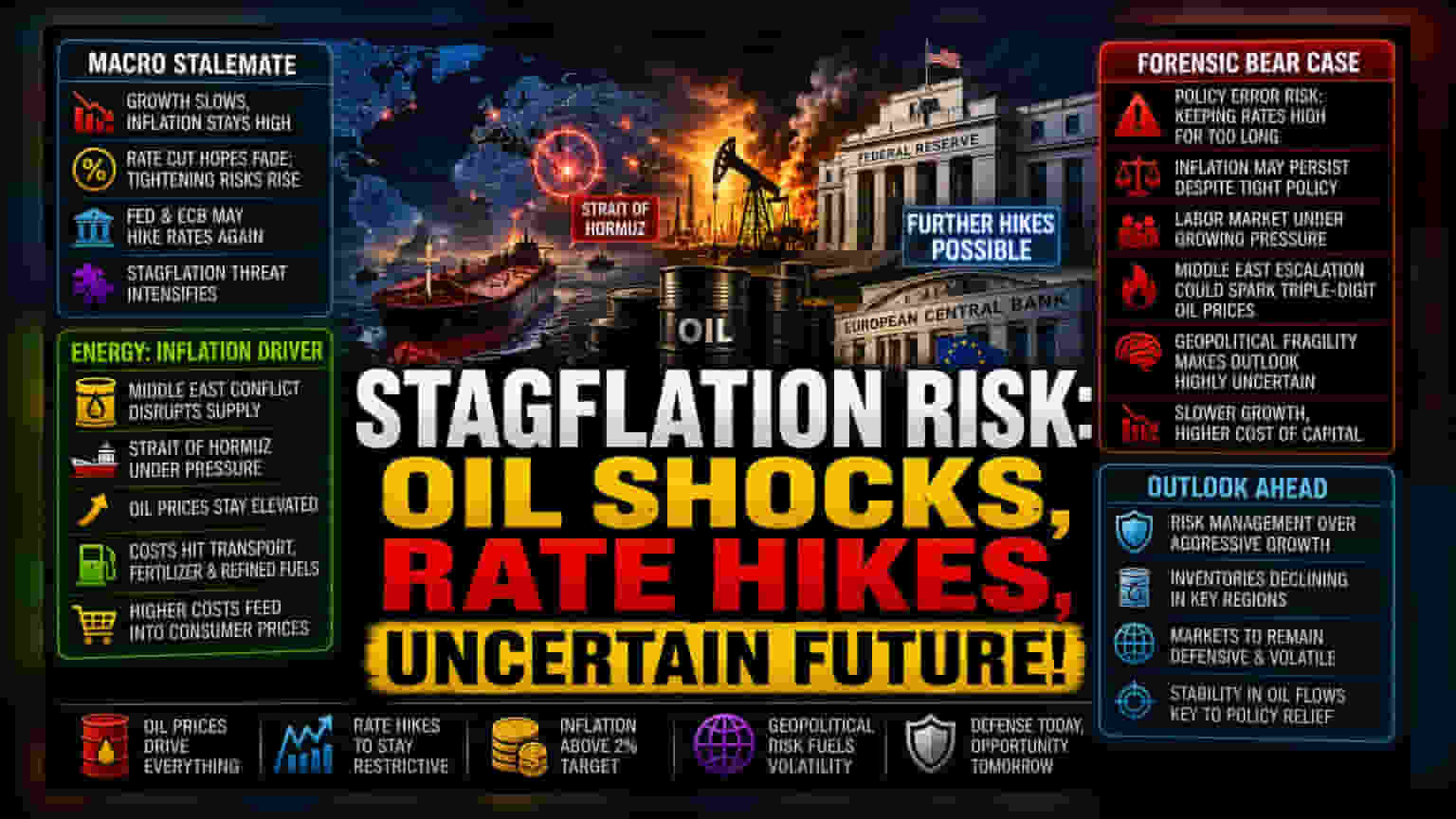


The Macroeconomic Stalemate
The global economy is currently navigating a precarious transition toward stagflation, defined by the convergence of weakening growth and entrenched inflation. Unlike previous economic cycles, this environment is being shaped by volatile energy costs that permeate broad sectors of the economy, forcing a pivot in monetary policy expectations. Markets that once anticipated rate cuts in 2026 have undergone a rapid recalibration, with interest rate futures now reflecting the distinct possibility of further tightening by the Federal Reserve and the European Central Bank to combat inflation that continues to hover well above official 2% targets.
Energy as the Primary Inflation Vector
Crude oil is no longer merely a commodity input; it has become the primary catalyst for structural inflation. The ongoing instability in the Middle East has centered on the Strait of Hormuz, a critical energy chokepoint that has effectively tightened global supply. While diplomatic efforts remain fluid, the persistence of the conflict has caused oil prices to remain elevated, creating a durable upward pressure on transport, fertilizer, and refined product costs. Historical data suggests that when energy shocks extend beyond short-term supply disruptions, the likelihood of second-round inflation—where higher costs are passed on to consumers—increases substantially, leaving central banks with little room to maneuver without risking deeper economic contraction.
The Forensic Bear Case: Policy Missteps
The fundamental risk facing investors is the potential for a "policy error" where central banks maintain high rates for too long, exacerbating the slowdown in growth while failing to fully suppress inflation. Recent dissent among FOMC members highlights the internal tension regarding this dilemma, as some officials lean toward protecting against inflation while others express concern over the mounting pressure on the labor market. Unlike previous crises, this environment features significant geopolitical fragility that makes forecasting difficult, as any escalation in the Middle East could trigger a rapid move toward triple-digit oil prices, creating a supply-side shock that monetary policy is poorly equipped to handle alone.
Future Outlook
Guidance from major financial institutions now prioritizes risk management over aggressive growth strategies. As inventories in key regions continue to decline, market participants should anticipate heightened volatility in energy-sensitive sectors. The path forward remains tethered to the resolution of regional conflicts; until a verifiable stability in oil flows is established, the market is likely to maintain a defensive posture, with the cost of capital expected to remain at restrictive levels to prevent inflation expectations from de-anchoring.